It may seem unusual to review something rooted in productivity rather than traditional gameplay, but On-Together: Virtual Co-Working sits comfortably in the growing space where games, social platforms, and wellness tools intersect. It’s not a title about combat, progression trees, or high-score chasing. Instead, it’s a carefully designed virtual environment that transforms work, study, and creative focus into a shared, comforting experience.
In an era where remote work and online study are the norm rather than the exception, On-Together tackles a genuine problem: isolation. It does so not by overwhelming users with productivity pressure, but by offering a warm, playful digital “third space” where people can work alongside others without obligation or noise. The result is a surprisingly effective, cozy, and emotionally supportive experience that feels more like a calm café than a corporate productivity app.
A Virtual Space That Feels Lived-In
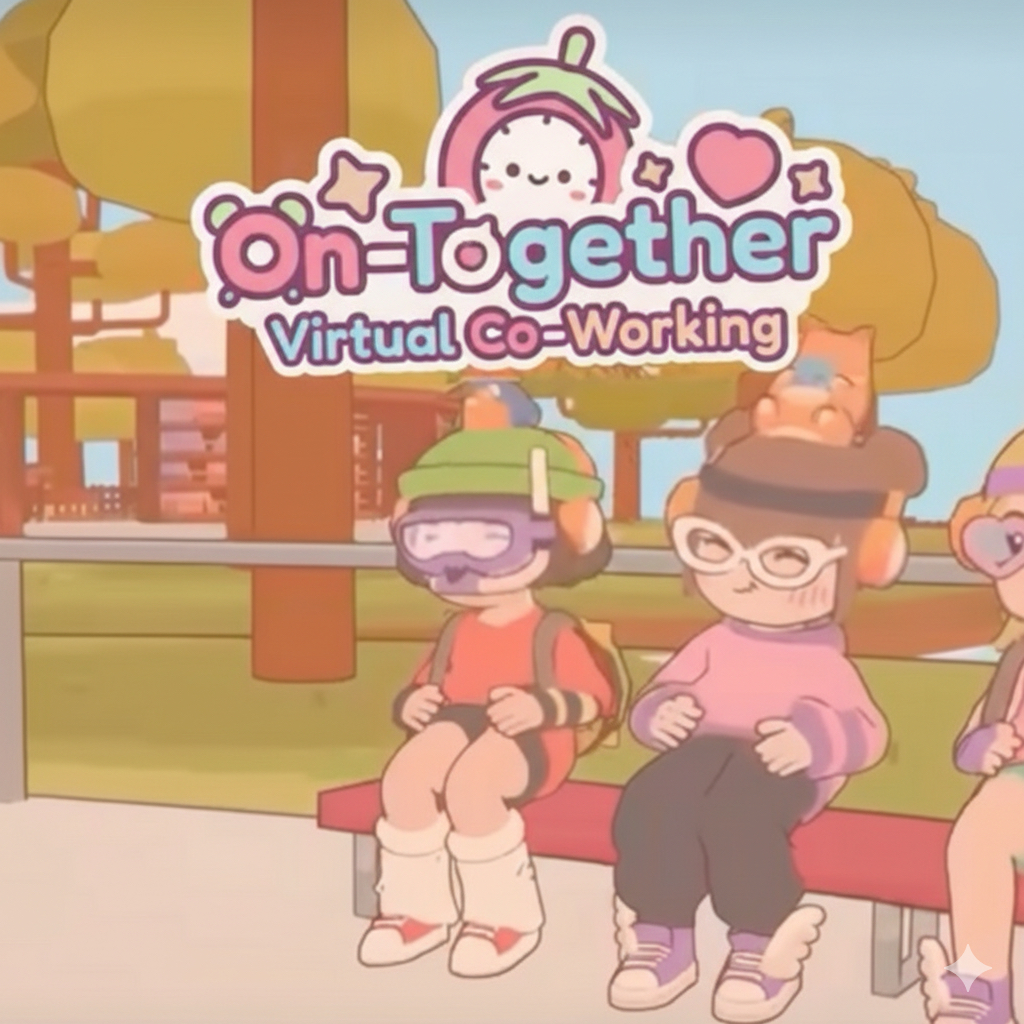
At its core, On-Together is built around the idea of shared presence. You and others occupy the same virtual spaces — libraries, lounges, outdoor hangouts, and quiet nooks — each represented by charming, customisable avatars. Everyone is there for the same reason: to focus, to work, to study, or simply to exist productively in the company of others.
The brilliance lies in how subtle this presence feels. There’s no pressure to interact, no obligation to chat, and no expectation of performance. You can silently coexist with others, glance at their avatars as they type or read, and feel a quiet sense of accountability that naturally encourages focus. It recreates the ambient motivation of a study hall or shared office without the stress or distractions.
Visually, the game leans into a soft, pastel aesthetic that’s immediately comforting. The environments feel safe, inviting, and deliberately unhurried. Lighting is warm, animations are gentle, and nothing ever screams for your attention. This design philosophy is essential to the experience — it never competes with your work, but complements it.
Productivity Tools That Don’t Feel Like Chores
What separates On-Together from standard virtual chat spaces is the thoughtful inclusion of productivity tools. These aren’t bolted-on features; they’re fully integrated into the flow of the experience.
You have access to a customisable focus timer, allowing you to structure work sessions with breaks in a way that suits your routine. Task lists let you organise priorities without pulling you out of the environment, while journaling and planning tools offer space for reflection, note-taking, or goal-setting. Everything is accessible without feeling intrusive.
Perhaps most importantly, On-Together reframes productivity as something rewarding rather than punishing. Staying focused earns small in-game rewards — cosmetic items, decorations, pets, and avatar customisation options. These incentives are never aggressive, but they’re effective. They add a gentle sense of progression that encourages consistency rather than perfection.
This approach is refreshingly humane. There’s no penalty for drifting, no shame for unfinished tasks. The system celebrates effort, not output, and that philosophy runs through the entire experience.
Breaks That Feel Like Breathing Room
When it’s time to step away from focused work, On-Together doesn’t push you out of the experience. Instead, it offers light, optional activities designed to refresh your mind without pulling you into distraction spirals.
These include small social or solo activities — casual mini-games, creative spaces, music jams, or quiet environmental interactions. None of them demand long engagement, and all are easy to step away from when it’s time to refocus.
This is where On-Together truly understands modern work habits. Breaks are treated as essential, restorative moments rather than indulgences. The game never forgets its purpose: helping you return to focus feeling calmer, not more scattered.
Social Without Social Pressure
One of On-Together’s strongest qualities is how it handles social interaction. Communication exists, but it’s optional, low-key, and unobtrusive. You can chat casually, react to others’ progress, or say nothing at all.
This design choice makes the experience accessible to a wide range of players and users. Introverts, neurodivergent players, or anyone fatigued by constant online engagement can enjoy the sense of shared space without feeling socially drained. It’s a rare example of a multiplayer environment that respects silence as much as conversation.
Working with friends feels natural, but working alongside strangers is just as comfortable. The shared goal of focus creates an unspoken bond that doesn’t require constant interaction to feel meaningful.
Customisation and Flexibility
On-Together offers a surprising amount of personalisation. Avatars can be styled in numerous ways, spaces can feel distinctly different depending on where you choose to work, and the interface itself can adapt to your setup. Whether you want the experience full-screen, tucked to the side, or lightly floating above your desktop, the game accommodates a wide range of workflows.
This flexibility makes On-Together suitable for different lifestyles. Students can study while chatting quietly with friends. Remote workers can leave it running in the background for ambient motivation. Creators can use it as a calm companion during long sessions.
Where It Falls Short
Despite its many strengths, On-Together won’t appeal to everyone. Those expecting traditional gameplay loops, challenges, or narrative progression may struggle to categorise it as a “game” at all. It’s better understood as a playful productivity environment rather than an entertainment-first experience.
Activity levels can also vary depending on time of day, which can impact the feeling of shared presence. While the experience still functions well solo, its magic is most noticeable when spaces feel populated.
Additionally, while the tools are well designed, users seeking deep productivity analytics or advanced task management may find the feature set intentionally light. This is a space for focus, not micromanagement.
Final Verdict
On-Together: Virtual Co-Working is a thoughtful, gentle, and surprisingly effective hybrid experience. It transforms productivity into something social without becoming noisy, competitive, or overwhelming. By prioritising comfort, presence, and encouragement over pressure, it succeeds in making work feel less lonely and more sustainable.
It may not fit traditional definitions of a game, but it absolutely earns its place as an interactive experience worth reviewing — especially in a world where mental wellbeing and focus are as valuable as entertainment.