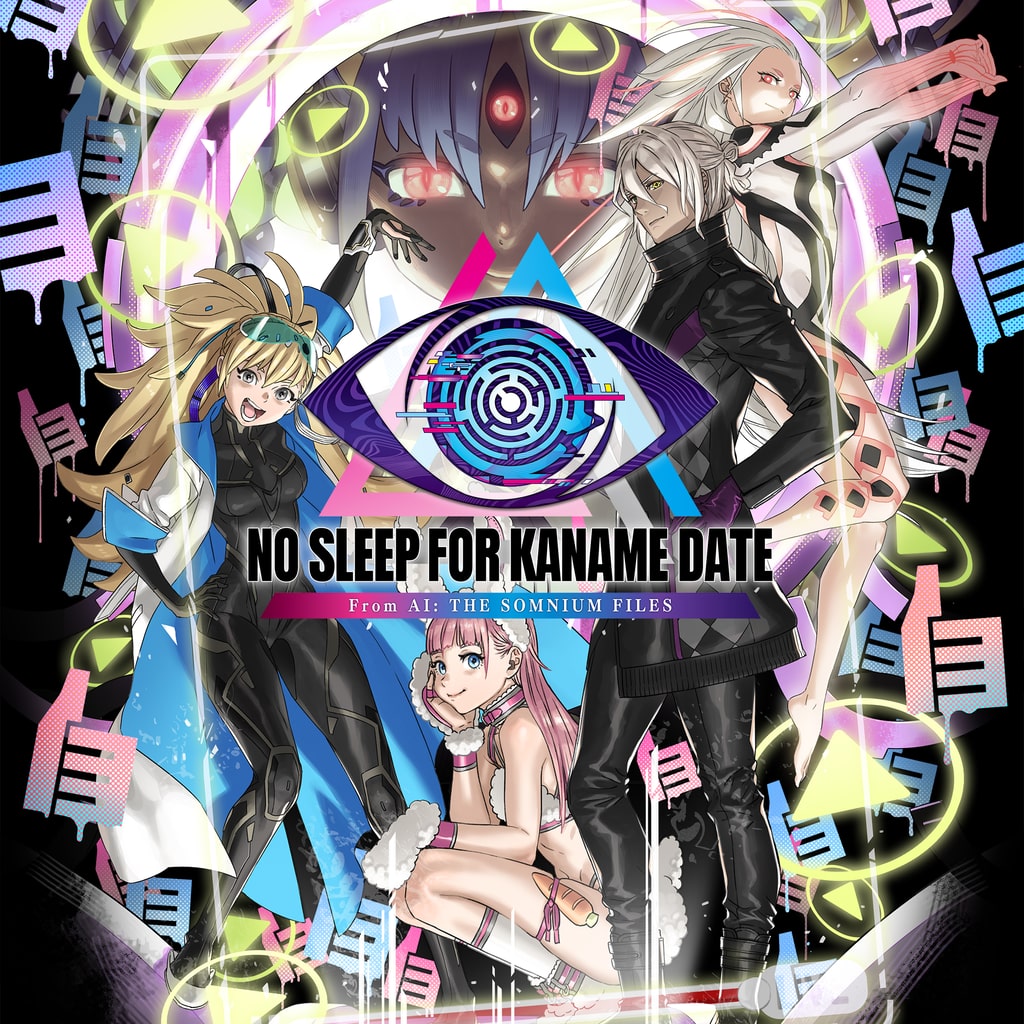
Few modern adventure series balance absurd humor, psychological storytelling, and genuine emotional weight quite like AI: THE SOMNIUM FILES. Since its debut in 2019, Spike Chunsoft’s sci-fi detective saga has carved out a loyal following thanks to its eccentric characters, surreal dream investigations, and narrative twists that frequently blur the line between comedy and existential dread.
No Sleep For Kaname Date – From AI: THE SOMNIUM FILES, originally released in July 2025 for Switch and PC and now arriving on PlayStation and Xbox platforms as of February 26, 2026, is not a full sequel but a focused spin-off set between the first game and nirvanA Initiative. Yet despite its smaller scope, this entry feels far from disposable filler. Instead, it functions as both a love letter to fans and a clever mechanical evolution of the series’ investigative formula.
And yes — Kaname Date is back, sleep-deprived, inappropriate jokes intact.
A UFO, an Idol, and an Impossible Game
The premise wastes no time embracing the series’ signature absurdity.
Internet idol Iris Sagan (A-set) has been abducted — allegedly by aliens — and forced into a deadly escape game aboard a mysterious UFO. Facing puzzles that could cost her life, she turns to the one person who can unravel impossible mysteries: ABIS investigator and certified chaos magnet Kaname Date.
From the outset, the story establishes its tone perfectly. It blends:
- conspiracy thriller energy
- anime sci-fi weirdness
- escape-room tension
- and relentlessly goofy character humor
This tonal juggling act shouldn’t work. Yet under the supervision of series creator Kotaro Uchikoshi and director Kazuya Yamada, the narrative walks the tightrope remarkably well.
The game frequently pivots from laugh-out-loud absurdity to emotionally devastating revelations without feeling inconsistent — a hallmark of the franchise at its best.
Three Pillars of Gameplay
Like previous entries, No Sleep For Kaname Date divides gameplay into distinct systems. However, this spin-off introduces a new pillar that meaningfully reshapes pacing.
Investigation
As Date, players explore crime scenes and environments using enhanced vision modes through his cybernetic left eye. Investigation remains largely point-and-click driven, but sharper writing and improved environmental interactions keep conversations engaging.
Dialogue is still the true star. Characters bounce between serious detective work and ridiculous tangents — including callbacks to Date’s infamous magazine obsession — giving scenes personality rarely seen in traditional visual novels.
Fans will immediately feel at home here.
Somnium Diving
The Somnium sequences return, and they remain the series’ most visually inventive component.
Entering suspects’ dreams alongside AI partner Aiba transforms gameplay into surreal third-person puzzle exploration. Logic bends, symbolism replaces realism, and emotional trauma manifests as bizarre metaphors.
One moment you’re navigating floating furniture; the next you’re solving puzzles governed by emotional logic rather than physical rules.
These sections still operate under time limits, forcing players to choose actions carefully — a mechanic that creates satisfying tension without overwhelming complexity.
Compared to earlier games, Somniums feel tighter and more focused, reducing trial-and-error frustration while preserving their dreamlike unpredictability.
The New Star: Escape Rooms
The biggest addition is the Escape gameplay system tied to Iris’s captivity.
These sequences introduce fully realized escape-room puzzles, adding a tactile, puzzle-heavy dimension previously absent from the series.
You’ll:
- search environments for clues
- combine items
- decode mechanisms
- manipulate machinery
- solve layered environmental puzzles
What elevates these sections is the dual-perspective system, where players switch between Iris and Ota Matsushita. Though separated physically, they must exchange information indirectly, turning puzzles into collaborative logic challenges.
It’s a brilliant evolution that breaks up long narrative stretches and injects hands-on engagement.
For puzzle fans, these are easily the game’s highlight.
The Third Eye Mechanic
New high-stakes decisions introduce Date’s Third Eye, allowing players to uncover hidden options beyond apparent binary choices.
Rather than simple branching dialogue, Third Eye moments reward observational thinking — encouraging players to question assumptions presented by the narrative.
Mechanically, it reinforces the central theme of the series:
Truth is rarely what it first appears to be.
Narratively, it helps avoid frustrating “wrong choice” scenarios, replacing them with clever revelations that feel earned rather than arbitrary.
Writing: Fan Service Done Right
This spin-off is unapologetically made for fans.
Returning characters receive extensive screen time, inside jokes abound, and emotional arcs from the first game receive subtle continuation. For longtime players, this feels like revisiting old friends.
Crucially, the writing never collapses into pure nostalgia.
Character interactions deepen relationships rather than merely referencing them, and several emotional moments land surprisingly hard — particularly those reframing events from the original game.
However, newcomers may struggle.
While technically playable standalone, much of the emotional resonance depends on familiarity with previous entries. Without that context, certain reveals lose their impact.
This is less an entry point and more an interlude meant for invested players.
Presentation and Performance
Visually, the game retains the polished anime aesthetic of nirvanA Initiative, with expressive character models and strong cinematic framing.
Highlights include:
- vibrant Somnium visuals bursting with surreal color
- dynamic camera work during escape sequences
- clean UI improvements for investigations
Performance across PS5 and Xbox Series X|S is smooth, with fast loading and stable frame pacing.
Voice acting remains excellent across both Japanese and English tracks, with performances capturing the franchise’s rapid tonal shifts between comedy and drama.
The soundtrack blends atmospheric synth tones with playful character themes, reinforcing both mystery and humor.
Pacing and Structure
One of the biggest improvements over prior entries is pacing.
By rotating between:
- investigations
- dream dives
- escape puzzles
the game rarely overstays its welcome in any one system.
The experience feels leaner than mainline entries while still delivering a satisfying narrative arc.
At roughly 15–20 hours, it strikes a strong balance between depth and focus.
Where It Stumbles
Despite its strengths, the game isn’t flawless.
Heavy Reliance on Series Knowledge
New players may feel lost during emotional beats or lore discussions.
Limited Mechanical Innovation Outside Escape Rooms
Investigations remain largely unchanged from earlier titles.
Occasional Puzzle Obscurity
Some escape-room solutions verge on overthinking territory.
Visual Novel Constraints
Players seeking constant gameplay may find dialogue-heavy stretches slow.
Still, these issues largely stem from genre expectations rather than poor execution.
A Spin-Off That Feels Essential
Spin-offs often feel optional. No Sleep For Kaname Date does not.
Instead, it fills emotional and narrative gaps between main entries while experimenting with gameplay ideas that could shape the series’ future.
The escape-room integration proves especially successful, adding interactivity without sacrificing storytelling — something many visual novels struggle to achieve.
More importantly, it reminds players why Kaname Date remains such a compelling protagonist: flawed, ridiculous, empathetic, and relentlessly human despite the sci-fi chaos surrounding him.
Pros & Cons
Pros
- ✔ Excellent character writing and humor
- ✔ Strong emotional storytelling
- ✔ Fantastic new escape-room gameplay
- ✔ Improved pacing over previous entries
- ✔ Stylish Somnium sequences
- ✔ High-quality voice acting and presentation
Cons
- ✘ Best appreciated after playing earlier games
- ✘ Some puzzles overly cryptic
- ✘ Investigation gameplay largely unchanged
- ✘ Dialogue-heavy pacing may not suit everyone
Final Verdict
No Sleep For Kaname Date – From AI: THE SOMNIUM FILES proves that a spin-off can meaningfully expand a series rather than simply extend it. By introducing escape-room mechanics alongside the beloved investigation and Somnium systems, Spike Chunsoft delivers an experience that feels both familiar and refreshingly new.
It may not replace a full sequel, but it enriches the universe, deepens character arcs, and experiments with gameplay in ways that suggest exciting directions for the future of the franchise.
For fans, this isn’t optional side content — it’s a heartfelt chapter that bridges past and future with style, humor, and surprising emotional weight.