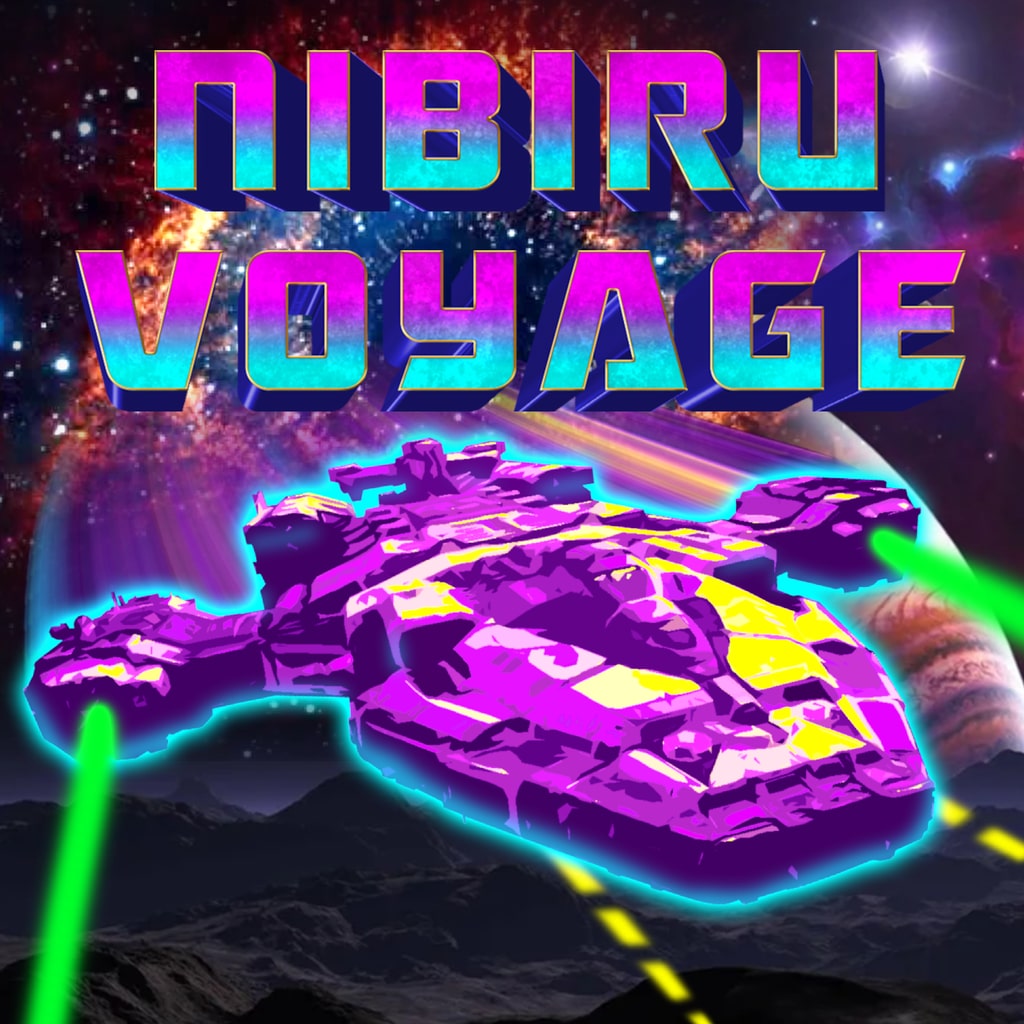
Science fiction games often must strike a delicate balance between worldbuilding, narrative intrigue, and player agency. Nibiru Voyage doesn’t merely dip its toes into these waters — it sets course for them with quiet confidence. The result is an evocative exploratory experience that rewards curiosity, patience, and an eye for subtle detail.
Unlike many action-heavy sci-fi titles, Nibiru Voyage chooses introspection over adrenaline. Its focus is less on combat or survival and more on discovery — of place, history, and ultimately, the self. The game invites you into a mysterious, atmospheric universe that slowly reveals its secrets through environmental storytelling, puzzles, and layered lore.
But while Nibiru Voyage excels in atmosphere and ambition, its pacing and niche appeal mean it won’t satisfy every palate. For players who enjoy thoughtful exploration with science fiction at its heart, however, it’s a voyage well worth undertaking.
Worldbuilding: A Cosmic Canvas
Right from the opening moments, Nibiru Voyage impresses with its world. The game’s environments span desolate moonscapes, derelict space stations, alien flora meadows, and abandoned research facilities. Each area is crafted with a muted colour palette that blends serenity and unease — a visual language that mirrors the game’s thematic core.
What stands out most is how the world tells its own stories. There’s minimal reliance on exposition dumps or NPC chatter. Instead, lore and history unfurl organically through:
- Fragments of journals scattered across the world
- Decaying machinery and half-erased data logs
- Symbolic environmental details that hint at past events
This minimalist method of storytelling encourages engagement without demanding it. Players who want narrative depth can chase every thread, while those who prefer the ambience of exploration can simply let the world wash over them.
Gameplay Loop: Exploration with Purpose
Mechanically, Nibiru Voyage leans into exploration, light problem-solving, and optional system interactions. At its most essential level, the gameplay loop can be summarised as:
Explore → Discover → Decode → Move Forward
There’s no complex skill system or inventory management to bog down your journey. Instead, your agency comes from where you choose to go and how you interpret the fragments you find.
Navigation and Discovery
Each new region feels like a chapter in an interstellar travelogue. Whether you’re scaling a dusty plateau on a barren moon or walking the hallways of a long-dead research outpost, navigation is intuitive yet rewarding. The pacing never rushes; instead, it allows you to take in your surroundings — a necessary design choice for a game that speaks through space as much as through text.
Puzzles and Interactions
Puzzles in Nibiru Voyage are typically environmental — nothing overly obtuse, but cleverly integrated into the landscape. You might:
- Realign power circuits to unlock a sealed vault
- Decode alien inscriptions to access hidden chambers
- Repair ancient machinery to discover historical sequences
These challenges never feel gratuitous. Instead, they encourage players to engage more deeply with the world, piecing together lore and context bit by bit.
Narrative Tone and Emotional Resonance
What makes Nibiru Voyage distinct isn’t the scale of its mystery but the way it unfolds. The narrative never shouts; it whispers. There’s a contemplative tone throughout, a feeling that every discovery is a small illumination in a vast, enigmatic universe.
The plot itself — involving an enigmatic signal from the distant planet or system called Nibiru — is familiar science fiction fare, but it’s the execution that elevates it. Rather than focusing on plot twists or dramatic set pieces, the game dwells on meaning: the significance of exploration, the weight of discovery, and the quiet loneliness of cosmic-scale journeys.
For players who enjoy thematic exploration akin to Everybody’s Gone to the Rapture or Outer Wilds (in mood if not in mechanics), Nibiru Voyage delivers a similarly meditative experience, but with its own distinct voice.
Visual and Audio Design: A Symphony of Silence and Space
Technically, Nibiru Voyage isn’t about pushing cutting-edge visuals. Instead, it uses aesthetics to craft mood and tone. Landscapes are detailed enough to feel grounded, yet often sparse, reinforcing the sense of isolation and mystery.
Lighting plays a significant role. Long shadows cast across alien sands, flickering panels in forgotten labs, and distant stormfronts on alien skies combine to create evocative scenes that stay with you.
Sound design is equally thoughtful. Ambient audio — soft wind, distant machinery hums, alien chatter in static — sets a tone of eerie wonder rather than constant threat. Music is used sparingly but effectively, often emerging during moments of revelation or emotional weight, giving them a resonant echo without overwhelming the experience.
This careful restraint makes Nibiru Voyage feel less like a game you play and more like a world you step into.
Accessibility and Learning Curve
Nibiru Voyage doesn’t overwhelm players with complex menus, lengthy tutorials, or steep learning curves. Most mechanics emerge organically as you traverse new regions, and the game’s pace allows players to absorb systems in bite-sized increments.
That said, its deliberate design might not appeal to hardcore action fans or players who seek fast-paced gameplay. There’s little in terms of combat or timed challenges — instead, the game’s tension comes from its atmospherics and intellectual engagement.
Features that enhance accessibility include:
- Clear navigation markers
- Optional hints for environmental puzzles
- Adjustable UI prompts
However, players who expect a strong narrative drive or cinematic momentum may find the pacing too languid for their tastes. Nibiru Voyage lives in its quiet spaces, not its dramatic peaks.
Replayability and Longevity
Replay value in Nibiru Voyage is rooted in discovery rather than challenge. Once the main voyage is complete, players might revisit earlier regions to uncover additional lore fragments or explore previously overlooked paths.
While the core narrative arc remains the same, atmospheric detail and optional lore make subsequent playthroughs worthwhile for those who relish worldbuilding. However, players primarily attracted by mechanical depth or high-stakes replay challenges may find longevity limited.
Final Verdict
Pros:
- Immersive, atmospheric world rich in subtle narrative
- Thoughtful exploration and environmental puzzles
- Reflective, emotionally resonant tone
- Clean, expressive audiovisual design
Cons:
- Deliberate pacing may not suit all players
- Limited mechanical variety beyond exploration
- Narrative impact depends heavily on player patience
Summary:
Nibiru Voyage may not redefine the exploration genre, but it refines its strengths with a thoughtful, evocative execution. Where many sci-fi games compete for spectacle, this title excels in atmosphere — a reflective journey through mystery, isolation, and quiet wonder.
Its deliberate pacing and emphasis on environmental storytelling might not cater to every taste, but for players who enjoy immersive worlds and thematic depth, Nibiru Voyage delivers a memorable and meaningful experience. Though not without its limitations, it is a fitting voyage for those willing to embrace its calm curiosity and cosmic contemplation.