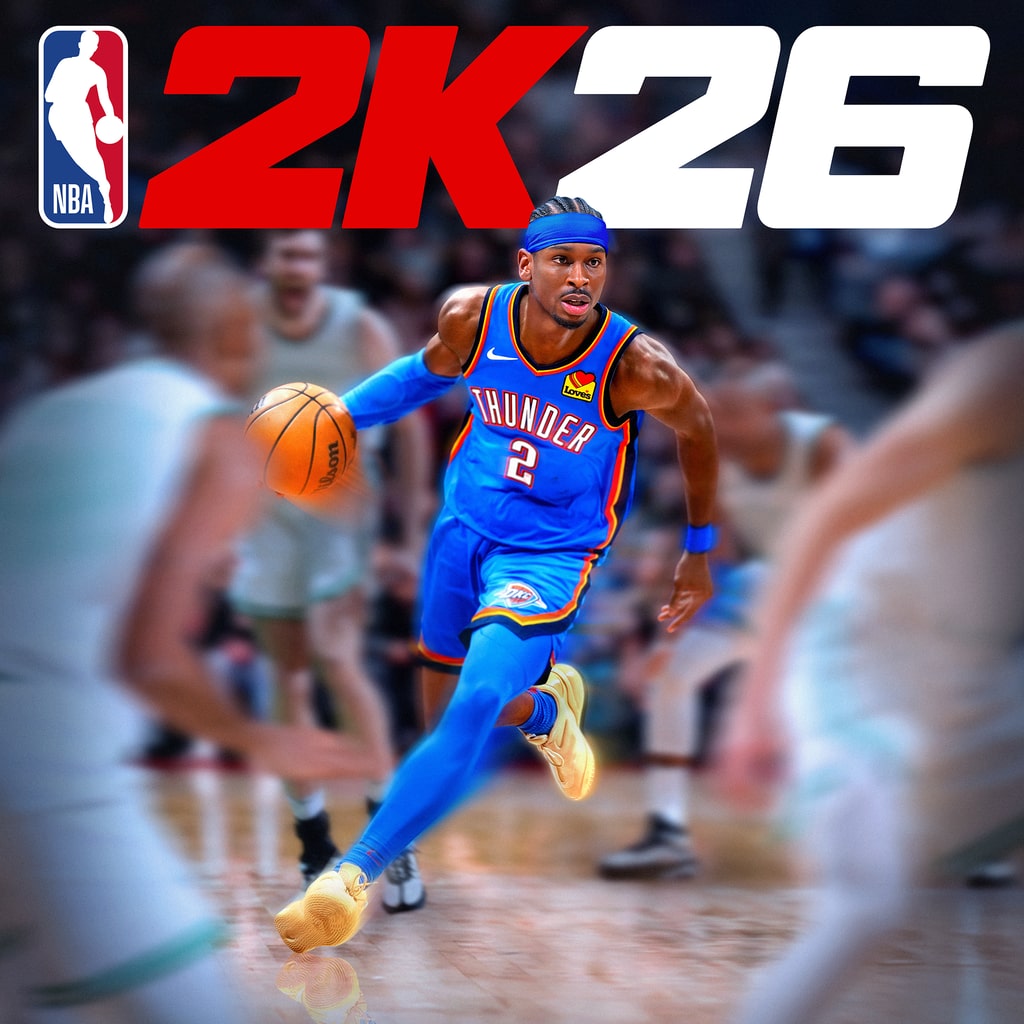
The NBA 2K series has long been the benchmark for basketball simulation, but it’s also carried the burden of controversy—chiefly around monetization and stagnant innovation. With NBA 2K26, Visual Concepts seems determined to reassert the franchise’s dominance by upgrading the essentials: movement, realism, and variety. While micro-transactions remain frustratingly entrenched, this year’s entry finally recaptures the magic of the old-school gameplay loop and delivers the smoothest, most balanced basketball experience in years.
Gameplay and Feel
The most significant change in NBA 2K26 is the implementation of the ProPLAY Motion Engine, which fundamentally transforms how players move and react on the court. Each dribble, pivot, and crossover feels snappier, creating a sense of fluid continuity that previous installments lacked. Small guards like Ja Morant dart through defenses with believable agility, while big men like Jokic or Embiid feel appropriately weighted and powerful when setting screens or posting up.
Visual Concepts listened carefully to long-standing complaints about rigidity and animation lock-in. Player movement is now far more responsive, letting you adjust positioning and release angles mid-motion. Fast breaks, especially, feel organic and exhilarating; the ball flows down court at a realistic pace, with teammates filling lanes intelligently and defenders reacting dynamically. Off-ball movement has also been reworked, with AI teammates proactively cutting to the basket, setting off-ball screens, and rotating to create space—a level of tactical nuance the franchise has been missing.
Shooting and the New Meter
Shooting—long the subject of contention—is now more rewarding and intuitive. The redesigned shot meter adapts to your defender’s proximity in real time, with a variable green window that shrinks under pressure and expands in open space. It’s an elegant evolution of earlier systems, encouraging both timing precision and court awareness. Miss the green, and your shot’s likely to clang off the rim, but nail it under defensive pressure and it feels immensely satisfying.
The balance between difficulty and reward is perfectly judged. In earlier games, three-point attempts could feel like dice rolls even with elite shooters. NBA 2K26 fixes that: players like Curry, Lillard, or Anthony Edwards perform as they should, capable of streaks but still vulnerable to tough contests. More satisfying still is how release timing varies subtly from player to player, letting you develop muscle memory for your favourite athletes.
Offense and Defense Refinement
On offense, players have greater freedom to customise their style through new Offensive Packages, allowing granular control over layup sequences, floaters, and dunk animations. It takes time to learn, but it makes the experience deeply personal—your player truly feels like “your” player. Defensively, new collision physics give weight to contact, and defenders now plant their feet intelligently rather than skidding unrealistically. This gives one-on-one scenarios far more drama: you can feel the balance of power in every matchup.
The end result? The most fluid two-way gameplay in years. Driving through the lane feels alive, controlling weak-side rotations feels intuitive, and timed blocks or steals feel masterful rather than lucky. Both newcomers and veterans will find a satisfying rhythm where risk and skill finally align.
MyCareer and The City
The returning MyCareer mode remains the backbone for many solo players, and this year’s iteration is arguably the strongest of the PlayStation 5/Series X generation. You still step into the shoes of an ambitious young player—once again dubbed “MP”—but the narrative structure has been modernized. Instead of a linear cutscene-heavy story, NBA 2K26 embraces role-playing dynamics, offering branching paths for endorsements, relationships, and gameplay focus. You can specialise in leadership, flashiness, or efficiency, influencing fan perception and teammate chemistry.
The City, 2K’s massive online hub, has finally seen much-needed streamlining. Navigation is faster, load times are nearly instantaneous, and activities are better distributed. The endless grind hasn’t vanished—you’ll still need Virtual Currency (VC) to upgrade—but progression feels less punishing. Events like park tournaments or three-on-three rooftop leagues break the monotony and encourage casual players to engage without being crushed by max-level veterans.
WNBA Expansion
The WNBA continues to receive overdue attention. Following years of secondary treatment, NBA 2K26 introduces a fully-fledged WNBA Career Mode, featuring its own narrative, commentary, and unique challenges. Player models have been vastly improved, finally matching the polish of their NBA counterparts. Even better, WNBA stars are now available in MyTeam, letting fans assemble mixed-gender dream lineups, a thoughtful step toward inclusivity in sports gaming.
MyTeam and Monetization
Of course, no review of NBA 2K26 is complete without addressing MyTeam—the series’ lucrative card-collection mode. While the integration of WNBA players and new “Momentum Card” systems adds intriguing strategic depth, the shadow of microtransactions looms large. Players can grind for packs through challenges and events, but the rate of VC accumulation remains skewed toward paying customers. To Visual Concepts’ credit, the in-game economy is slightly fairer this year: odds are transparent, and some premium packs can now be unlocked through skill-based challenges rather than pure grind.
Despite the controversies, MyTeam remains absurdly addictive. Building a squad of legends, testing chemistry on the court, and dominating online matchups offers endless replayability. Yet, it’s still saddening to realize that much of this potential resides behind pay-gated content—a blemish on an otherwise stellar product.
Visuals, Audio, and Atmosphere
The presentation is sensational. NBA 2K26 pushes realism to near-photorealistic levels, right down to sweat accumulation, jersey fabric movement, and realistic facial lighting. Arenas gleam with spectacle; crowd reactions are dynamic, and each venue feels distinct. The broadcast presentation has received renewed polish, blending snappy camera work with refined commentary. While the halftime show is less elaborate than some hoped, the new highlight montages and in-game interviews sustain immersion beautifully.
Sound design remains excellent. The squeak of sneakers, the roar of momentum shifts, and the satisfying “swish” of perfect shots contribute to an unmatched sense of authenticity. The licensed soundtrack—dominated by contemporary hip-hop and R&B—fits the game’s personality, keeping energy high without overpowering the action.
Performance and Stability
Performance across platforms is strong. On PS5 and Xbox Series X, NBA 2K26 runs at a steady 60fps at full 4K resolution, while PC players benefit from improved optimisation and stable frame pacing. Nintendo’s Switch 2 version offers a respectable technical showing, running smoothly at a lower resolution without sacrificing gameplay fidelity. Online connectivity, though improved, still occasionally stumbles during peak hours, particularly in The City.
Verdict
NBA 2K26 is a triumph of refinement over reinvention. It doesn’t tear down the foundation, but it builds smarter, smoother, and fairer systems upon it. On the court, the gameplay shines—responsive, physical, and thrilling. Off the court, the experience remains slightly tainted by the ever-present grip of microtransactions, but the progress toward balance is undeniable.
Every drive, dunk, and jumper carries purpose. WNBA expansion broadens the franchise’s appeal, the revamped motion engine redefines flow, and the improved shooting mechanics make skill mastery deeply rewarding. For basketball fans, NBA 2K26 isn’t just another annual instalment—it’s the best the series has felt in a decade.