Independent developer Odencat has built a reputation for crafting games that look deceptively simple on the surface yet hide surprisingly emotional stories beneath. Whether it’s the bittersweet journey of Meg’s Monster or the reflective warmth of Bear’s Restaurant, the studio consistently demonstrates a remarkable ability to blend charm with genuine heart. Mousebusters continues that tradition, delivering an adventure that begins as a quirky ghost-hunting tale starring mice and gradually becomes something far more thoughtful.
At first glance, Mousebusters feels like a lighthearted parody of supernatural adventure films. You play as an ordinary person who wakes one morning to discover they’ve been transformed into a mouse. Before panic can fully set in, you’re recruited into a secret organisation of rodent ghost hunters tasked with cleansing an apartment building plagued by mysterious spirits. It’s a wonderfully absurd setup that immediately establishes the game’s playful personality.
Yet beneath the comedy lies a surprisingly mature story about emotional baggage, insecurity, grief, and the quiet struggles people carry every day. Rather than presenting ghosts as simple monsters, Mousebusters frames them as manifestations of the residents’ inner turmoil. That approach gives the entire adventure an emotional foundation that elevates it far above its modest appearance.
Tiny Heroes, Big Problems
The apartment building serves as the game’s primary setting, and each resident becomes the focus of a self-contained mystery. As a newly recruited Mousebuster, your goal is not simply to hunt ghosts. First, you must understand why they appeared in the first place.
This leads to some of the game’s most engaging moments. Exploring apartments, examining personal belongings, and quietly observing residents help you piece together their fears and insecurities. Some stories are humorous, while others touch on loneliness, self-doubt, or unresolved regret. The writing consistently balances lighthearted comedy with emotional sincerity.
Chief, your fellow mouse and mission coordinator, deserves special mention. Acting as both guide and comic relief, he accompanies you through radio conversations that are packed with personality. His dry humour and constant commentary help maintain the game’s upbeat tone, even when the subject matter becomes surprisingly heavy.
What makes the narrative work so well is its restraint. The game rarely overexplains its themes. Instead, it trusts players to connect the dots. The result is a story that feels more personal and authentic than many larger productions.
Life Through a Mouse’s Eyes
One of Mousebusters’ greatest strengths is its sense of scale. Viewing ordinary apartments from a tiny mouse’s perspective transforms everyday environments into fascinating playgrounds.
A simple bookshelf becomes a towering structure. Kitchen counters feel like mountain ranges. Air vents become secret passageways linking stories throughout the building. This shift in perspective constantly reminds players of their size and fosters a sense of wonder during exploration.
The environments are rich in detail. Every apartment feels lived in, reflecting the personalities of its inhabitants. Family photos, cluttered desks, neglected belongings, and personal decorations all contribute to environmental storytelling that enriches the world without relying on lengthy exposition.
Exploration is straightforward yet satisfying. The game rarely leaves players unsure of where to go next, which helps maintain the brisk pace. While hardcore adventure game fans may wish for more complex investigation systems, the streamlined design ensures the story remains the primary focus.
Solving Problems Before Busting Ghosts
Mousebusters blends exploration with a variety of small gameplay diversions. Investigations often involve completing simple tasks, interacting with objects, and solving light puzzles centred on uncovering emotional truths rather than testing logic.
These sections rarely become particularly challenging, which is largely intentional. The puzzles act as narrative tools rather than mechanical roadblocks. They keep players engaged without interrupting the flow of the story.
Once enough clues have been gathered and a resident’s emotional struggles have been identified, the ghost finally emerges. This shifts the game into its most action-oriented component: Exciting Exorcism Battles.
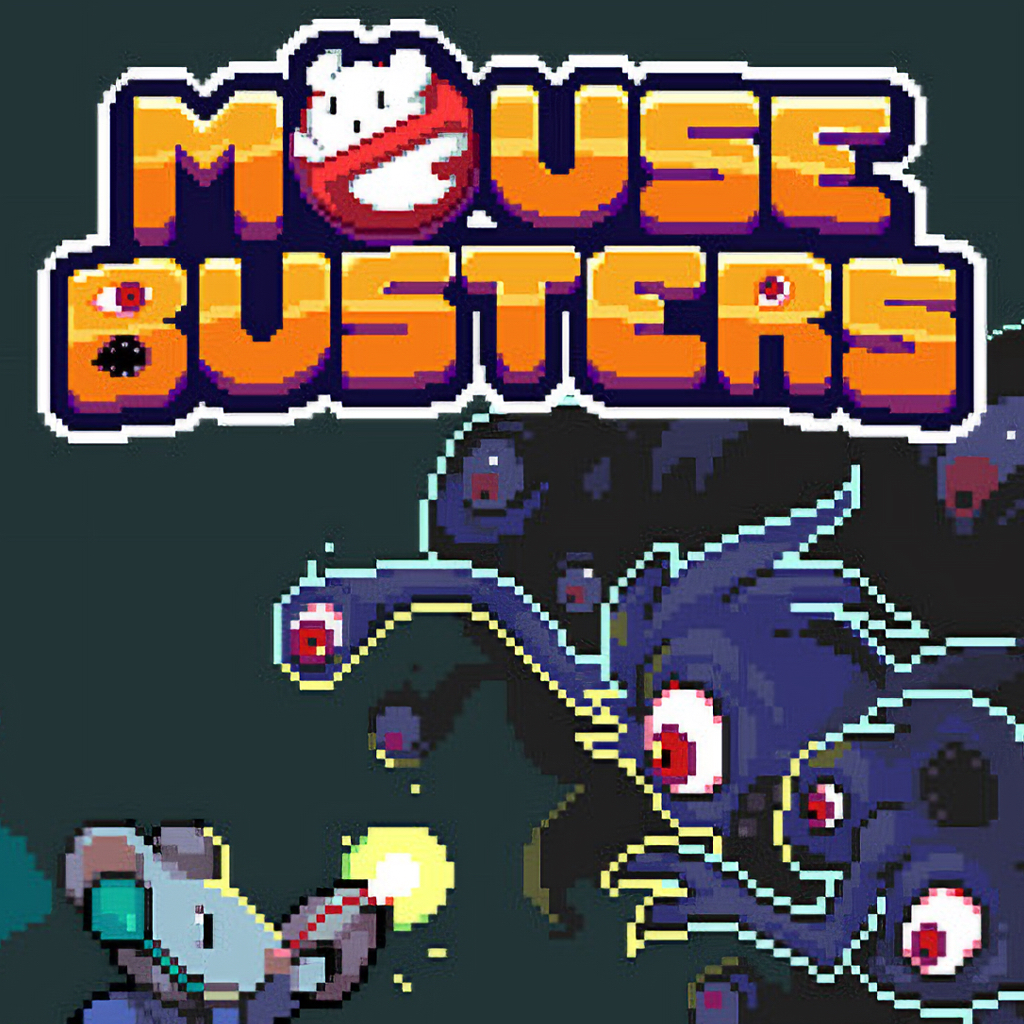
These encounters turn the experience into a colourful projectile-dodging minigame in which players use a ray gun to expose and cleanse spirits. They’re energetic, visually appealing, and offer a welcome change of pace from exploration.
The downside is that they rarely offer much challenge. Even on higher difficulty settings, most encounters can be completed without significant effort. While they serve their purpose as entertaining climaxes to each chapter, players looking for deep action mechanics may find them somewhat simplistic.
Pixel Art with an Enormous Heart
Odencat’s distinctive visual style remains one of the studio’s greatest strengths. Mousebusters embraces colourful pixel art that feels nostalgic yet modern.
Character animations are packed with personality. Tiny gestures, facial expressions, and subtle movement details convey emotion even in silent moments. Whether it’s a nervous resident avoiding eye contact or a ghost emerging from the shadows, every animation feels carefully crafted.
The contrast between cosy apartment interiors and supernatural encounters works particularly well. The building often feels warm and inviting, making the darker moments stand out more effectively when they arrive.
The soundtrack deserves equal praise. Relaxing melodies accompany exploration, creating a comforting atmosphere throughout much of the game. During ghost encounters, the music shifts to energetic electronic tracks that heighten tension without feeling overwhelming. It’s a versatile score that consistently supports the game’s emotional beats. Combined with excellent sound design and polished presentation, Mousebusters feels remarkably complete despite its relatively modest scope.
A Short Journey Worth Taking
One criticism some players may have concerns the game’s length. Mousebusters is not a lengthy adventure. Even with the expanded content in this remake, most players will likely reach the ending within a handful of hours.
Normally that might feel disappointing, but the game’s pacing benefits from its brevity. There is very little filler. Every chapter contributes meaningfully to either the central mystery or the emotional growth of the characters involved.
The bigger issue is that certain residents and their personal struggles could have benefited from further development. A few stories are so compelling that you wish you could spend more time with them before moving on to the next apartment.
Fortunately, the game’s post-credits content helps address this somewhat by expanding the narrative in meaningful ways. Players should absolutely stick around after the initial ending, as some of the strongest material arrives later.
Final Verdict
Mousebusters is not trying to reinvent the adventure genre, nor is it interested in delivering complex puzzles or demanding combat encounters. Instead, it focuses on telling a heartfelt story through charming characters, clever world-building, and an abundance of empathy.
The gameplay is intentionally accessible, the puzzles remain light throughout, and the action sequences never become particularly challenging. Yet none of those elements diminish the experience, as they all serve a larger purpose. Every design choice supports the narrative, and that narrative is genuinely worth experiencing.
Odencat once again demonstrates a rare talent for crafting stories that linger long after the credits roll. Mousebusters may feature tiny heroes armed with miniature ghost-busting gadgets, but its emotional impact is anything but small. Funny, heartfelt, and quietly moving, it stands as another excellent example of why narrative-focused indie games continue to thrive.