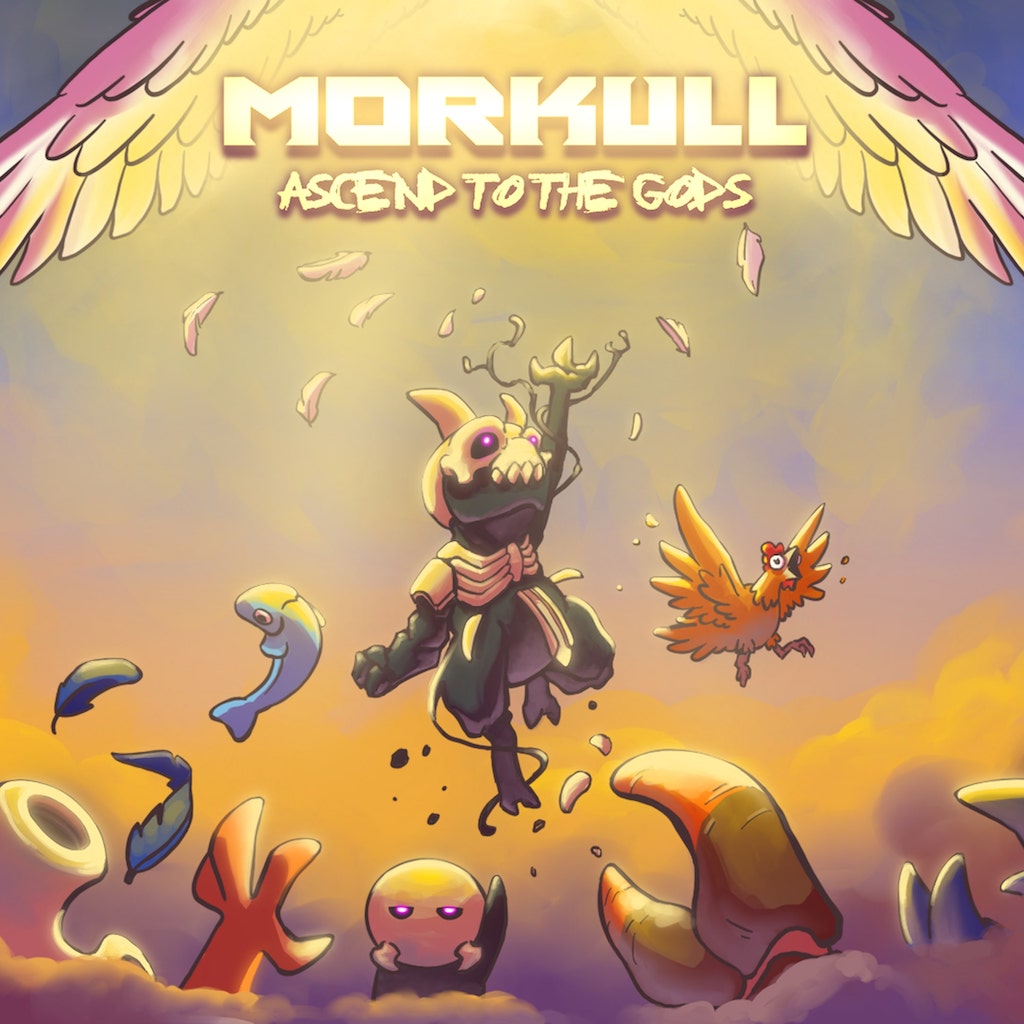
Developed by Disaster Games and published by Dojo System, Morkull: Ascend to the Gods arrives as a bold and confident sequel that doubles down on everything its predecessor introduced—particularly its most distinctive trait: its protagonist.
Morkull, the self-proclaimed God of Death and Darkness, is not just aware of his power—he’s aware of you. From the very first moments, the game sets its tone through constant fourth-wall breaks, with Morkull mocking mechanics, commenting on your failures, and even questioning design choices mid-battle.
It’s a risky narrative device. In lesser hands, it could quickly become grating. Here, it strikes a balance between genuinely funny and occasionally overindulgent—but it undeniably gives the game a personality few action titles can match.
Boss Rush by Design
At its core, Morkull: Ascend to the Gods is a boss-focused 2D action game.
Instead of sprawling levels filled with filler enemies, the experience is tightly focused around a series of intense encounters. Each battle challenges you against powerful foes—from elite henchmen to god-like beings—each with unique mechanics, phases, and attack patterns.
This design choice provides the game with a strong sense of purpose. There’s very little downtime. Every encounter matters, and every victory feels well earned.
Combat centres on precise controls, combo chains, dodging, and ability management. Morkull can be customised with a variety of unlockable skills and charms, allowing players to adjust their playstyle before each fight.
Want to concentrate on aggressive melee combos? You can. Prefer a more defensive, reactive approach? That’s also possible.
The flexibility is especially appreciated, considering the game’s challenging nature.
Difficulty: Brutal, But (Mostly) Fair
Let’s be clear: this is not a casual experience.
Morkull: Ascend to the Gods demands precision, patience, and a willingness to fail—repeatedly. Bosses hit hard, patterns are unforgiving, and mistakes are punished swiftly.
However, the game largely adheres to a fair design philosophy. Death rarely feels cheap; instead, it becomes part of the learning process.
Each attempt teaches you something new—timing, positioning, pattern recognition. Over time, what once seemed impossible becomes manageable, then conquerable.
That said, the difficulty curve can spike unpredictably. Some bosses feel significantly harder than others, occasionally disrupting the game’s pacing. For players less accustomed to high-challenge action games, this may prove frustrating.
Combat Feel and Responsiveness
Where Morkull truly excels is in its responsiveness.
Controls are precise and instant. Every jump, dodge, and attack feels purposeful, which is crucial for a game centred around high-stakes encounters.
The combo system is gratifying without being overly complicated. It balances accessibility with depth, allowing players to experiment without feeling overwhelmed.
Abilities and charms introduce an extra layer of strategy. Choosing the right loadout before a fight can make a big difference, encouraging players to adapt rather than simply brute-force their way through each challenge.
Hand-Drawn Style with Personality
Visually, Morkull: Ascend to the Gods is striking.
The game’s fully hand-drawn animation gives it a fluid, expressive quality that stands out immediately. Characters move with a natural, almost theatrical flair, and each boss is unique in both design and animation.
The world of Midaldus is brought to life through a vibrant colour palette and varied environments. Although the game’s structure centres on boss fights, the settings themselves feel diverse enough to sustain visual interest.
From shadowy, ominous arenas to more surreal, divine spaces, the game ensures that each encounter feels like part of a larger, coherent world.
Humour That Walks a Fine Line
The defining feature of Morkull—its humour—is also its most divisive.
Morkull is constantly talking. He jokes, complains, mocks, and references everything from game mechanics to pop culture. At its best, this creates genuinely funny moments that break tension and make repeated failures more bearable.
There’s a certain charm in having a protagonist who reacts to your mistakes in real time, almost like a sarcastic co-op partner.
However, the sheer volume of dialogue can become overwhelming. Not every joke lands, and the frequency of interruptions can occasionally disrupt the flow of gameplay—especially during more intense encounters.
Players who enjoy meta-humour will likely embrace it. Those who prefer a more immersive, uninterrupted experience may find it distracting.
Structure and Replayability
The game’s structure is quite simple: fight, die, learn, repeat.
Although this cycle is engaging, it does have its limits. Aside from boss battles and build customisation, there’s little exploration or side content.
Replay value mainly comes from mastering fights and trying out different builds. For some players, this will be more than enough. Others may find the lack of additional modes or content leaves them wanting more.
Audio and Presentation
Sound design complements the action effectively.
Combat effects are sharp and clear, allowing players to react correctly to attacks and cues. The soundtrack features high-energy compositions that match the intensity of boss fights, helping to keep up the momentum throughout the game.
Voice delivery for Morkull deserves special mention. His personality shines through his dialogue, and the performance captures his chaotic, self-aware nature well.
Pros & Cons
Pros
- Tight, responsive combat system
- Challenging and well-designed boss encounters
- Distinctive hand-drawn art style
- Strong sense of personality and humour
- Flexible build customisation
Cons
- Humour can feel excessive or intrusive
- Difficulty spikes may frustrate some players
- Limited content outside of boss battles
- Pacing occasionally disrupted by dialogue
Final Verdict
Morkull: Ascend to the Gods is a confident, character-driven action game that clearly knows its identity.
It doesn’t aim to provide a vast world or an in-depth story. Instead, it concentrates on delivering intense, memorable boss battles wrapped in chaotic, self-aware humour.
For players prepared to accept its difficulty and unique tone, it offers a fulfilling and distinctive experience. The blend of precise combat, striking visuals, and a relentlessly chatty protagonist ensures it stands out in a crowded genre.
However, its narrow focus and divisive humour mean it might not appeal to everyone. This is a game that thrives on its personality—and that personality can be both its greatest strength and its biggest hurdle.