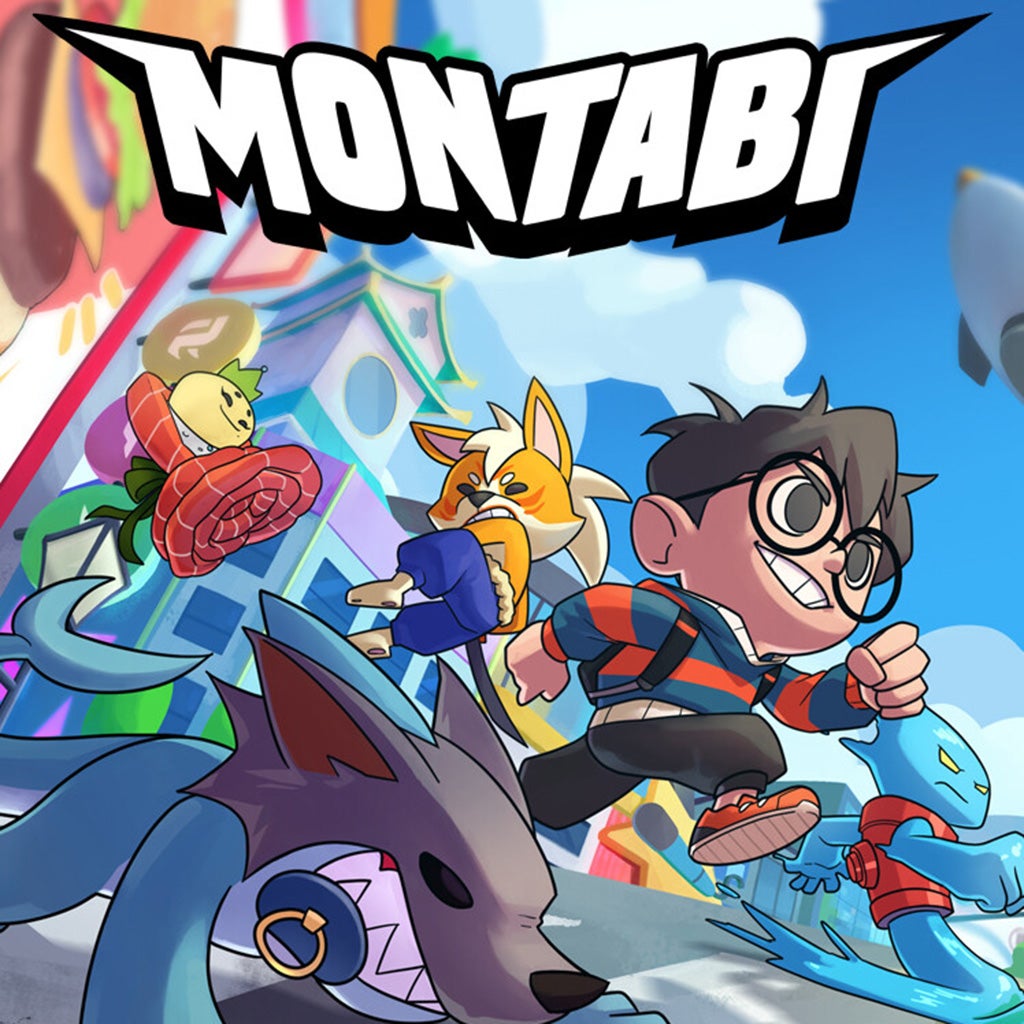
The roguelike deckbuilding genre has become one of gaming’s busiest playgrounds in recent years. Every few months, another title arrives promising clever card combinations, endless replayability and strategic depth. Likewise, creature collecting has evolved far beyond simply catching monsters and battling gym leaders. Montabi does something smart by refusing to choose between the two. Instead, it blends both ideas into a surprisingly cohesive adventure where building the perfect team is just as important as building the perfect deck.
Developed by Mankibo and published by Akupara Games, Montabi throws players into a city threatened by criminal forces, tasking them with assembling a team of powerful creatures while protecting the one person who matters most, your Trainer. It is an unusual twist that transforms every battle into something far more tactical than simply reducing an enemy’s health bar. Victory demands careful positioning, thoughtful planning and the ability to adapt when carefully laid strategies inevitably fall apart.
What could have become an overly complicated hybrid instead feels remarkably approachable. Beneath its colourful presentation lies a deeply satisfying strategy game that rewards experimentation without punishing curiosity. It may borrow ideas from several well-known genres, but the final result possesses an identity that feels entirely its own.
Gameplay
At its heart, Montabi is built around collecting an ever-growing roster of adorable yet formidable creatures, each bringing unique cards, abilities and tactical possibilities to your team. With more than sixty Montabi available to recruit and evolve, there is no shortage of combinations waiting to be discovered.
Unlike many deckbuilders, where success depends solely on drawing the right hand, Montabi introduces a compact three-by-three battlefield that changes the flow of every encounter. Position suddenly becomes just as important as card management. Moving a creature into the correct space can protect vulnerable allies, set up devastating attacks or prevent enemies from reaching your Trainer.
This additional tactical layer keeps battles engaging throughout the campaign. Rather than simply playing your strongest cards whenever possible, every turn becomes a small puzzle where movement, timing and positioning matter equally. It creates an enjoyable rhythm that feels somewhere between a traditional card game and a tactical role-playing game.
Protecting the Trainer proves to be one of the game’s smartest mechanics. While your Montabi can withstand heavy punishment, losing your Trainer immediately ends the run. This constantly forces players to think defensively instead of recklessly pursuing damage. It is a simple rule that raises the tension of every encounter without ever feeling unfair.
Runs also remain varied thanks to branching paths filled with equipment shops, random encounters, cafés and unexpected events. Choosing whether to recover health, upgrade equipment or pursue another powerful Montabi introduces meaningful decisions outside combat, making each expedition feel slightly different from the last.
Building the Perfect Team
Collecting creatures has always been satisfying, but Montabi elevates the formula with its evolution system. As your companions grow stronger, they unlock entirely new abilities and card options rather than simply receiving larger numbers. Each evolution feels meaningful because it directly changes how your deck functions.
Drafting new cards during evolution is particularly rewarding. Instead of following predetermined upgrade paths, players shape each Montabi to suit their preferred strategy. One creature might become an aggressive damage dealer, while another evolves into a protective support specialist, depending on the choices made throughout the run.
Equipment and charms further deepen customisation. Small statistical bonuses gradually become significant strategic advantages, encouraging experimentation with different combinations between runs. Finding a charm that perfectly complements an evolving creature often feels just as exciting as recruiting a brand-new teammate.
Trainer selection adds another welcome layer of variety. Whether choosing a more offensive approach, emphasising positioning, or supporting allies through restorative abilities, each Trainer encourages a noticeably different playstyle. Switching Trainers dramatically changes how familiar creatures perform, extending replayability well beyond the initial campaign.
Strategy That Rewards Creativity
One of Montabi’s greatest strengths is its willingness to reward unusual ideas. Powerful strategies rarely emerge from relying on a single overpowered creature. Instead, success usually comes from uncovering unexpected synergies among multiple Montabi working together.
Some creatures excel at repositioning allies, enabling stronger attackers to strike from ideal positions. Others focus on applying status effects so teammates can exploit weakened enemies for devastating combinations. The best moments often come when carefully assembled plans unfold exactly as intended, clearing an entire battlefield through smart preparation rather than overwhelming force.
The roguelike structure ensures that flexibility remains essential. Random events, unpredictable rewards and evolving circumstances prevent players from pursuing identical strategies every run. Learning to adapt becomes just as valuable as learning individual mechanics.
The difficulty also strikes an admirable balance. Early encounters provide enough breathing room to understand new systems, while later battles demand careful planning without becoming overwhelmingly punishing. Defeats generally feel like lessons rather than frustrations, encouraging another attempt rather than inviting resignation.
Presentation
Visually, Montabi embraces bright colours and expressive creature designs that immediately establish its welcoming personality. Every Montabi has enough individuality to be memorable, whether through charming animations, distinctive silhouettes or imaginative evolutions.
The city itself serves as an effective backdrop without overshadowing the creatures, who remain the true stars of the adventure. Menus are clean, information is presented clearly, and navigating between battles feels effortless. Given the complexity beneath the surface, the interface deserves considerable praise for remaining consistently intuitive.
Combat animation brings every encounter to life. Attacks have satisfying impact while remaining quick enough to keep battles flowing smoothly. Position changes across the tactical grid are easy to follow, ensuring players always understand why particular strategies succeed or fail.
The soundtrack complements the game’s upbeat tone beautifully. Energetic battle themes maintain momentum during combat, while calmer exploration tracks provide welcome moments to plan future decisions. It may not become one of the year’s most memorable soundtracks, but it consistently supports the atmosphere without becoming repetitive.
Story
Narratively, Montabi keeps its ambitions relatively grounded. The central conflict, with criminal gangs threatening the city, provides enough motivation to drive the adventure without drowning players in excessive exposition. Instead, the story primarily serves as a framework for the strategic gameplay.
That simplicity works surprisingly well. Rather than interrupting the pacing with lengthy dialogue sequences, the narrative remains focused on the growing partnership between Trainers and their Montabi companions. The creatures themselves display enough personality through their animation and abilities that players naturally become attached over repeated runs.
The writing also embraces a cheerful optimism that suits the colourful presentation. While the stakes are certainly present, the overall tone remains encouraging and accessible without becoming overly childish.
Where It Falls Short
Despite its many strengths, Montabi occasionally struggles with pacing during longer runs. Some encounters can feel slightly repetitive once players become familiar with common enemy formations. Greater environmental variety or additional encounter objectives could have helped sustain momentum even further.
The story, while charming, leaves some of its world-building underdeveloped. The city feels intriguing enough to warrant deeper exploration, yet much of its lore remains lightly sketched. Players invested in the setting may finish the adventure wanting a little more context.
Some advanced mechanics also take time to appreciate fully. Although the early tutorials explain the basics well, the deeper strategic possibilities often emerge only after several failed runs. Fortunately, the learning curve rewards persistence rather than punishing experimentation.
Final Verdict
Montabi succeeds because it never treats its hybrid identity as a gimmick. Every creature collected, every card drafted and every move across the tactical grid contribute to a cohesive strategic experience that feels both fresh and deeply satisfying. The combination of creature evolution, deckbuilding and positional combat creates a loop that consistently rewards experimentation while remaining accessible to newcomers.
Its colourful presentation and optimistic charm make it immediately inviting, but beneath that cheerful exterior lies a remarkably thoughtful strategy game with impressive replay value. Whether you arrive for the creature collecting, the deckbuilding or the tactical battles, you will likely stay because those systems complement one another so naturally.