There’s something timeless about model trains. Whether it’s the careful placement of tracks, the quiet satisfaction of watching a locomotive glide through a perfectly constructed route, or the gentle click of wheels on rails, it’s a hobby rooted in patience and creativity. Mini Trains, originally a VR title before making its way to consoles, attempts to capture that magic in digital form—and for the most part, it succeeds.
Released on 2 April 2026 (Xbox) and 3 April 2026 (PlayStation), this latest version of Mini Trains by QubicGames S.A. reintroduces the cosy, toy-box railway experience to modern hardware. Stripped of its VR origins but retaining its tactile charm, the game presents itself as a “digital tabletop” puzzler—one where logic, planning, and a touch of imagination are your most important tools.
The result is a quietly compelling experience that doesn’t shout for your attention, but steadily earns it.
A Toybox Full of Possibilities
From the moment you start Mini Trains, its identity is clear. This isn’t a complex railway management game or a high-stakes simulation. Instead, it fully embraces its toy-like aesthetic.
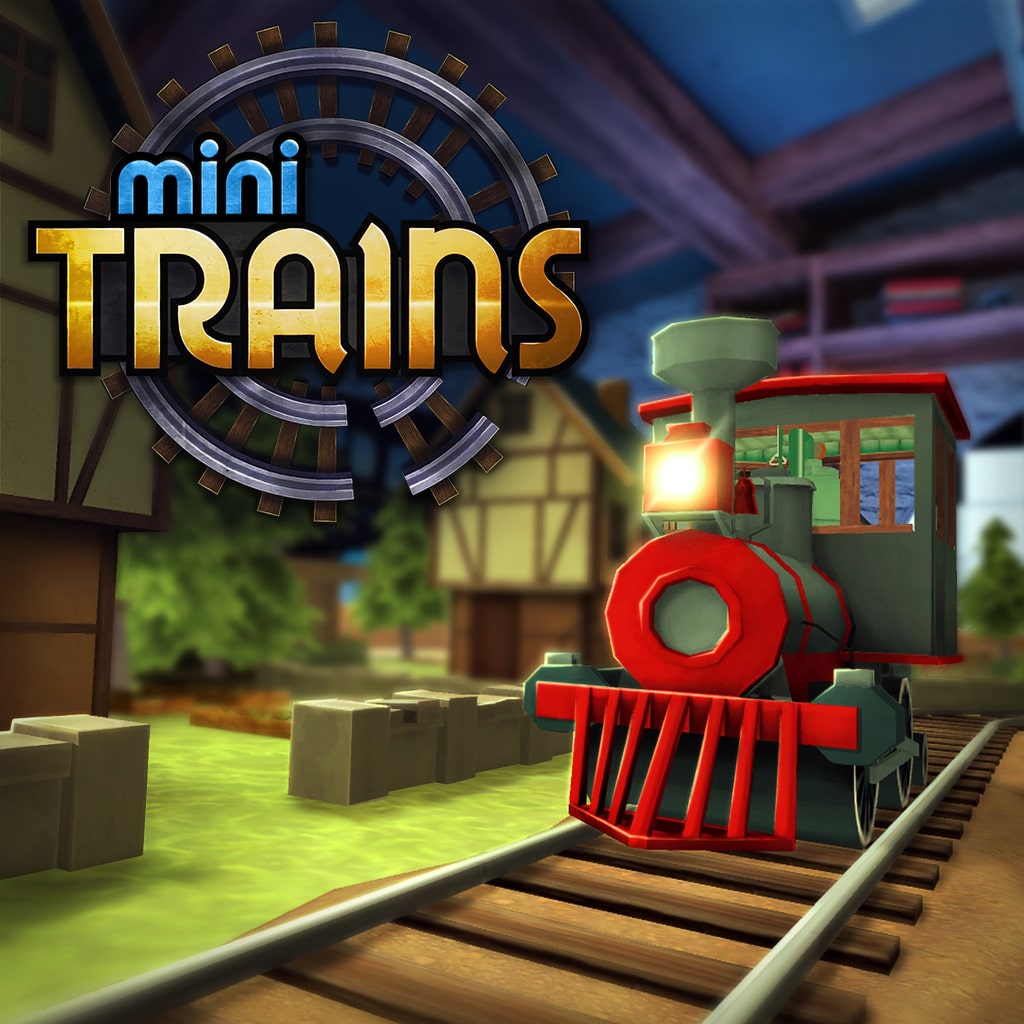
Each level is presented as a miniature diorama—small countryside scenes dotted with rolling hills, charming houses, grazing animals, and, of course, your railway lines waiting to be constructed. There’s a tactile quality to the visuals that evokes the sensation of leaning over a real train set, carefully placing pieces into position.
It’s immediately welcoming and, importantly, non-intimidating. Even players with no interest in trains or engineering will find themselves drawn in by the straightforward concept: build tracks, guide trains, and reach the destination.
However, beneath that simplicity lies a surprisingly engaging puzzle structure.
Tracks, Logic, and Trial-and-Error
At its core, Mini Trains is a puzzle game—and a well-designed one at that.
Across 40 levels, including 12 more complex “special” stages, players are challenged to construct railway routes that safely guide trains to their destinations. Each puzzle introduces new constraints, requiring careful consideration of track placement, timing, and route efficiency.
Early levels are simple, gradually introducing you to the mechanics. You’ll place basic track pieces, connect stations, and watch as your train trots happily along its route. It’s calming, almost meditative.
As the game advances, complexity increases.
New mechanics—such as switches, tunnels, and turntables—are introduced gradually, adding extra considerations to each puzzle. Suddenly, it’s not just about connecting point A to point B; it’s about managing multiple trains, avoiding collisions, and ensuring everything runs smoothly within limited space.
The beauty of Mini Trains lies in its flexibility. Many puzzles have multiple solutions, allowing for experimentation and creative problem-solving. You’re not limited to a single “correct” answer, which makes the process feel more natural and less restrictive.
However, trial-and-error still plays a significant role. Some later puzzles can seem somewhat opaque, requiring repeated attempts to fully grasp the intended solution. While this isn’t unusual in puzzle games, it can occasionally break the otherwise relaxed flow.
A Relaxing Pace—Mostly
One of Mini Trains’ greatest strengths is its pacing.
This isn’t a game that rushes you. There are no timers forcing quick decisions, no high-pressure situations demanding perfection. Instead, it encourages you to take your time, explore, and enjoy the process.
For players looking for a calming, low-stress experience, this is ideal. It’s the kind of game you can dip into after a long day, solving a puzzle or two while relaxing.
However, this laid-back approach isn’t entirely consistent.
The inclusion of a scoring system—based on efficiency and performance—introduces a quiet tension. While it’s optional, players aiming for high scores might find themselves replaying levels multiple times to perfect their solutions. This can shift the tone from “cosy puzzler” to something more precise.
It’s not a flaw, but it does create a slight clash between relaxation and optimisation.
From VR to Console: A Smooth Transition
Originally created as a VR experience, Mini Trains has effectively transitioned to traditional consoles.
The good news is that it generally functions well.
Controls are straightforward, allowing you to easily place and adjust track pieces. Moving through the diorama-like environments feels natural, even without the immersive experience of VR. There is a slight loss of that “hands-on” sensation, but the core gameplay remains engaging.
In fact, moving away from VR arguably makes the game more accessible. Without requiring specialised hardware, Mini Trains appeals to a wider audience—those who might enjoy its relaxed design even more.
Performance across PlayStation and Xbox is consistent, with smooth frame rates and quick loading times. Considering the game’s modest scope, this is expected but still welcome.
Visual Charm and Audio Comfort
Visually, Mini Trains strongly embraces its cosy aesthetic—and it successfully does so.
The miniature settings are charming, with soft colours, gentle animations, and small details that bring each level to life. Watching a train wind through a carefully crafted track, passing by tiny houses and fields, is strangely satisfying.
There’s a warmth to the presentation that complements the gameplay perfectly. It never tries to be flashy or overly intricate—instead, it focuses on creating a welcoming, relaxing atmosphere.
The audio design complements this approach.
Soft background music offers a calming backdrop, while the iconic whistle of the steam trains adds a nostalgic touch. Sound effects are subtle but effective, emphasising the tactile feel of the experience.
It’s all very understated—but that’s exactly the point.
Where It Falls Short
Despite its charm, Mini Trains has its limitations.
The main issue is its longevity. Although 40 levels offer reasonable content, the experience doesn’t change significantly over time. Once you’ve mastered the fundamental mechanics, there’s little innovation to keep things engaging.
Replayability exists—especially for those aiming for high scores—but it may not appeal to everyone.
Furthermore, while the game introduces new mechanics gradually, it never fully explores their potential. Some systems feel underused, leaving the impression that the game could have pushed further in its puzzle design.
Final Thoughts
Mini Trains is a quietly charming puzzle game that values simplicity, charm, and careful design.
It doesn’t aim to be revolutionary, nor does it need to be. Instead, it offers a cosy, approachable experience that rewards patience and imagination. Its best moments come from the pure joy of solving a puzzle and watching your miniature railway come alive.
Although it lacks long-term depth and sometimes relies too much on repetition, its main appeal remains strong. This is a game that clearly knows what it wants to be—and delivers it confidently.
For those seeking a relaxing, low-pressure puzzle experience, Mini Trains is definitely worth a ticket.