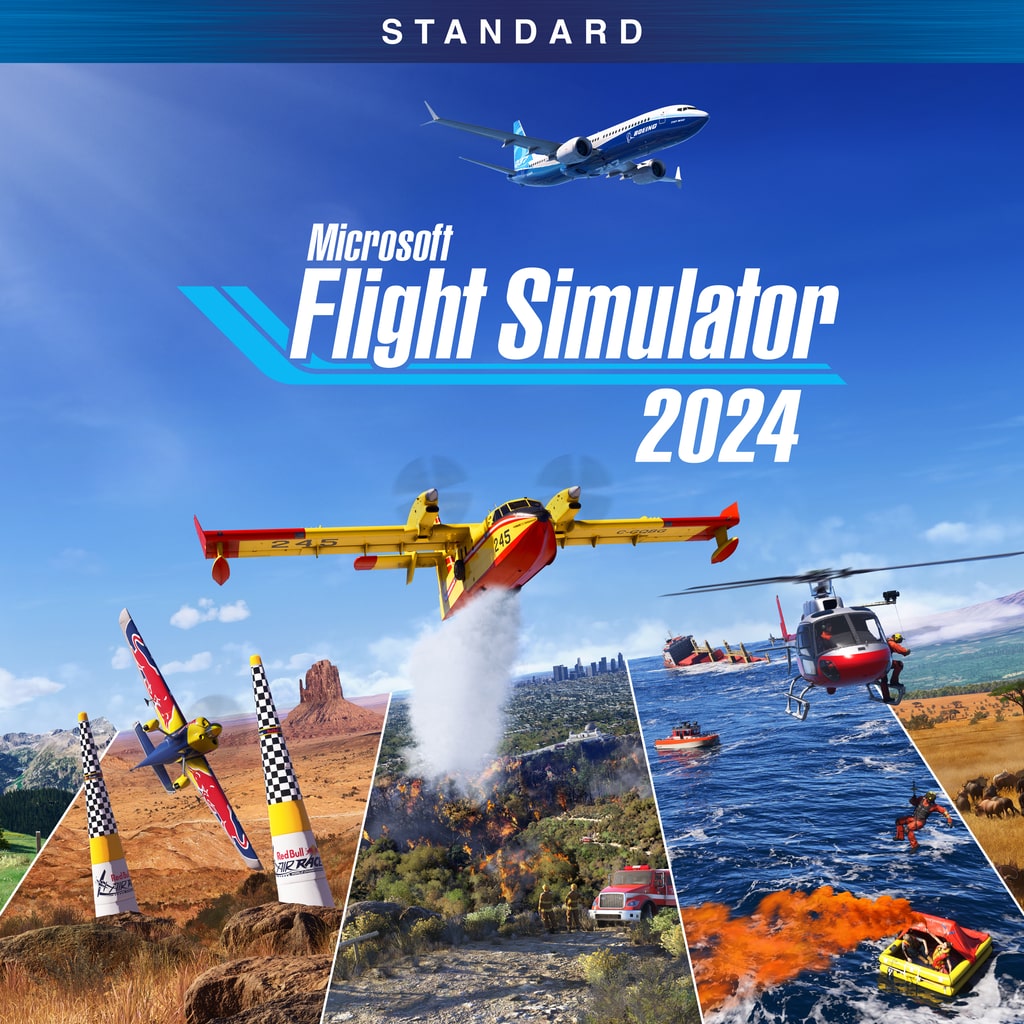
Immersive, ambitious, and finally built to be more than a sky-gazing tech showcase
Microsoft Flight Simulator 2024 arrives with the weight of a legacy behind it. For decades, the franchise has balanced realism with accessibility, attempting to be both a training tool for aviation enthusiasts and an awe-inducing world simulator for everyone else. The 2020 reboot dazzled with its satellite-mapped world and cutting-edge atmospheric modelling, but it was sometimes criticised for feeling like a breathtaking sandbox rather than a purpose-driven game. With the 2024 instalment, Asobo and Microsoft set out to change that. They haven’t just expanded the globe—they’ve expanded the reasons to fly.
What emerges is arguably the most complete flight simulation package available today, one that blends unparalleled environmental realism with a new focus on structure, progression, and purpose. For the first time in years, Microsoft Flight Simulator isn’t just something you load up to admire; it’s something you play, with clear motivations that extend far beyond touchdown.
A World More Alive Than Ever
The first thing returning players will notice is how much more convincingly alive the planet feels. Weather simulation—already a highlight in the 2020 version—has been dramatically expanded. Storm systems build dynamically, temperature shifts impact aircraft handling in noticeable ways, and visibility layers such as fog, haze, and dust storms show remarkable fidelity. Flying into turbulent cumulonimbus clouds feels dangerous again, not just visually impressive.
But the real breakthrough lies on the ground. Cities aren’t just static clusters of photogrammetry anymore: traffic systems, wildlife populations, industry zones, and even major events can influence your flight. High winds over an active wildfire change your approach if you’re participating in aerial firefighting missions. Dense crowds and emergency vehicles affect landing site availability during rescue operations. It creates a sense of a world reacting to your presence, not merely decorating it.
Performance has also improved thanks to the new engine enhancements and clever background streaming tech. Even on mid-range hardware, the simulator runs smoother and loads faster, reducing the friction that once held back spontaneous flying sessions. For PC players with higher-end rigs and Xbox Series X owners, this is as close as home aviation comes to being is indistinguishable from reality.
Purposeful Flying: Careers That Give the Skies Meaning
The biggest structural change, and the one that pushes Microsoft Flight Simulator 2024 into a new era, is its career-driven progression system. Instead of relying on self-assigned goals or community challenges, the game introduces a rich selection of aviation careers, each with bespoke mission types, progression trees, and equipment.
You can choose to specialise, or dabble in several paths at once:
- Aerial firefighting, requiring precision drops, hazard avoidance, and teamwork with AI units.
- Search and rescue, where weather, visibility, and terrain push your piloting skills to the limit.
- Cargo hauling and logistics, rewarding efficiency, route planning, and reliable flying under pressure.
- Agricultural aviation, including crop dusting and surveying flights that test low-altitude control.
- Executive transport and air taxi work, favouring smooth handling and punctuality.
- Heavy aviation for those who prefer jumbo jets and complex systems management.
- Construction and utility aviation, introducing sling loads, crane-style manoeuvres, and true mechanical risk.
Each career feels thoughtfully constructed, not like a shallow add-on. The missions organically integrate the world’s new systems—weather, AI behaviour, and geography—to offer challenges that feel logical rather than scripted. Completing assignments earns experience, upgrades, and new contract opportunities. It’s a subtle gamification layer that still respects the simulation purists but offers enough structure that casual players won’t feel lost.
This focus on professions also ties beautifully into the new aircraft maintenance and wear systems, which simulate how equipment deteriorates over time. Pilots need to treat their craft with respect: push too hard during repeated emergency landings or overstress the airframe during turbulence and you’ll see measurable consequences. It adds a welcome sense of ownership without becoming intrusive.
Aircraft Variety and Handling: Masterful Across the Board
Microsoft Flight Simulator 2024 comes with an enormous range of aircraft out of the box—from light trainers and bush planes to jets, helicopters, gliders, and specialty aviation vehicles. Every cockpit is recreated with meticulous detail, and flight modelling maintains the high bar established previously while introducing new nuance.
Helicopters in particular benefit from improved rotor aerodynamics. Hovering, autorotation, and load-bearing missions feel more realistic and less forgiving, which significantly enriches the search-and-rescue and construction career paths. Gliders see upgrades too, with thermal currents and ridge lift now behaving more believably.
The sense of weight, power, and inertia has never been better communicated in a consumer flight sim. You feel the strain on the controls as you lift a heavy water tank beneath a firefighting helicopter. You compensate for crosswinds in small props with more noticeable sensitivity. Jets respond smoothly but demand foresight; the game expects you to plan ahead, just like a real pilot.
For aviation enthusiasts, the fidelity alone is worth the price of admission. For newcomers, the adjustable assists make the experience accessible without compromising the thrill of actual flight.
Accessibility, Tutorials, and Quality-of-Life Improvements
A major criticism of the 2020 release was its steep learning curve. Microsoft Flight Simulator 2024 addresses that with a dramatically expanded tutorial library, covering both basic flight theory and aircraft-specific training. Career missions double as natural learning tools, offering context that pure training flights lacked.
New pilots will appreciate simplified control schemes, visual approach aids, and an improved UI that surfaces essential information without clutter. Meanwhile, veteran simmers can deactivate all assists to experience the full depth of the systems.
The result is a simulator that finally feels friendly without compromising its authenticity.
Verdict: The Definitive Modern Flight Simulator
Microsoft Flight Simulator 2024 isn’t just an upgrade—it’s a redefinition of what a consumer flight simulator can be. By grounding its world in purpose and giving players meaningful tasks that leverage the stunning global environment, the developers have transformed the experience from a beautiful tech demo into a compelling, rewarding journey through the world of aviation.
The series’ trademark visual splendour remains unmatched, but now it’s paired with a robust progression layer, deeper systems, and an immersive sense of connection to the simulated world. Whether you’re dropping water on a forest fire or navigating a passenger jet through an incoming storm, every flight feels like a story worth telling.
A soaring triumph that finally gives players a reason to keep coming back to the cockpit.