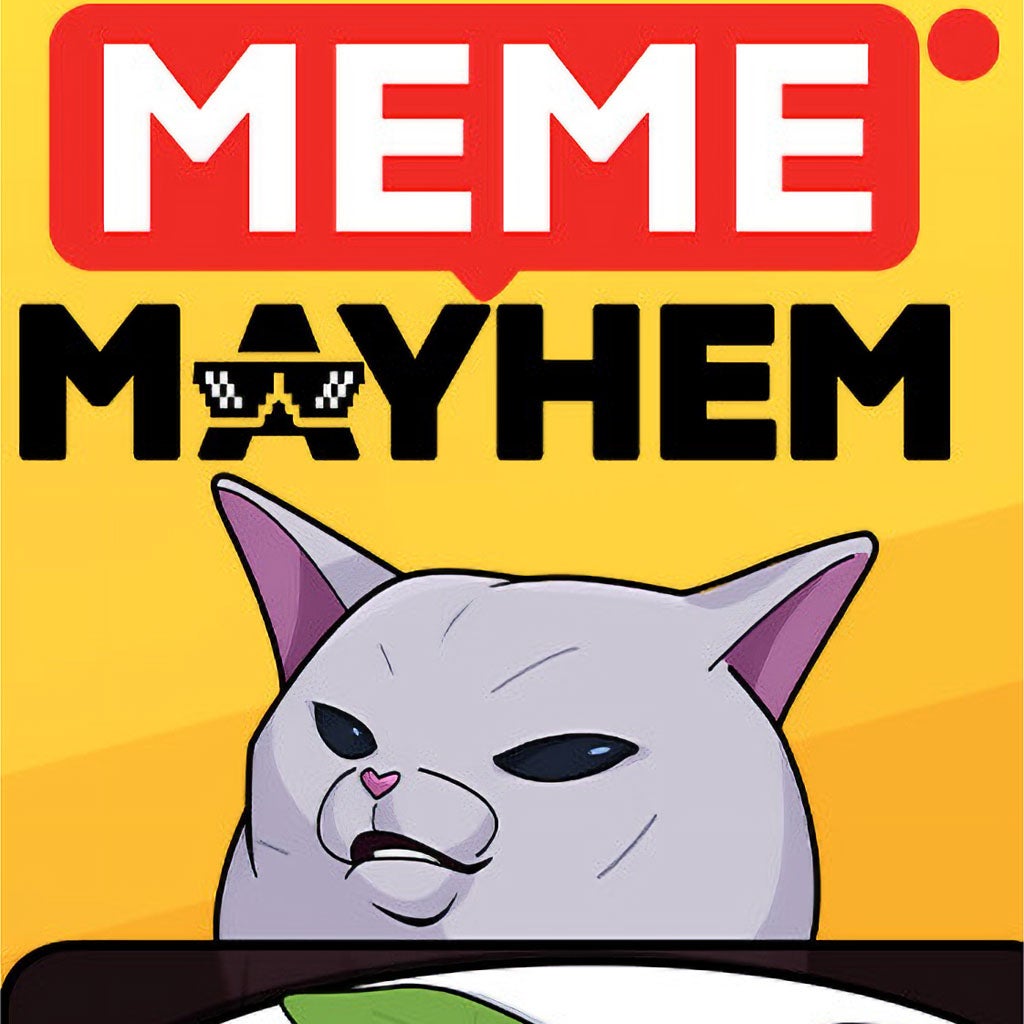
There are games that chase trends, and then there are games that try to set them. Meme Mayhem lands somewhere awkward—and fascinating—in between. On the surface, it appears as a chaotic parody of internet culture, filled with references, emojis, and absurdist humour. Beneath that, however, lies a surprisingly competent mix of roguelite strategy and idle RPG systems that occasionally surpass its own gimmick.
Developed and published by Cr3 Studio, Meme Mayhem quietly arrived on Steam in 2024 and has since cultivated a modest following as a cult curiosity. Its premise is immediate and absurd: you are a “social media hero” climbing the internet ranks by battling trolls, influencers, and digital personalities using emoji-based combat. It sounds like a joke—and often plays like one—but it is also more mechanically solid than you might expect.
Scrolling Into Chaos
The game’s structure revolves around a simulated social media feed. Between battles, you scroll through posts, react to content, engage in DMs, and activate events that influence your run. It’s a clever framing device, providing context to the chaos while functioning as a progression system.
This is where Meme Mayhem first sets itself apart. The feed isn’t just superficial — it’s interactive and impactful. Choosing which posts to engage with can yield rewards, stat boosts, or unexpected events. It effectively captures the addictive cycle of real-world social media, translating it into gameplay that feels both satirical and practical.
There’s also a sharp edge to the humour. The writing embraces sarcasm, absurdity, and occasional cruelty, echoing the tone of online discourse. Not every joke lands, but when it does, it hits with an unsettling accuracy.
Emoji Combat: Simple, Then Not
Combat in Meme Mayhem truly defines the game’s identity. Battles are practically “idle” since they run automatically once started—yet the prep work is anything but passive.
You assemble a deck of emoji-based abilities, each serving a different purpose. Some inflict direct damage (like the blunt-force “Rock”), others apply status effects (such as “Oil” for fire-based combos), and some offer sustenance (like “Vampire” for health-stealing). The essence is synergy—discovering combinations that boost each other and scale effectively over time.
Initially, the system feels almost overly simple. You select a few abilities, initiate a fight, and watch numbers fly across the screen. But as you advance, the complexity becomes clearer. Timing your Ultimate abilities, managing cooldowns, and stacking effects in the right sequence can mean the difference between a smooth victory and a sudden defeat.
It’s a fine balance between control and chaos. You’re not directly executing actions in real time, but your prior decisions—and occasionally your choices during pivotal moments—carry considerable weight. This hybrid style gives the game a distinctive rhythm, one that falls somewhere between strategy and spectacle.
Roguelite Depth and Build Variety
Where Meme Mayhem truly excels is in its roguelite systems. With over 200 perks and relics to discover, each run presents a different array of possibilities. You might adopt aggressive, high-damage builds one run, then switch to defensive or status-based strategies the next.
Relics, in particular, introduce a layer of unpredictability. Some provide straightforward bonuses, while others bring quirks or trade-offs that prompt you to reconsider your approach. The ability to combine relics into new forms—like the bizarrely named “Walking Octopus” or “Broccoli Devil”—adds an extra dimension of experimentation.
This is where the game’s design feels most confident. It recognises the appeal of roguelites: the constant push-and-pull between risk and reward, the satisfaction of discovering a potent combination, the temptation to attempt “just one more run.”
However, the balance isn’t always perfect. Certain builds can seem disproportionately powerful, while others struggle to remain viable in later stages. It doesn’t entirely undermine the experience, but it does create moments where success feels more reliant on luck than skill.
A Satire That Sometimes Overreaches
The game’s narrative and thematic aims are… messy, but intentionally so. Meme Mayhem clearly aims to satirise internet culture, influencer dynamics, and the often toxic nature of online spaces. You rise from a humble troll to a prominent online figure, battling increasingly significant personalities along the way.
At its best, this satire is sharp and self-aware. It mocks performative outrage, viral trends, and the absurdity of online fame. At its worst, it relies too much on randomness and shock value, sacrificing coherence to be “edgy.”
The key events—ranging from philosophical dilemmas to outright nonsense—highlight this duality. Some present genuinely interesting choices with meaningful consequences, while others seem like throwaway jokes, amusing at the time but ultimately insignificant.
Style Overload
Visually, Meme Mayhem is exactly what you’d expect: loud, chaotic, and unapologetically cluttered. The UI mimics social media platforms, complete with notifications, pop-ups, and a constant stream of information.
This aesthetic is both a strength and a weakness. It reinforces the game’s theme and creates a distinct identity, but it can also be overwhelming. Important information can get lost in the noise, especially during more intense battles.
The audio design follows a similar pattern. Sound effects are punchy and exaggerated, while the music leans into high-energy tracks that match the game’s pace. It all fits, but it rarely leaves a lasting impression beyond the immediate moment.
The Idle Paradox
One of the more intriguing aspects of Meme Mayhem is how it manages its “idle” label. While battles unfold automatically, the game requires a surprising level of involvement. You are constantly making decisions—selecting perks, overseeing resources, responding to events.
This creates a kind of paradox. It’s a game you can technically play passively, but you will get far more from it if you stay actively engaged. For some players, this hybrid approach will be appealing. For others, it may feel as if the game cannot quite decide what it wants to be.
Final Verdict
Meme Mayhem is a peculiar, chaotic, and occasionally brilliant experiment. It takes an idea that could have easily been a shallow joke and creates a surprisingly deep system around it. The roguelite mechanics are genuinely engaging, the variety of builds is impressive, and the social media framing adds a distinctive twist to the formula.
At the same time, it struggles with consistency. The humour is hit-or-miss, the balance can be uneven, and the overall presentation sometimes prioritises chaos over clarity. It’s a game that feels as volatile as the culture it’s parodying—sometimes sharp and insightful, other times loud and unfocused.
But perhaps that’s the point. Meme Mayhem doesn’t just depict internet culture—it embodies it, for better and worse.