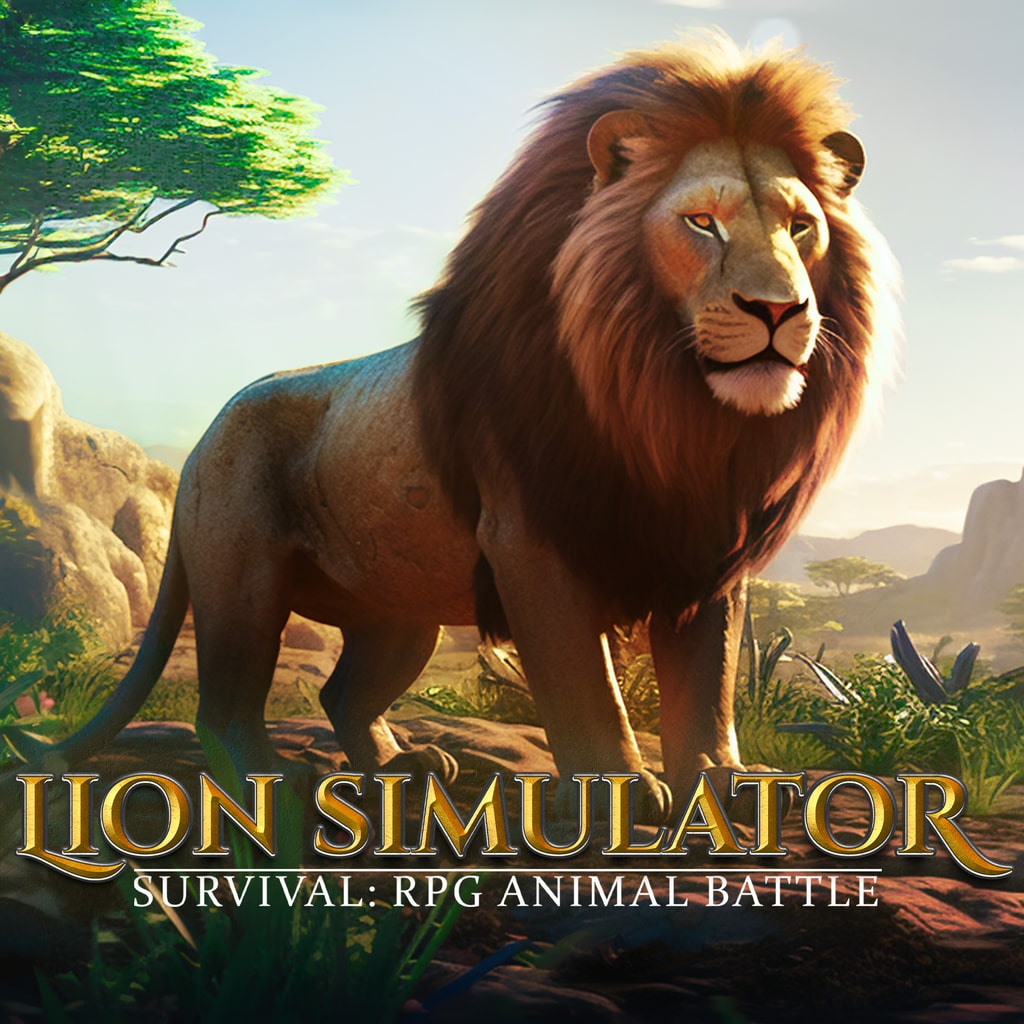
Released on 12 March 2026 for PlayStation 4, Lion Simulator RPG: Animal Battle Survival immerses players in the life of one of nature’s most iconic predators. Developed by Dezvolt Games and published by Christopher Ikeda, the game aims to combine animal simulation with light RPG mechanics, giving players the chance to explore the savannah, hunt prey, build a pride and ultimately rise to become the dominant alpha lion.
Animal simulators have quietly carved out their own niche within the gaming landscape over the past decade. Titles in this genre typically focus on survival, exploration, and ecosystem interactions rather than traditional narrative-driven gameplay. Lion Simulator RPG: Animal Battle Survival adheres closely to that formula, offering players an open environment where the main goal is simple: survive, grow stronger, and establish dominance in the wild.
Although the premise is straightforward, the game seeks to add depth through survival systems, pride management, and territorial battles.
Life in the Savannah
From the moment players start their journey, Lion Simulator RPG: Animal Battle Survival focuses on the core fantasy of living as a powerful apex predator. The game places players in a vast savannah environment where roaming freely is encouraged.
Exploration plays a vital role in the experience. The landscape includes open grasslands, wooded areas, and scattered watering holes, each inhabited by various animals that can serve as prey or threats.
Players must constantly balance survival requirements while exploring these environments. Hunger, stamina, and health are all tracked through the game’s survival system. Successfully hunting replenishes hunger, while resting and careful movement help manage stamina.
This blend of exploration and survival creates a consistent gameplay loop: scout the environment, locate prey, hunt effectively, and preserve your strength before facing larger threats.
Hunting and Combat
Hunting is the main activity in Lion Simulator RPG: Animal Battle Survival. Players stalk various animals across the savannah, using stealth and timing to make successful kills.
Approaching prey carefully is often more effective than charging straight into combat. Some animals can escape quickly, while others will fight back if threatened. Timing your attack and selecting the right target is crucial for survival.
Combat itself is relatively simple but effective. Attacks are based on basic strike mechanics, allowing the lion to bite, swipe, and overpower opponents. Larger prey can lead to longer battles, especially when facing aggressive animals.
Occasionally, players will meet rival predators or competing lions, leading to moments of territorial conflict. These encounters add tension to the otherwise exploratory gameplay.
Although combat lacks the complexity of traditional action RPGs, it suits the tone of the simulation quite well.
Building and Leading a Pride
One of the game’s more intriguing features is its pride-building system. Instead of wandering alone indefinitely, players can recruit lionesses and form a pride.
Protecting and supporting these pride members becomes part of the long-term progression. As the pride expands, the player receives help during hunts and territorial battles.
This mechanic introduces a sense of leadership and progression to the game. Rather than merely surviving as a lone predator, players gradually develop a small ecosystem around themselves.
However, the pride system remains relatively simple. While it enhances flavour and immersion, the management mechanics are fairly limited. Players do not have extensive control over pride behaviour or strategies.
Nonetheless, the presence of pride members during hunts and encounters helps reinforce the feeling of commanding a group within the ecosystem.
A Dynamic Environment
To improve immersion, Lion Simulator RPG: Animal Battle Survival features dynamic weather systems and a day-night cycle. These elements affect the feel of the environment and sometimes influence gameplay.
Nighttime can make navigation harder but also provides chances for stealthier hunts. Weather conditions like rain can change the atmosphere of the savannah, adding visual variety to the environment.
These systems help build a more believable ecosystem, even if their gameplay influence remains fairly limited.
Exploration becomes more engaging thanks to these features. Watching the sun rise over the plains or observing a storm crossing the landscape adds to the overall atmosphere of the game.
Visuals and Presentation
Visually, Lion Simulator RPG: Animal Battle Survival offers a functional yet somewhat modest depiction of the African savannah.
The environments capture the broad idea of open plains and natural landscapes, although the visual detail remains fairly simple. Terrain textures and vegetation can appear repetitive at times, especially during lengthy exploration sessions.
Character models for animals are functional but lack significant detail. Animations effectively portray basic movement and combat actions, though they may sometimes feel stiff.
Despite these limitations, the game successfully generates a sense of scale. Large open areas allow players to explore freely, enhancing the feeling of being part of a wild and unpredictable environment.
The sound design enhances the atmosphere positively. Ambient wildlife sounds, wind across the plains, and distant animal calls help to bring the environment to life.
A Relaxed Simulation Experience
Unlike many action-packed survival games, Lion Simulator RPG: Animal Battle Survival often feels more leisurely in its pacing.
Players are seldom forced into constant combat or high-pressure situations. Instead, the game promotes exploration and gradual development.
This slower tempo might appeal to players who enjoy sandbox-style experiences where objectives are self-directed rather than strictly scripted.
However, it also means that the gameplay can become repetitive over time. The core cycle of hunting, exploring, and defending territory remains mostly unchanged throughout.
For players seeking deeper RPG mechanics or narrative progression, the game might seem somewhat limited.
Pros & Cons
Pros
- Unique perspective as a playable lion
- Large environments encourage exploration
- Pride-building system adds progression
- Atmospheric day-night cycle and weather effects
- Relaxed survival gameplay loop
Cons
- Basic combat mechanics
- Limited depth in pride management systems
- Repetitive gameplay over longer sessions
- Visual presentation feels dated in places
Final Verdict
Lion Simulator RPG: Animal Battle Survival provides a niche yet interesting experience focusing on a rarely explored fantasy in gaming: living as a wild animal within its natural ecosystem.
The idea works best when players embrace the slower pace of exploration and survival. Roaming the savannah, stalking prey, and gradually building a pride can be surprisingly immersive, especially when the dynamic environment makes the world feel alive.
However, the game’s ambitions are occasionally limited by its simple mechanics and modest presentation. Combat and pride management systems are quite basic, and the overall gameplay loop does not change much over time.
Despite these flaws, the core concept remains attractive. Players interested in animal simulators or sandbox survival might enjoy the freedom the game offers.
Although it may not reach the depth or polish of bigger simulation titles, Lion Simulator RPG: Animal Battle Survival still manages to offer a functional and sometimes engaging wildlife adventure.
For those curious about stepping into a dominant predator’s role and ruling the savannah, this simulation offers a glimpse into that world — even if it sometimes feels rough around the edges.