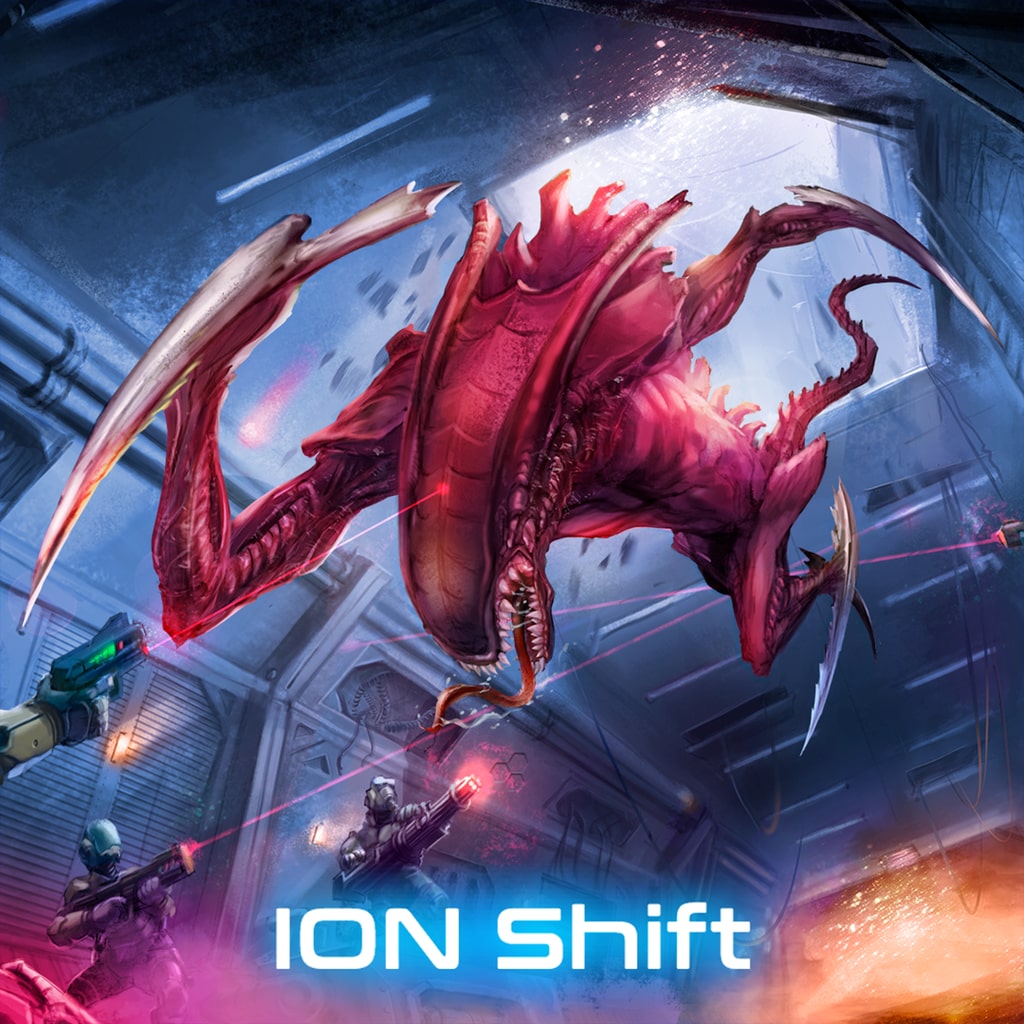
ION Shift is a bold entry into the first-person shooter space, blending high-speed traversal with kinetic combat set against a backdrop of sci-fi futurism. On paper, the game’s identity is clear: an adrenaline-fuelled ride where gravity feels optional, combat is fluid, and every engagement rewards spatial awareness as much as marksmanship. In execution, ION Shift largely delivers on this promise, crafting a thrilling sense of motion and moment-to-moment action that stands out — even if its narrative and systemic depth occasionally lag behind.
For players seeking an experience focused on execution, reflexes, and dynamic movement, ION Shift is compelling. For those craving narrative depth or mechanical novelty beyond its core kinetic appeal, the experience can feel familiar rather than revolutionary.
Concept and Setting: Motion as the Narrative
Unlike shooters that lean heavily into story or character arcs, ION Shift opts for a minimalist sci-fi premise that serves as backdrop rather than driving force. The game casts players as an operative thrust into fragmented environments — neon industrial complexes, gravity-warped arenas, and sprawling research facilities — where spatial manipulation and combat intertwine.
World-building is atmospheric rather than explicit. Environments suggest a larger context — corporate conflict, technological missteps, and ethical ambiguity — but these themes are rarely unpacked through structured narrative. Instead, context emerges through environmental storytelling: partially readable terminals, cryptic broadcasts, and level design that hints at prior events and systemic decay.
This approach suits a game where momentum is the star. Narrative cues enhance mood without overwhelming the player, leaving room for the experience to breathe and prioritising gameplay flow over exposition.
Core Gameplay: Speed, Precision, and Spatial Mastery
The defining feature of ION Shift is its emphasis on movement. Traversal isn’t merely a prelude to combat — it is combat. Players can dash, slide, bunny hop, cling to ledges, and exploit gravity-defying elements scattered throughout levels. This kinetic core transforms each engagement into a dynamic challenge where positioning, rhythm, and environmental usage matter as much as aim.
Enemy encounters are designed to reinforce this philosophy. Foes vary from nimble skirmishers to heavy armoured brutes, but all excel in challenging the player’s spatial awareness. Standing still is not rewarded; those who fluidly weave between cover, exploit verticality, and maintain momentum tend to prevail.
Combat systems complement the mobility. Weapons are sharp and distinct, each with clear feedback, recoil behaviour, and situational utility. The arsenal includes precision rifles, rapid-fire energy weapons, and experimental armaments that introduce tactical variety. Weapon balance is generally fair, though certain tools feel stronger in isolation than in synergy, encouraging a bit of experimentation to find effective loadouts.
The game’s movement-first design is its greatest strength. Players quickly learn that defensive play gives way to aggressive repositioning; encounters reward anticipation and adaptation. Nailing the dance between motion and fire is satisfying in a way that few shooters achieve.
Level Design: Dynamic Arenas With Variable Flow
Levels in ION Shift underscore its kinetic philosophy. Arenas are thoughtfully constructed to facilitate fluid movement: wide corridors that bloom into open chambers, tight shafts that reward wall-runs, and gravity-altering fields that transform spatial expectations. These design cues not only diversify combat scenarios but also reinforce a sense of discovery as tactical options evolve mid-engagement.
The placement of hazards, boosts, and traversal aids feels deliberate. Players are not merely reacting to enemy fire; they are constantly reading space. A successful engagement often ends with a dynamic retreat, creative flank, or sudden altitude shift — and the game’s layout supports that.
While early stages feel confident in pacing, later levels introduce difficulty spikes that hinge more on mechanical endurance than creative spatial thinking. These moments can feel like barriers rather than beckons, occasionally interrupting the otherwise compelling flow.
Audio and Visual Presentation: Futuristic Clarity With Punch
Visually, ION Shift embraces a neon-accented sci-fi palette that balances readability with aesthetic flair. Levels are distinct enough to convey unique thematic zones — from sterile labs to industrial factories — without sacrificing the clarity needed in fast-paced combat. Enemy designs are recognisable even in the midst of chaotic motion, and visual cues such as glowing pathways and contrast shifts help players maintain orientation.
Character and weapon animations are crisp and fluid, reinforcing the tactile satisfaction of movement and firing. Special effects — muzzle flares, energy discharge, particle trails — accentuate action without becoming visually overwhelming.
The audio design reinforces intensity. Weapon sounds are punchy, step audio and environmental ambience provide spatial context, and the soundtrack underscores momentum without distracting from on-screen action. Music adapts to pacing, swelling during heightened engagements and receding during quieter traversal sequences.
Narrative and Progression: Functional, Not Foundational
Narrative is not the primary driver in ION Shift, and for most of the experience, this feels intentional rather than negligent. The game delivers plot points and context fragments that colour the experience, but these elements rarely rise above background flavour. Players who prioritise story will find it minimalistic — intriguing in hints but never fully realised.
Progression systems expand steadily. Players earn upgrades for movement, weapons, and defensive abilities in ways that enhance rather than overwhelm the core experience. These unlocks integrate naturally into combat flow and encourage experimentation, though some later unlocks feel iterative rather than transformative.
Progression pacing is generally effective, with new mechanics introduced at moments that broaden combat potential without diluting challenge. However, there are occasional bottlenecks where doubling down on system complexity feels at odds with the game’s streamlined momentum DNA.
Accessibility and Challenge: Flow vs Frustration
Difficulty in ION Shift is calibrated around flow state achievement — rewarding players who internalise movement rhythms and spatial awareness. For newcomers, the initial learning curve can feel steep, particularly as mastering traversal quickly becomes indispensable rather than optional. Tutorials are functional but brief, requiring players to dive into practice to truly understand nuanced movement and combat interactions.
For accessibility, the game includes adjustable difficulty settings and control customisation, which helps mitigate early frustration. Even so, mastery demands practice and attention. For players who enjoy skill arcs and mechanical reflex challenges, this is a strength; for those who prefer narrative or systematic safety nets, it may feel demanding.
Where It Stumbles
Despite its many strengths, ION Shift is not without limitations:
Narrative Underinvestment:
Story elements provide context but never resonate with the weight that the world suggests. Richer characterisation or plot depth could elevate engagement.
Late-Stage Difficulty Spikes:
Some later encounters rely on endurance more than tactical novelty, which can disrupt pacing.
Limited Replay Incentives:
Post-completion incentives are modest; without robust modes or leaderboard integration, long-term engagement depends primarily on personal mastery.
These concerns are notable but do not fundamentally undermine the game’s core appeal.
Final Verdict
ION Shift is a compelling sci-fi shooter that places movement at the heart of combat and succeeds in making every encounter feel kinetic, responsive, and rewarding. While its narrative remains in the background and some pacing choices could be smoother, the core gameplay loop — fluid traversal, dynamic engagement, and responsive gunplay — delivers consistent excitement.
For players who appreciate skill-oriented shooters driven by movement and momentum, this is an experience that rewards engagement and adaptation. It does not reinvent the genre, but it refines key elements with polish and purpose.