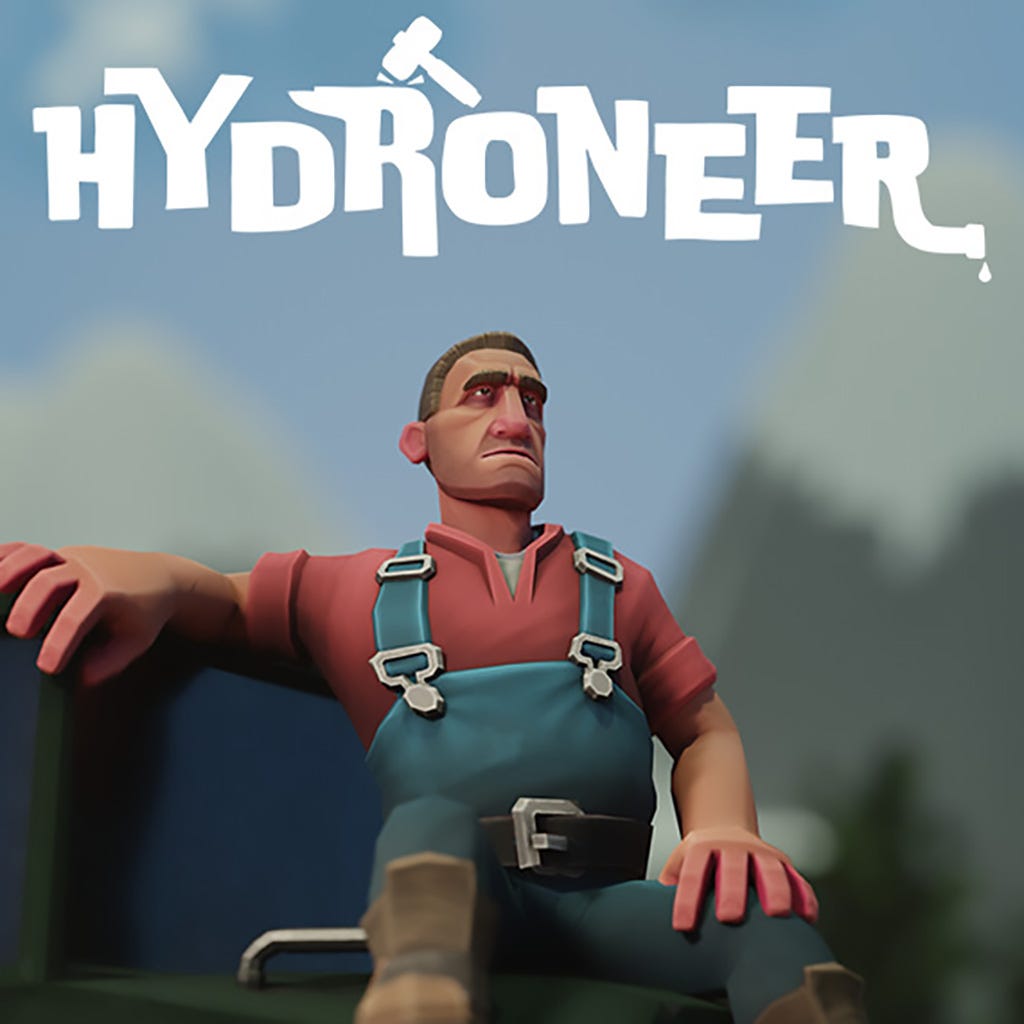
There is a primal joy in digging, a feeling most of us first discovered in a backyard sandbox, convinced that if we dug deep enough, we would find something world-changing. Hydroneer takes that childhood curiosity and fuels it with high-pressure hydraulics. Celebrating its sixth anniversary with a major leap to consoles, Foulball Hangover’s mining sim captures the transition from simple discovery to industrial mastery. As I traded my rusty shovel for a network of automated drills, I found a game that understands the fine line between the satisfaction of a perfectly tuned machine and the hilarious, muddy chaos of an engineering project gone spectacularly wrong.
At first glance, Hydroneer looks deceptively simple. You arrive with basic tools, a tiny plot of land, and very little direction. There are no elaborate tutorials screaming for your attention, no cinematic set pieces to guide your path. Instead, the game quietly hands you a shovel and says, “Go see what happens.” That freedom becomes the game’s greatest strength.
From Shovel to Empire
The opening hours are wonderfully tactile. Scooping dirt into a pan, washing it in water, and discovering tiny flecks of gold tap directly into the same satisfaction loop that makes games like Minecraft or Stardew Valley so hard to put down. Every nugget matters early on because every coin earned feels genuinely earned. Hydroneer excels at making progression feel physical.
You are not clicking through menus to unlock upgrades. You are hauling pipes across muddy ground, lining up conveyor belts, and desperately trying to stop your latest machine from spraying resources across the landscape like a broken fire hydrant. Your success is visible in the world itself. Tiny hand-dug trenches slowly evolve into sprawling industrial compounds filled with automated drills, sorting systems, pressure tanks, and resource processors.
There is something deeply satisfying about watching a machine you built with your own hands finally sputter into life after an hour of trial and error. And yes, it will probably explode into chaos five minutes later because you forgot a single connector pipe. That unpredictability becomes part of the charm.
Beautiful Industrial Chaos
Hydroneer understands that engineering is rarely clean. The game constantly rides the line between mastery and disaster, often turning small mistakes into muddy catastrophes. Pipes burst. Resources clog conveyors. Machines stop functioning because a single tiny valve faces the wrong way.
Normally, these frustrations would feel exhausting, but Hydroneer frames them almost as slapstick comedy. When your carefully planned operation collapses under its own inefficiency, you cannot help but laugh before rolling up your sleeves and fixing it.
The console release handles these systems surprisingly well. Controller navigation initially feels awkward because of the sheer number of interactive components, but after several hours, muscle memory takes over. There is a rhythm to grabbing parts, rotating machinery, and connecting systems that eventually becomes second nature.
DualSense support on the PlayStation 5 also adds subtle immersion. Machinery hums through the controller with convincing weight, especially when larger drills begin chewing through the terrain.
The Joy of Automation
What truly sets Hydroneer apart from other sandbox simulators is its obsession with automation. The game scratches the same itch as Factorio or Satisfactory, but with a messier, more playful personality.
You begin by manually collecting resources. Eventually, you build self-sustaining mining networks capable of generating enormous wealth while you focus on expansion. The leap from humble prospector to industrial overseer feels massive because the game never shortcuts that growth. Every upgrade matters.
A stronger drill digs deeper. Better pipes improve pressure. Smarter conveyor placement increases efficiency. Soon you are no longer thinking like a miner. You are thinking like an engineer.
Yet Hydroneer wisely avoids becoming too sterile. The physics-driven systems introduce enough unpredictability that your machines always feel slightly unstable, as if they are one wrong pipe away from total collapse. That imperfection gives the game personality.
Journey to Volcalidus
The included Journey to Volcalidus expansion significantly broadens the experience and justifies this console edition feeling like the definitive package.
Volcalidus is enormous, far larger and harsher than the original island, and it immediately shifts the tone of the adventure. The volcanic setting introduces lava-powered machinery, new resources, and entirely different progression systems that force you to rethink established habits. The expansion feels less like a bonus area and more like a second campaign.
The lava mechanics are especially clever. Managing heat and resource flow creates fresh logistical challenges without completely reinventing the game’s core systems. New vehicles, particularly the enormous Hydro-Hauler crane truck, add a wonderful sense of scale to your industrial ambitions.
There is also a stronger emphasis on rebuilding civilisation. Helping to restore New Glade gives Volcalidus a sense of purpose beyond simple profit. It adds small narrative motivations to a game otherwise driven almost entirely by player creativity.
Most importantly, Volcalidus preserves the same spirit of discovery that makes the base game so compelling. You are constantly tempted to dig deeper, explore further, and see what ridiculous machine you can build next.
Rough Edges Beneath the Surface
For all its brilliance, Hydroneer still has frustrations that are hard to ignore. Performance can become unstable once your mining empire reaches a certain size. Large automated systems filled with physics-active objects occasionally stutter, particularly when conveyor networks become overly complex. It never becomes unplayable, but the slowdown is noticeable.
The building system also remains somewhat finicky. Snapping objects into place can feel more difficult than it should, especially in cramped underground spaces. Aligning pipes can turn into an exercise in patience rather than creativity.
Hydroneer also demands a particular mindset. Those looking for structured objectives or guided progression may bounce off its open-ended design. The game thrives on self-motivation. If you do not enjoy experimenting for its own sake, the slower pace may feel repetitive.
Still, these rough edges almost feel strangely appropriate for a game about muddy industrial improvisation. Hydroneer is imperfect in the same way a handmade machine is. Frustrating at times, yes, but oddly lovable because of it.
A Sandbox Worth Getting Lost In
What impressed me most about Hydroneer was not its complexity, though it certainly has plenty of that. It was the sense of ownership it creates. Every tunnel feels hand-carved because it was. Every machine bears your fingerprints because you assembled it piece by piece. Every success feels personal because failure was always a possibility.
Few sandbox games understand progression this intuitively. Hydroneer never simply hands you power. It asks you to build it yourself, often literally bolt by bolt. That makes the eventual success immensely rewarding.
The Journey to Volcalidus expansion strengthens the experience considerably, adding new mechanics and larger ambitions without losing sight of the simple joy that defines the game at its core: digging into the earth and wondering what might be waiting beneath.
Like those childhood afternoons spent excavating imaginary treasure from a sandbox, Hydroneer succeeds because it taps into something timeless. The thrill of discovery. The pride of creation. The satisfaction of watching a messy idea slowly become something functional. And occasionally, the joy of watching it all collapse in spectacular fashion.
Final Verdict
Hydroneer + Journey to Volcalidus is messy, ambitious, occasionally clunky, yet consistently rewarding. Its sandbox freedom, tactile progression, and wonderfully chaotic machinery create an experience that feels deeply personal, a quality few simulators achieve.
The console version still shows technical strain under the weight of larger builds, and its building systems can test your patience. Yet beneath those frustrations lies an endlessly engaging mining sandbox driven by creativity and experimentation. For players willing to embrace both the brilliance and the mud, Hydroneer delivers one of the most absorbing sandbox experiences available today.