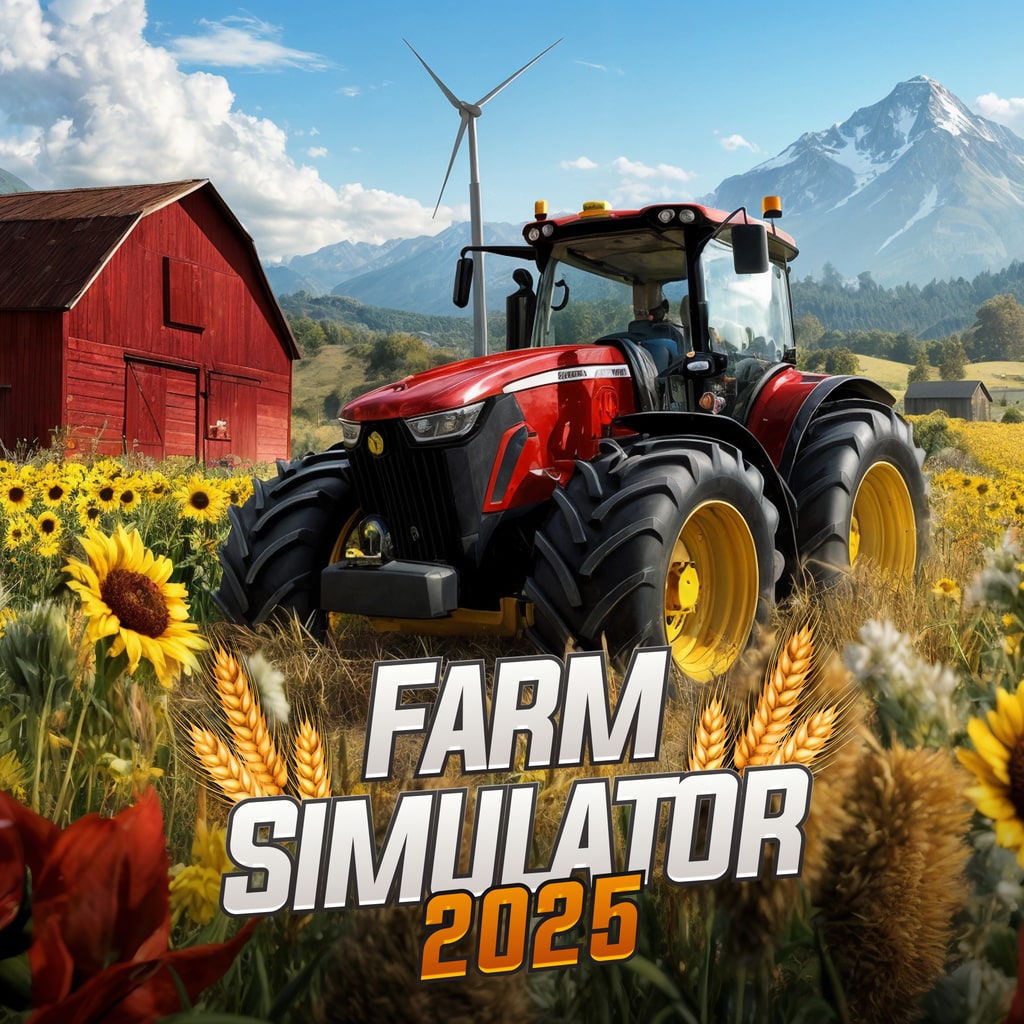
Every so often, a small indie title comes along that takes a familiar concept and twists it just enough to make you stop, stare, and ask, “Wait, what exactly am I playing?” Farm Simulator, created by solo developer Christopher Ikeda, is exactly that kind of game. On the surface, it looks like another entry in the growing crop of agricultural simulators, but beneath the soil lies something more abstract, more personal, and surprisingly thought-provoking. It’s not a farming game in the traditional sense—it’s a game about routine, solitude, and control, told through the deceptively calm rhythm of farm life.
A Quiet Kind of Weird
At first glance, Farm Simulator appears almost aggressively ordinary. You start with a small plot of land, a handful of tools, and a tractor that feels older than the barn it’s parked in. There’s no flashy intro sequence, no overbearing tutorial—just you, the soil, and a gentle hum of ambient sound. The minimalism feels intentional; the visuals are clean but slightly uncanny, with lo-fi textures and a washed-out color palette that sets an eerie tone from the very beginning.
The simplicity might fool you into thinking this is just another budget farming sim. But after a few in-game days, you begin to notice things that don’t quite add up—subtle environmental changes, odd shifts in lighting, and strange noises echoing from beyond the farm’s fences. The game never spells anything out, but the tension builds quietly, creating a creeping sense of unease that feels more psychological than supernatural. It’s as if Farming Simulator collided with Papers, Please and an art-house horror short film.
Cultivating the Mundane
Gameplay in Farm Simulator is intentionally repetitive, but that repetition is the point. You’ll plow, plant, water, and harvest, over and over, with little variation. Crops grow in real time, and seasons shift slowly as days pass. There are no big upgrades or flashy rewards; instead, the satisfaction comes from the slow mastery of the game’s quiet rhythm. The controls are intentionally stiff and slightly delayed, mimicking the physical sluggishness of real labor, while also emphasizing the meditative—and at times suffocating—nature of isolation.
Where most simulators focus on expanding your empire, Farm Simulator feels more like a study in minimalism. You can expand your fields, but the game subtly discourages it. Equipment breaks down faster than you can afford to repair it, and market prices fluctuate erratically, leaving you constantly on the edge of financial collapse. It’s as if the game is whispering: “Don’t grow too big. Don’t reach too far.”
This slow, often punishing design won’t appeal to everyone. But for players who enjoy slow-burn, experiential games that blur genre lines, Ikeda’s restraint is fascinating. The world never feels entirely real—more like a dream about farming than an actual simulation of it—and that blurred line is where the game finds its unsettling beauty.
The Story Beneath the Soil
There isn’t a traditional narrative in Farm Simulator, but Ikeda hides just enough breadcrumbs to suggest a larger story. Faded notes appear in the farmhouse. Some tools seem misplaced, as if someone else had been using them before you arrived. Occasionally, the radio in your tractor crackles with fragments of voices that don’t sound like weather reports. Whether these are hallucinations, memories, or something more sinister, the game never confirms. The ambiguity becomes part of the intrigue.
This environmental storytelling approach rewards observation and patience. There’s no quest log, no dialogue tree—just the quiet unraveling of atmosphere and tone. The result feels oddly personal, as though you’re playing through someone’s private reflection rather than a structured narrative. It’s melancholic, unsettling, and occasionally moving.
Aesthetic Isolation
Artistically, Farm Simulator walks a fine line between realism and abstraction. The models are simple, almost crude, but they carry a deliberate sense of unease. The lighting shifts unpredictably, sometimes bathing your crops in harsh reds or washed-out grays that make the environment feel alien. Sound design plays an equally crucial role—crickets that stop chirping suddenly, wind that howls in unnatural patterns, and machinery that roars just a little too loud. There’s a clear undercurrent of tension beneath the calm.
Ikeda’s minimalist soundtrack, composed largely of ambient drones and field recordings, deepens that mood. It’s not music you hum along to—it’s music that lingers, like an echo in an empty barn. Every sound feels purposeful, designed to make you hyper-aware of your surroundings.
Growing Pains
Despite its strengths, Farm Simulator isn’t for everyone. The pacing is intentionally slow, bordering on tedious, and players looking for the structured progression or high-end realism of something like Farming Simulator 25 will likely bounce off quickly. The lack of tutorials, direction, or traditional objectives makes the first few hours disorienting. There’s also a thin line between atmosphere and frustration; some players might find the obtuse design pretentious rather than profound.
Technically, the game runs smoothly enough, but there are occasional glitches—objects clipping through terrain, strange lighting flickers, and audio cues that don’t always sync properly. While these could be seen as bugs, some almost feel like deliberate design choices that enhance the surreal tone. It’s hard to tell where technical limitation ends and artistic intention begins, and that ambiguity oddly works in the game’s favor.
The Verdict
Christopher Ikeda’s Farm Simulator isn’t a game about farming—it’s a game about existence disguised as one. It uses the repetitive language of simulation to explore themes of loneliness, control, and the fragility of human purpose. Beneath its quiet exterior lies a haunting meditation on what it means to nurture something—be it land, life, or memory—when everything feels transient.
It’s easy to dismiss Farm Simulator at first glance as another indie curiosity, but those willing to dig deeper will find something strangely profound waiting beneath the dirt. It’s not perfect—its pacing and presentation will alienate some—but it’s a rare game that dares to be slow, quiet, and weird in an industry obsessed with spectacle.
If you come to Farm Simulator expecting the comforting loop of planting and profit, you may walk away confused. But if you approach it as an atmospheric, meditative experience about the weight of routine and the loneliness of open spaces, you’ll find a game that stays with you long after you’ve put down the shovel.