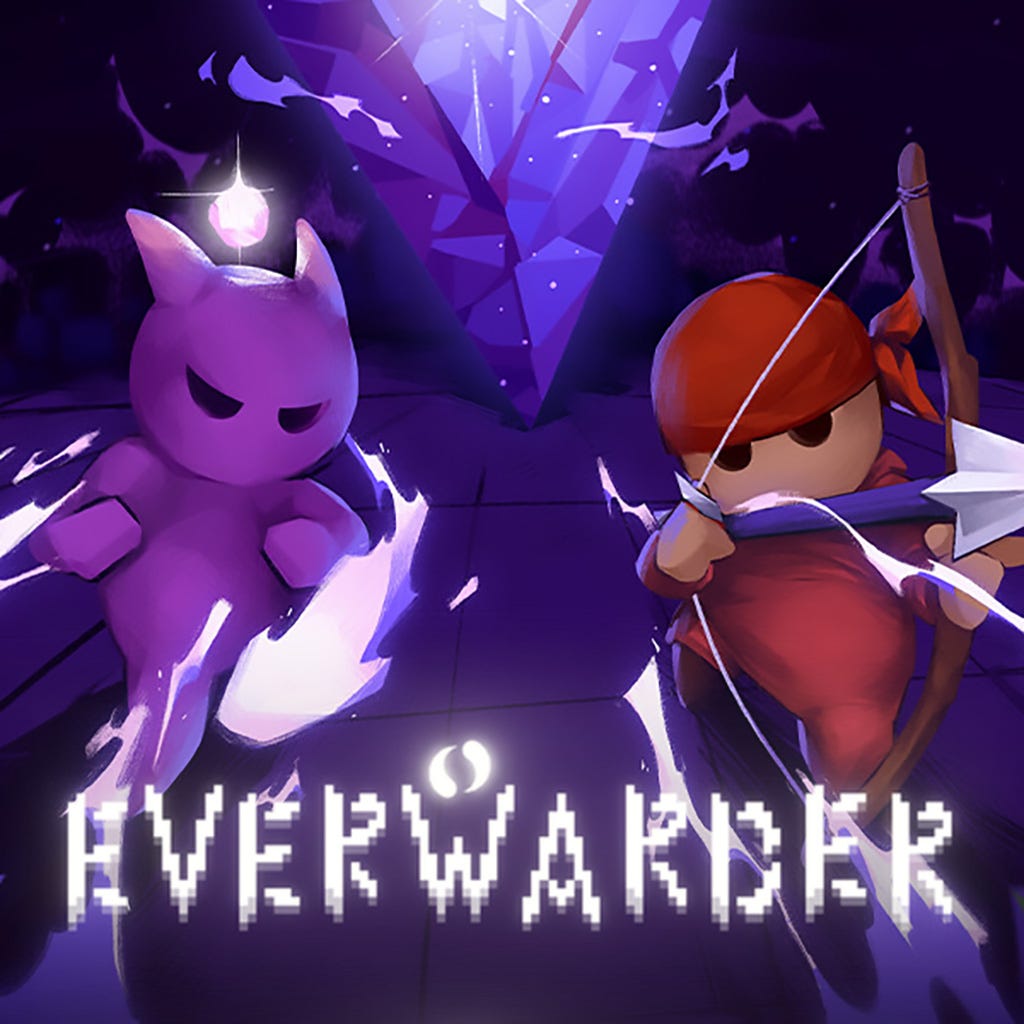
At a glance, Everwarder looks like another minimalist indie strategy game built around procedural generation and looping runs. But spend even a few minutes inside its shadow-covered world, and it becomes clear that this is no ordinary tower defense experience. Everwarder is a game about restraint, risk, and the slow realization that every step forward is an invitation for disaster. It’s not just about defending a base—it’s about deciding when to provoke the world into fighting back.
By reimagining how enemies spawn and how territory is claimed, Everwarder turns familiar tower defense concepts into something far more tense and personal. The result is a game that feels constantly on edge, mechanically elegant, and deeply replayable.
Darkness as a Design Choice
The core idea of Everwarder is deceptively simple. You begin each run with a crystal—your most precious asset—containing your trapped friend. Surrounding it is a procedurally generated world blanketed in darkness. The twist? The darkness is not merely aesthetic. Touch it, and it responds.
Clearing darkness causes enemies to spawn, immediately reframing exploration as an act of aggression. Unlike traditional tower defense games, where waves arrive on a predictable timer or from fixed lanes, Everwarder places that responsibility squarely on the player. You decide when and where danger appears simply by expanding your reach.
This design choice is the game’s greatest stroke of genius. Every inch of cleared terrain feels consequential. Expansion isn’t inherently good—it’s a calculated gamble. Do you carve out safe zones methodically, harvesting energy and setting up defensive lines? Or do you push outward recklessly, hoping to uncover ancient structures and powerful artifacts before the darkness retaliates too strongly?
Strategy Born From Pressure
Each run begins modestly: a crystal, a supply of energy, and a handful of options. From there, the game unfolds organically, shaped by your decisions rather than rigid scripting. Defenders must be placed with intention, balancing coverage, synergy, and upgrade potential. Positioning matters, but so does timing.
The ever-present pressure of time adds another layer of tension. Enemies grow stronger as the seconds tick on, transforming the game into a race against escalation. But this isn’t a one-sided arms race. As the darkness intensifies, so do your options. Energy harvested from cleared terrain fuels upgrades, boosts, and new defenders, creating a dynamic push-and-pull between survival and ambition.
This balance keeps Everwarder from feeling oppressive. Even when a run starts to spiral out of control, there’s often a moment where clever adaptation can turn the tide—if only briefly.
Roguelite Progression Done Right
Failure in Everwarder is not only expected, it’s encouraged. Each run yields minerals that feed into a persistent upgrade tree, unlocking new mechanics, improved defenders, and additional strategic layers. These upgrades don’t trivialize the game, but they do expand your tactical vocabulary.
What’s especially commendable is how upgrades tweak the feel of the experience rather than just inflating numbers. New synergies emerge. Playstyles evolve. A defensive strategy that once felt sluggish can become viable with the right unlocks, while aggressive expansion becomes more tempting as your toolkit grows.
This progression system reinforces the game’s core philosophy: learning through repetition. Each failed run teaches you something—about pacing, about risk tolerance, about when to stop expanding and consolidate. Over time, that knowledge becomes just as valuable as any upgrade.
Endless Variety Through Systems, Not Gimmicks
Procedural generation is often a double-edged sword, but Everwarder uses it wisely. Every run features a different layout, hidden structures, and unique challenges, but the real variety comes from how upgrades interact. Small tweaks to defender behavior or resource generation can dramatically alter your approach, ensuring that no two runs feel quite the same.
The game excels at creating emergent moments. A risky expansion might uncover an artifact that supercharges your defenses, buying precious time. Alternatively, an overextension can snowball into chaos, with enemies overwhelming your carefully placed structures. These highs and lows give Everwarder its rhythm—a cycle of cautious planning punctuated by bursts of panic.
Even when the difficulty spikes, the game rarely feels unfair. Losses are usually traceable back to decisions you made, reinforcing the sense that mastery is achievable through understanding rather than reflexes alone.
Presentation and Atmosphere
Visually, Everwarder embraces clarity over spectacle. The contrast between the encroaching darkness and the glowing crystal at your center is immediately readable, reinforcing the game’s themes through its art direction. Animations are clean, effects are purposeful, and nothing distracts from the tactical overview.
The atmosphere is quietly oppressive without being overwhelming. There’s a persistent sense of urgency, but it never tips into sensory overload. Sound design complements this mood, underscoring tension without demanding attention.
Where It Stumbles
Despite its strengths, Everwarder isn’t flawless. Some players may find the early runs slightly opaque, as the game trusts experimentation over explicit tutorials. While this aligns with its design philosophy, it may alienate those looking for a gentler onboarding experience.
Additionally, while the upgrade tree adds depth, certain paths feel more immediately rewarding than others. Balancing these options over time could further enhance long-term variety.
Final Verdict
Everwarder is a smart, confident reimagining of tower defense principles, blending them seamlessly with roguelite progression and procedural unpredictability. Its core mechanic—turning exploration into a risk—is both elegant and deeply engaging, forcing players to think before every move.
For fans of strategy games that value decision-making over raw execution, Everwarder offers a compelling, endlessly replayable challenge. It’s tense without being cruel, complex without being bloated, and thoughtful without sacrificing fun.