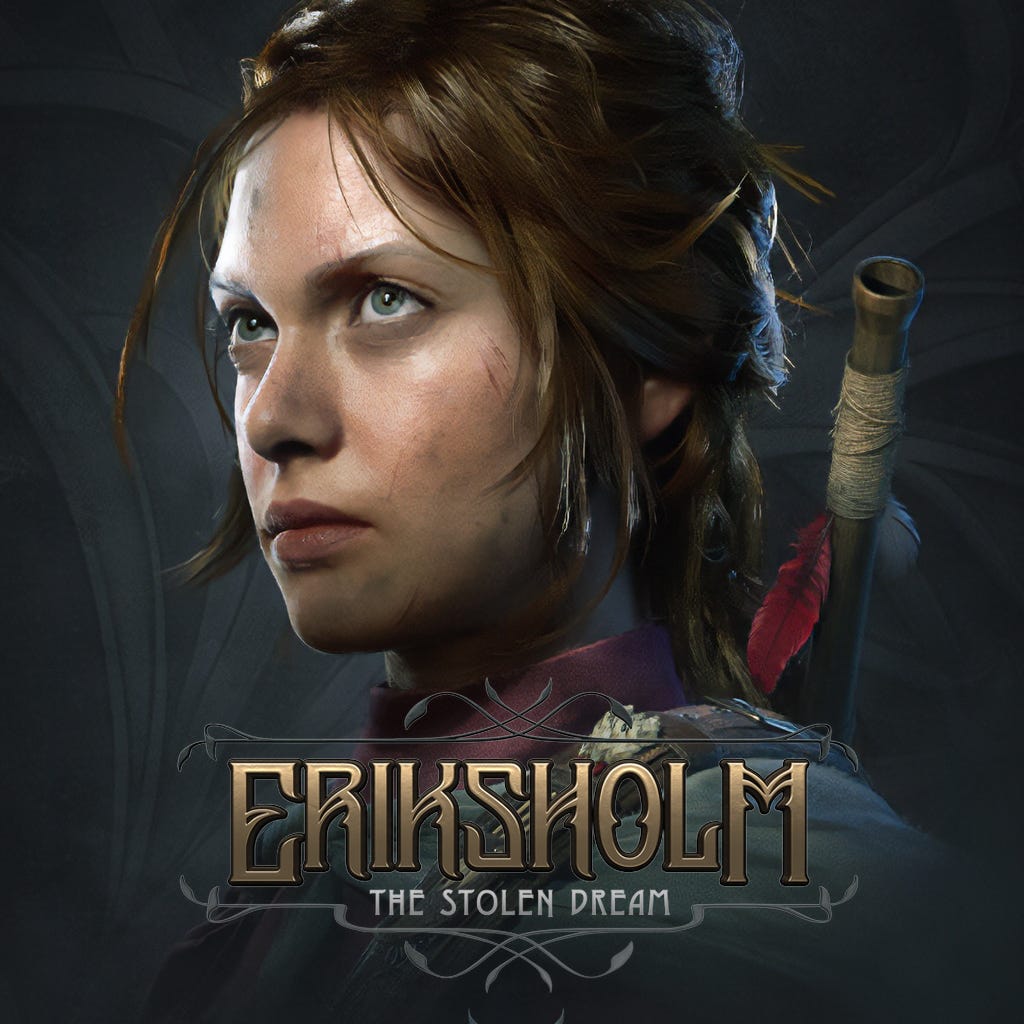
In an age when stealth games often hinge on high-octane action or sprawling, unscripted sandbox environments, Eriksholm: The Stolen Dream quietly stakes out a different claim. It’s neither a run-and-gun stealth title nor a sprawling, open-ended spy sim — instead, it’s a measured, almost cinematic experience crafted by a small team, steeped in narrative weight and precision. Its isometric vantage point and early-20th-century Nordic-inspired aesthetic lend it a touch of melancholic elegance, while its tight stealth puzzles and emotionally charged story anchor it in a space that feels both classic and fresh.
A Story of Loss, Mystery, and Conspiracy
The heart of Eriksholm is its story: Hanna, a young orphan recovering from a deadly plague known as Heartpox, is plunged into turmoil when her brother, Herman, disappears under suspicious circumstances. As she peers into the city’s underbelly, her journey uncovers secrets far bigger than a simple sibling’s disappearance. She’s not alone; two additional playable characters — Alva and Sebastian — join the search as the narrative unfolds, each bringing unique abilities and perspectives.
This isn’t just a tale of a missing family member. It’s a deeper conspiracy threading through Eriksholm’s decaying industrial streets, grand Art Nouveau buildings, and oppressive social hierarchy. The narrative is handled with maturity and restraint, full of dramatic payoffs, subtle character moments, and a surprising amount of emotional nuance. Voice acting stands out across the board, lending personality and warmth to each character and grounding the story in human stakes rather than broad archetypes. It all comes together to create a narrative that feels intimate yet large in scope, personal yet politically charged.
Stealth as Puzzle — Not as Sandbox
Mechanically, Eriksholm leans into stealth-puzzle design rather than open-ended infiltration. You’ll switch between Hanna, Alva, and Sebastian to navigate levels strategically: Hanna crawls through tight ventilation shafts, Alva scales drainpipes and scaffolding, and Sebastian uses his strength and diving skills to traverse waterways. Instead of improvisational stealth, most encounters play out as carefully arranged puzzles waiting to be solved.
This design philosophy gives the game a unique identity but also introduces rigidity. Enemy patrol routes, environmental hiding spots, and movement patterns typically have one or two optimal solutions. The game rarely rewards improvisation; instead, it demands patience, observation, and deliberate planning. Being spotted is usually a death sentence, often sending you back to the most recent checkpoint. That pressure can make encounters thrilling, but it can also be frustrating — especially when a misstep forces you to repeat long sequences.
For players who love methodical stealth in the style of classic strategy-infused games, this structure will feel refreshingly focused. But those seeking a free-form infiltration sandbox may find its rigidity limiting.
Visuals, Atmosphere, and Presentation
One of Eriksholm’s greatest strengths is its captivating atmosphere. Built with rich environmental detail and stylised realism, the city of Eriksholm feels alive — a place shaped by cold industry, creeping poverty, and whispers of political tension. The tall, angular architecture looms over narrow alleys and waterfront docks, creating a world that feels both storybook and grounded.
Lighting is used superbly, with shadowy corners, oil lamps, and flickering industrial lights shaping both tone and gameplay. The isometric camera, rather than feeling restrictive, allows for carefully framed scenes and striking vertical compositions. Cutscenes are also beautifully animated and seamlessly integrated. Despite its indie scale, the game often punches above its weight visually.
Pacing, Challenge, and Frustrations
Eriksholm unfolds at a deliberate pace. Some chapters allow room to breathe, to observe, to soak in the city’s atmosphere. Others demand precise execution, with multi-step puzzle sequences in which every move must be planned. When everything clicks, the game delivers an absorbing, cerebral rhythm reminiscent of classic stealth titles. But when it doesn’t, flaws become apparent.
A notable omission is the lack of mechanical progression. There are no skill trees, no new abilities earned through XP, and no major evolution of each character’s toolkit. What you have at the start is essentially what you use throughout the entire adventure. While this supports the game’s minimalist design, it limits a sense of character growth or shifting gameplay dynamics.
The difficulty spikes may also frustrate some players. A few midgame stealth challenges feel unforgiving, with checkpoints placed just far enough apart to make repeated attempts grating. The game values precision — perhaps to a fault.
Sound and Music
Audio design plays a subtle yet powerful supporting role. Voice acting is heartfelt and expressive, giving weight to Hanna’s determination, Alva’s resilience, and Sebastian’s quiet strength. The soundtrack leans on soft, atmospheric melodies that heighten tension without overwhelming the experience. Sound effects — muffled guard chatter, echoing footsteps, distant machinery — help tether you to the world and heighten the dread of being discovered.
Length and Replayability
Most players will finish Eriksholm in about 10 to 14 hours, depending on how stealthy they are. It’s a well-paced narrative arc, but replayability is limited. The game’s linear puzzles and precise solutions don’t lend themselves to experimentation or alternative playstyles. While completionists can track down hidden documents and optional scenes, most players will likely find a single playthrough sufficient.
Final Verdict
Eriksholm: The Stolen Dream is a thoughtful, beautifully crafted stealth-puzzle adventure that prioritises emotion, atmosphere, and careful design over spectacle. Its storytelling is heartfelt, its visuals striking, and its stealth mechanics tight and deliberate. While its rigidity, difficulty spikes, and lack of mechanical evolution may put off players seeking a more flexible stealth experience, those who appreciate methodical, story-driven gameplay will find a memorable and evocative journey.
A touching, meticulously crafted stealth adventure that shines through its emotional core and atmospheric world-building.