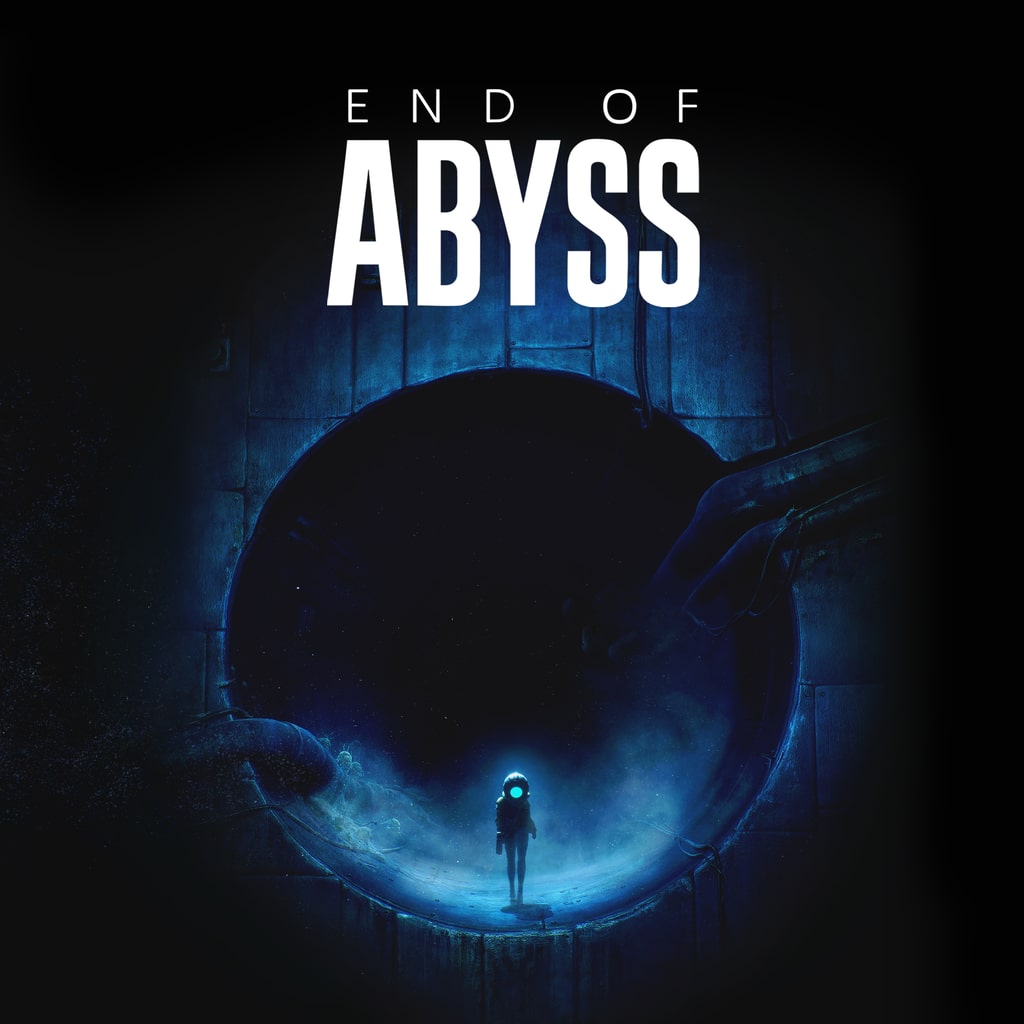
End of Abyss opens with a familiar premise that quickly ceases to feel familiar. You step into the role of Cel, a young combat technician dispatched to investigate disturbances deep within a vast subterranean facility. What begins as a controlled inspection collapses almost immediately into isolation, with corridors stripped of order and machinery that seems to murmur as you pass. The deeper Cel descends, the less the place resembles a man-made structure and the more it feels like something that has grown around forgotten intent.
The game wastes no time establishing its tone. This is not horror built on sudden tricks but on sustained discomfort. The facility feels awake in a way that is never explained and rarely visualised directly, which is precisely what makes it effective. Broken systems flicker in and out of function as though reacting to your presence, while environmental storytelling replaces exposition almost entirely. You are not told what happened here. You are left to survive long enough to piece it together.
A Facility That Pushes Back
Where End of Abyss immediately distinguishes itself is in how it treats its environment as resistance. The underground compound is not simply a backdrop for encounters; it actively shapes your movement, pacing, and decision-making. Doors do not simply open when you are ready. They open when the system allows it, when power reroutes, or when you have learned enough of the facility’s logic to bend it to your favour.
The Metroidvania structure is handled with confidence, if not comfort. Early areas loop back into themselves in ways that feel oppressive rather than convenient. Locked corridors from the opening hours are revisited later, though they rarely feel safe even when cleared. Section 9 Interactive understands that backtracking only works in horror when the world changes in your absence, and here it often does. Lighting shifts, sounds travel differently, and previously dormant threats can return in altered states that force you to question what “cleared” really means.
Combat That Refuses to Rescue You
Combat in End of Abyss is deliberately unglamorous, and that is its greatest strength. Cel is not a powerhouse. She is a technician trying to survive in a system far beyond her control. Twin-stick shooting feels precise but never forgiving, with scarce ammunition shaping nearly every encounter. You are encouraged to avoid conflict where possible, but avoidance is not always an option when the facility decides to close in.
Encounters rarely unfold cleanly. Enemies behave like corrupted echoes of industrial purpose, ranging from malformed biological entities to drones that still follow broken directives. The result is combat that feels less like heroism and more like interruption, a brief assertion of control in a space that constantly tries to take it back. Even victories feel temporary, as if the facility simply allows you to continue rather than acknowledging defeat.
Scanning the Unknown
One of the most compelling systems in End of Abyss is Cel’s scanner, which turns exploration into a slow act of interpretation. Rather than highlighting objectives in a traditional sense, the scanner reveals inconsistencies in the environment. Structural weaknesses, hidden logs, and concealed access points appear only when actively probed, forcing you to engage with every room rather than rush through it.
This creates a rhythm that feels almost investigative. You are not just moving through space; you are interrogating it. The scanner also becomes a subtle narrative device, as fragments of data logs and corrupted recordings build a sense of history that never fully resolves into clarity. The more you learn, the more it feels as if the facility is adapting to conceal what remains.
Horror in the Industrial Void
Visually, End of Abyss commits fully to its identity. The industrial cyberpunk aesthetic is relentlessly cold, filled with rusted metal, fractured lighting, and geometry that feels too precise to be natural yet too broken to be stable. The isometric perspective could have distanced the horror, but instead it sharpens it. You are always slightly removed from the space, never fully inside it, which makes what you see feel even less controllable.
Sound design carries much of the emotional weight. Mechanical groans echo through ventilation shafts in ways that never quite align with your location, and distant impacts suggest movement in places the map does not acknowledge. This creates a persistent uncertainty that follows you even during quieter moments. Silence never feels like relief. It feels like preparation.
Early Impressions and Final Verdict
Based on early previews, End of Abyss feels like a confident evolution rather than a safe iteration of familiar ideas. Section 9 Interactive has taken the DNA of atmospheric horror and fused it with systems that demand patience, attention, and a willingness to be uncomfortable. The shift to an isometric presentation could have diluted its tension, but instead it reframes it, turning navigation itself into a source of unease.
There are still questions about long-term variety, particularly how visually repetitive some of the industrial environments may become during extended backtracking. Yet even this potential weakness feels partially intentional, reinforcing the idea that the facility is not meant to be easily understood or comfortably traversed. It resists clarity in the same way it resists escape.
End of Abyss stands out for its restraint. It does not overload the player with spectacle or constant escalation. Instead, it builds pressure slowly, letting the environment, systems, and silence do most of the work. What it offers is not comfort or empowerment, but a steady, suffocating sense of descent that lingers long after you step away.
For fans of methodical survival horror and systemic exploration, this is shaping up to be one of the most intriguing releases of 2026.