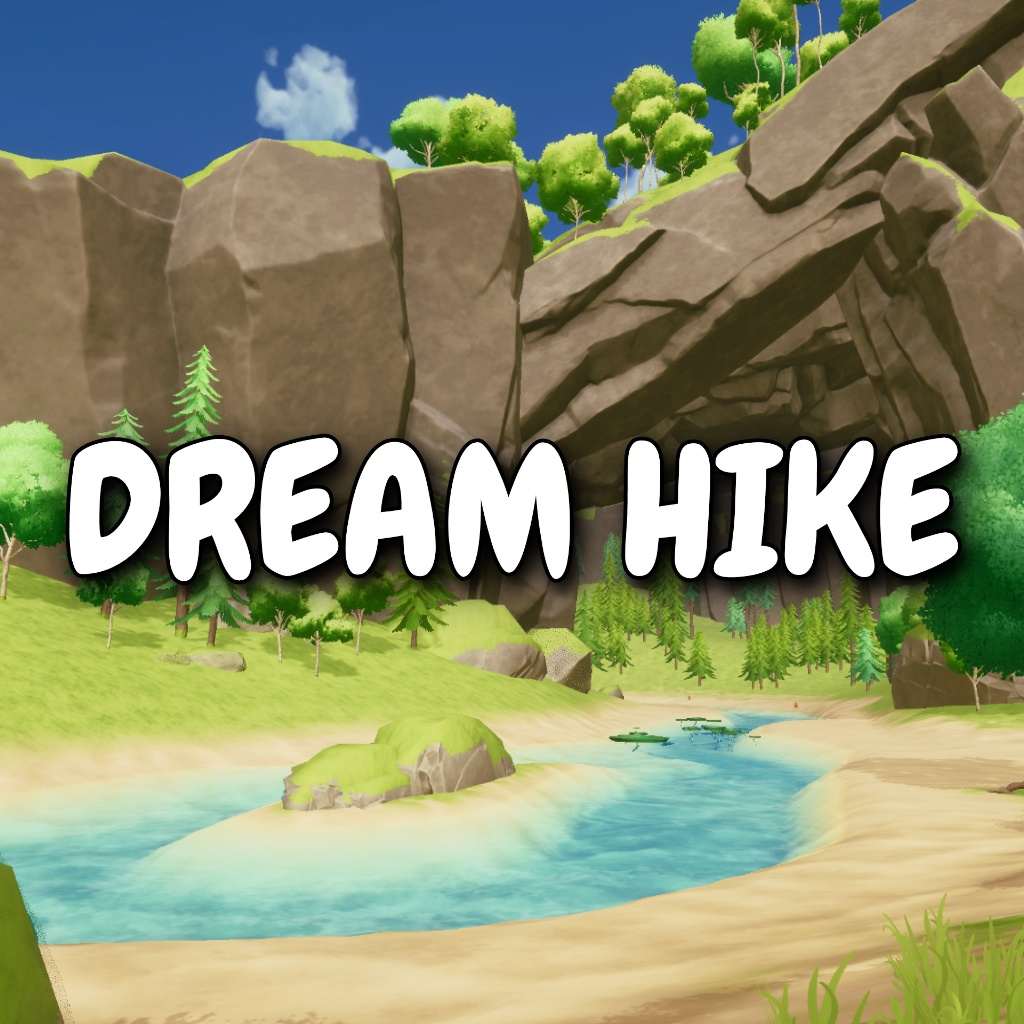
There is something wonderfully appealing about a game that asks you to do very little beyond taking a deep breath and enjoying the view. In an industry where so many adventures are built around relentless combat, elaborate progression systems and increasingly demanding challenges, Dream Hike takes a different path. Developed and published by Downmeadowstreet, this peaceful first-person walking simulator strips the traditional adventure down to its simplest elements, inviting players to explore a colourful, dreamlike world in search of hidden melons. There are no enemies to defeat, no timers counting down and no looming threat around the next corner. Instead, the experience is built around curiosity, tranquillity and the simple pleasure of discovering somewhere new.
From the moment you step into its natural surroundings, Dream Hike makes its intentions clear. This is a game designed to help you switch off, leave the pressures of everyday life behind and lose yourself in a world where there is absolutely no need to hurry. Forest paths, winding mountain trails, peaceful valleys and mysterious routes provide the backdrop for a leisurely stroll, with each area offering its own scenery and opportunities for exploration. The absence of danger or failure means players can approach the experience entirely on their own terms, taking as much time as they like to appreciate the environment. It is a refreshing change of pace, particularly for anyone who finds themselves craving a little peace after a long day.
The Joy of Exploration
At the heart of Dream Hike is an uncomplicated objective: explore the world and find as many hidden melons as possible. It might not sound like the foundation for an ambitious adventure, but the simplicity of the idea is very much part of its appeal. Rather than overwhelming players with an extensive list of objectives, complicated puzzles or a lengthy tutorial, the game encourages them to wander naturally and pay attention to their surroundings. A path might lead to a scenic viewpoint, while a less obvious route could reveal a tucked-away collectible or an interesting corner of the landscape. The satisfaction comes from making these discoveries yourself, without the constant intervention of markers or instructions dictating where you should go next.
The search for melons gives exploration a little purpose, ensuring that players have something to look out for as they travel through the environment. There is a gentle sense of achievement in spotting a hidden collectable that might otherwise have been overlooked, particularly when it encourages you to investigate an area more thoroughly. However, the melons are not part of an elaborate progression system, and the game does not appear particularly interested in turning collection into a demanding pursuit. This keeps the experience accessible and relaxed, although players who enjoy substantial challenges or meaningful rewards may find the central gameplay loop a little too slight. Once the novelty of searching for collectables begins to fade, the scenery itself needs to do much of the work in keeping the adventure engaging.
A Colourful Dreamscape
A walking simulator lives or dies by the quality of the world it presents, and Dream Hike understands the importance of creating an environment that feels inviting. Its colourful natural landscapes are designed to be enjoyed rather than conquered, with lush forests, open valleys, mountainous trails and tranquil vistas offering a welcome variety of scenery. The dreamlike setting gives the world a gentle sense of escapism, helping it feel removed from the ordinary environments we encounter every day. There is a certain comfort in simply following a trail, looking out towards the surrounding landscape and wondering what might lie beyond the next bend. It is not necessarily about discovering something spectacular at every turn, but about appreciating the smaller details that make the journey worthwhile.
The game’s visual identity suits its relaxed approach. Its emphasis on bright colours and peaceful natural surroundings helps establish an atmosphere that feels warm and approachable, rather than imposing or intimidating. There is no need to study every corner for threats or prepare for an unexpected encounter, allowing the scenery to take centre stage. For players who enjoy cosy adventures, that sense of safety can be a significant part of the appeal. The world provides a pleasant place to spend time, even when the immediate objective is little more than walking from one location to another.
That said, beautiful scenery alone cannot always sustain an entire experience. While the environments offer a relaxing backdrop, players looking for dramatic changes in location, elaborate environmental storytelling or a world filled with secrets may find the exploration somewhat limited. The appeal is rooted in the atmosphere rather than in layers of narrative or intricate world design. Those who approach Dream Hike expecting a sprawling wilderness packed with discoveries could come away wanting more, but anyone happy to appreciate its quieter surroundings will find its simplicity easier to embrace.
Finding Peace in the Sound
Sound design is an important part of any atmospheric adventure, and Dream Hike places considerable emphasis on soothing ambient soundscapes. The gentle audio reinforces the feeling of being somewhere peaceful, complementing the natural surroundings and encouraging players to settle into the experience. Without the familiar sounds of combat, urgent musical cues or constant reminders of an impending objective, the atmosphere has room to breathe. The result is a game that feels particularly well suited to short sessions when you simply want to relax, clear your head or enjoy a little time away from more demanding entertainment.
The combination of calming visuals and ambient audio is central to what makes the experience work. A quiet walk through a forest can be enjoyable in its own right, but the soundscape gives those moments a greater sense of presence. It encourages you to pay attention to the world rather than rushing towards the next collectible, which is an important distinction for a game built around leisurely exploration. The absence of pressure becomes part of the experience itself, allowing the player to find their own rhythm and decide what makes a particular moment enjoyable.
Of course, a relaxing soundtrack and peaceful atmosphere will not appeal to everyone. Some players prefer their adventures to have a stronger musical identity, a more memorable narrative or a greater variety of audio experiences. Dream Hike appears content to keep its sound design subtle, supporting the scenery rather than competing with it. That restraint is appropriate for the game, even if it means the overall experience may not leave a particularly lasting impression once the journey is over.
Accessible, But Perhaps Too Simple
One of Dream Hike’s greatest strengths is its accessibility. With no combat, time limits, fail states or complicated mechanics to master, there is very little standing between the player and the experience. You can pick it up, begin exploring and enjoy the surroundings without investing time in learning a complex set of systems. This makes it an appealing option for casual players, those who enjoy walking simulators and anyone looking for a game that does not demand constant concentration. It is also the kind of adventure that can be enjoyed in small bursts, making it an ideal choice when you have a little time to spare but do not necessarily want to commit to a lengthy gaming session.
However, accessibility and depth are two very different things, and Dream Hike does not appear particularly interested in pushing the boundaries of either exploration or interaction. The central activity remains largely unchanged throughout the adventure, with walking, looking around and finding hidden melons forming the bulk of the experience. There are subtle environmental elements to interact with and scenic viewpoints to discover, but the overall mechanics are deliberately minimal. For players who enjoy the meditative nature of walking simulators, this simplicity is likely to be a welcome design choice. For others, the lack of variety could quickly become noticeable, especially if they are expecting more substantial gameplay systems or a greater sense of progression.
There is also the question of longevity. Dream Hike is a relatively brief experience, and its limited interactive depth means there may be little incentive to return once the world has been thoroughly explored. Collecting the hidden melons offers a reason to revisit overlooked areas, but the appeal of doing so will depend largely on how much enjoyment you get from the act of exploration itself. Those hoping for branching paths, substantial narrative choices, unlockable abilities or a compelling reason to replay the adventure may find its offerings rather modest. It is not necessarily a flaw that every game should aim to occupy dozens of hours, but a short experience needs to make the most of the time it has, and Dream Hike occasionally feels as though it could have done more with its central idea.
A Welcome Escape from Everyday Life
Where Dream Hike succeeds is in clearly defining the experience it aims to offer. It does not hide its limited mechanics behind unnecessary complexity, nor does it turn a relaxing stroll into an unexpectedly stressful challenge. Its appeal lies in the freedom to explore without consequence, taking in the scenery and enjoying a gentle sense of discovery. For players who regularly turn to cosy games to unwind, that focus can be more valuable than an elaborate gameplay system. There is something genuinely comforting about being able to wander through a beautiful environment without worrying about making mistakes or falling behind.
The game is also a reminder that not every adventure needs a grand story or an enormous world to be enjoyable. Sometimes, a pleasant setting and a simple reason to explore are enough to create a worthwhile experience, particularly when the game is approached with the right expectations. Dream Hike offers a small pocket of escapism, providing a peaceful alternative to more intense games and a chance to enjoy the journey at your own pace. Its biggest limitation is that its core concept does not evolve much, leaving the player to decide whether the atmosphere alone is enough to keep them engaged.
Final Verdict
Dream Hike is a charming, calming walking simulator that delivers precisely the low-pressure exploration its premise promises. Its colourful environments, soothing soundscapes and straightforward search for hidden melons make it an accessible choice for anyone seeking a little tranquillity, while the absence of combat, timers and failure ensures the experience remains welcoming from beginning to end. It understands the appeal of slowing down and appreciating the world around you, offering a pleasant escape from the demands of everyday life.
Unfortunately, its simplicity is also its greatest weakness. The brief runtime, minimal interaction and limited replay value mean there is little incentive to return once everything the game has to offer has been explored. A little more variety in its activities, or additional reasons to investigate its world, could have made the experience considerably more memorable. Nevertheless, for those who enjoy cosy adventures and walking simulators, Dream Hike provides a relaxing diversion that is easy to recommend when all you want is a peaceful stroll and a few hidden treasures to discover.