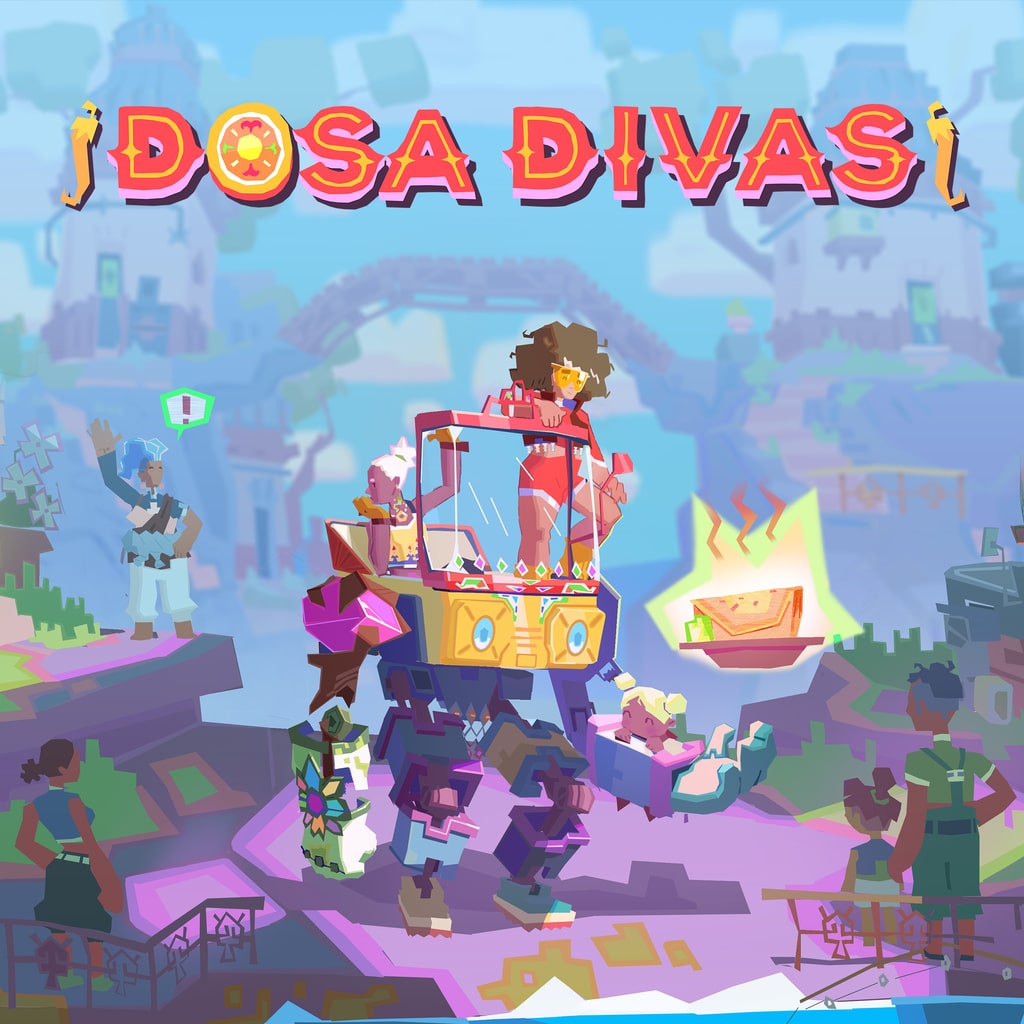
There’s a special kind of energy that Outerloop Games infuses into everything they do—bold, vibrant, deeply rooted in culture, and unafraid to be a little messy in their pursuit of something truly original. With Dosa Divas, the studio fully embraces that spirit, offering up a spicy narrative RPG that combines heartfelt storytelling with inventive gameplay and a flavor that’s impossible to ignore.
Building on the success of titles like Thirsty Suitors and Falcon Age, Dosa Divas feels like a natural evolution—more ambitious, more daring, and more focused on mechanics than ever before. It’s not perfect every time, but when it hits the mark, it’s as satisfying as sharing a perfect meal at just the right moment, echoing the warmth and complexity of genuine connection.
“Dosa Divas isn’t just about saving the world—it’s about remembering what it tastes like.”
A Story of Sisters, Culture, and Resistance
At the core of Dosa Divas are Samara and Amani, two sisters who have been estranged for a long time but are brought back together by extraordinary circumstances. Their story follows their journey with Goddess, a sentient spirit-mech, as they stand up against a corrupt fast-food empire. But beneath the surface, there’s a much deeper story waiting to be told.
This is a game about reconnection—about more than just repairing bonds between siblings. It’s about reconnecting with communities, histories, and traditions that shape us. Food serves as the heart of the story, acting not only as a gameplay mechanic but also as a language that tells its own tale.
Outerloop’s writing really stands out here. The dialogue feels natural and often humorous, rooted firmly in the characters’ personalities. The relationship between Samara and Amani develops in a believable way, shaped by shared memories, lingering tensions, and the journey they’re on. It’s messy in a genuine way—arguments don’t always get resolved neatly, and emotional moments can leave more questions than answers.
The cast supporting them adds even more depth to the world. Villagers, allies, and even rivals reflect different facets of the game’s central themes. It’s a world that feels fully lived-in, even when it drifts into the surreal, making it all the more real and heartfelt.
Combat That Packs Real Flavour
The highlight of Dosa Divas is its innovative combat system. At first glance, it seems like a typical turn-based game, but it quickly reveals its true personality through the use of flavor profiles—Sweet, Salty, Spicy, and more—which act as elemental counterparts.
Enemies experience cravings, and your task is to figure out the right attacks to satisfy these urges. By doing so, you can break through their defenses and leave them stuffed, vulnerable to heavy damage. It’s a smart, playful twist that turns what could have been a simple system into something much more engaging and strategic.
Timing really matters in this game. Just like in classic RPGs with active inputs, hitting the buttons at the right moment makes a difference in both attacking and defending. It’s a small detail that makes battles more engaging and keeps them from feeling boring or passive.
Each sister has her own unique style of play, and you can customize what they can do through Spirit Powers and upgrades. Creating a good flow between them, while also keeping an eye on resources like boost points and Ultimate meters, makes combat feel more satisfying and rhythmic.
Of course, the system isn’t perfect. Some fights can drag on longer than they should, especially when you’re not instantly aware of enemy weaknesses. There’s also a bit of a learning curve to really understanding how the flavors and abilities work together.
But even with these quirks, the game rewards you for trying different approaches. And when everything clicks—the timing, the strategy—it feels truly wonderful, like you’re really part of the battle.
Mech-sploration: Movement Meets Personality
Exploration in Dosa Divas is brought to life by Goddess, your customizable spirit-mech. It’s not just a tool for getting around; it feels like a character all on its own, adding both mechanical charm and a touch of storytelling magic.
Moving around is smooth and fun, with abilities like double jumps, grappling, and drilling that help you uncover more of the world as you go. The villages are crafted with vertical spaces and hidden secrets in mind, making you want to explore every nook and cranny.
Customizing Goddess is part of the adventure too. Swapping out parts, tweaking looks, and fine-tuning skills give your mech a personality that matches your style of play.
That said, exploration isn’t always perfectly balanced. Some areas are packed with secrets and things to discover, while others feel a bit emptier. It’s not a major problem, but it can make the sense of discovery feel a little inconsistent.
Cooking as Connection
If combat is the spice that adds fire to life, then cooking is the true soul of Dosa Divas, filling it with warmth, passion, and a touch of magic.
The cooking system isn’t just a side activity; it’s at the heart of how you progress and tell the game’s story. Gathering ingredients, preparing dishes, and serving villagers all have real, visible effects on the world around you. People start to open up, communities begin to reconnect, and your reputation steadily grows as you engage with this process.
On a mechanical level, cooking feels satisfying and engaging without being overwhelming. You can adjust recipes to craft dishes that deliver specific effects—whether that’s healing, providing buffs, or restoring resources—which directly influences both combat situations and exploration.
More than that, it’s a way to reinforce the game’s deeper themes. Food isn’t just about nourishment; it’s about memory, culture, and identity. When you cook, it becomes a way to heal not only individuals but entire communities, bringing people closer together and restoring what’s been lost.
Presentation: Vibrant, Expressive, and Distinct
Visually, Dosa Divas radiates charm and character. Bright colors illuminate the scene, while expressive character designs and richly detailed environments bring the world to life, making it feel warm and inviting.
Every element of the game has a tangible feel — from the lively animation of cooking scenes to the characters’ movements, there’s a real charm that draws you in. You can tell a lot of love and care went into crafting a world that feels both cohesive and visually captivating.
The soundtrack is a perfect match, seamlessly blending upbeat tracks with more introspective melodies that deepen the emotional moments of the story.
On the performance side, things generally run smoothly across different platforms. The PlayStation 5 and Xbox Series X|S versions provide slick gameplay with quick load times, making the experience enjoyable. The Switch version holds up nicely too, even if there are some compromises in visual quality, which is understandable given the hardware differences.
Where It Falls Short
Despite its bursts of creativity, Dosa Divas somehow just falls short of perfection, leaving a sense that it hasn’t fully hit its stride.
The pacing feels a bit uneven, especially in the middle of the game, where the rhythm between storytelling, exploration, and fighting occasionally slips. Some of the systems, particularly during combat, could really use clearer tutorials or better onboarding to help players get more comfortable.
Sometimes, the game’s ambition seems to outgrow what it can actually deliver. Not every idea comes to life as fully as it could, and some mechanics feel a bit undercooked compared to the rest. It’s a mix of promise and missed potential, giving it a certain charm despite its flaws.
These issues rarely take away from the overall experience. They’re just small bumps along what is otherwise a truly compelling journey.
Final Verdict
Dosa Divas has a clear voice and a strong perspective, which really stands out in today’s crowded landscape. It’s more than just a game—it’s a statement, and that makes all the difference.
It’s inventive yet approachable, heartfelt without tipping into sentimentality, and rich in culture without feeling like it’s teaching a lesson. It dares to take risks, some work better than others, but overall, it creates an experience that feels truly special.
This game really gets to the heart of what food can mean, not just as a game mechanic but as a way to tell stories that matter. It invites players to step into its world in more ways than just fighting—through caring, building connections, and letting their creativity shine.
It may not be flawless, but it’s undeniably memorable.