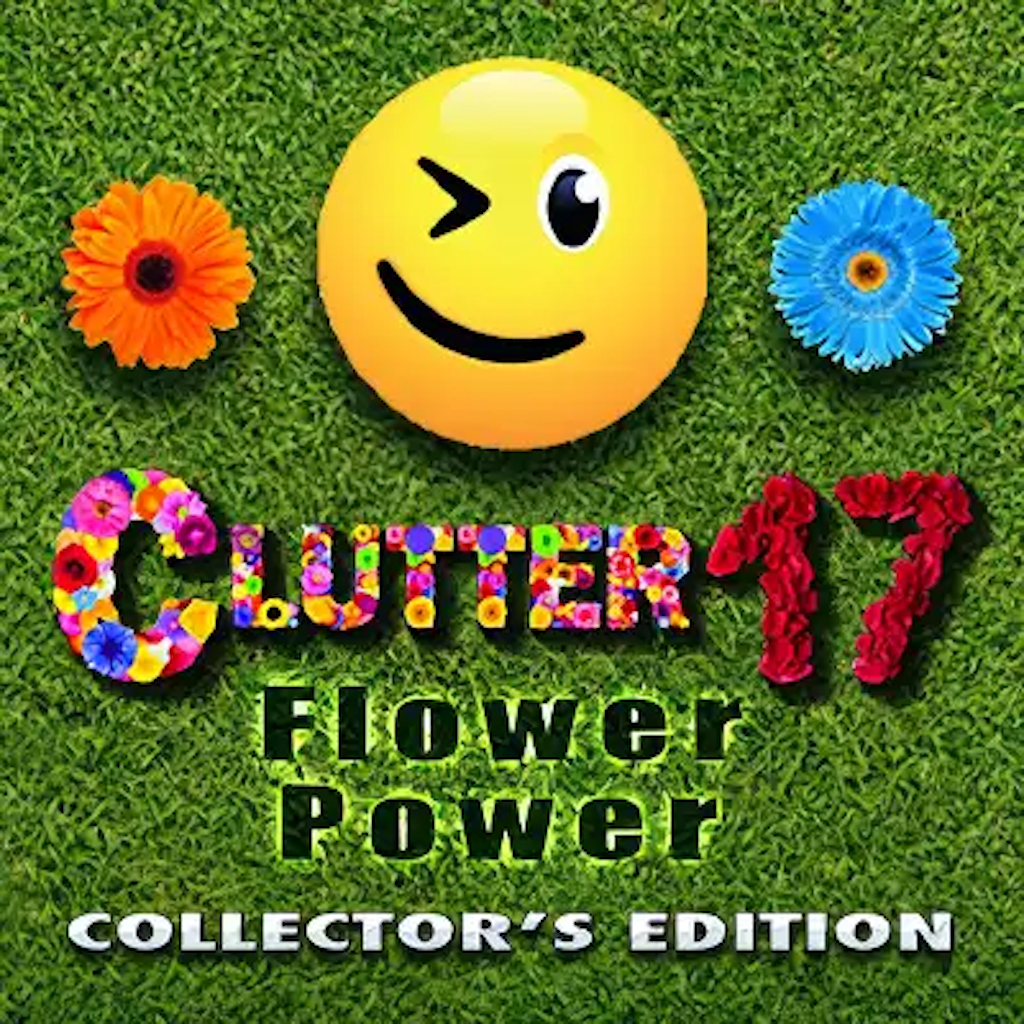
Clutter 17: Flower Power Collector’s Edition continues the long-running Clutter series’ tradition of turning everyday messes into delightful puzzle experiences. This instalment places players in a wonderfully thematic setting: gardens, conservatories, floral shops, and nature-inspired interiors bursting with detail. True to the series’ DNA, the game invites players to find a list of hidden objects within richly decorated scenes, then rewards and builds upon success with light adventure elements and spirited progression.
At its heart, Clutter 17 is a comfort puzzle game — one that is accessible, aesthetically inviting, and structured to deliver short-session enjoyment without steep learning curves or punitive mechanics. While it does not break new ground, it refines the classic hidden object formula with charming visuals, gentle pacing, and a leisurely progression cadence that will appeal to fans of casual adventure.
Concept and Setting: A Garden of Detail
Flower Power embraces its floral theme wholeheartedly. From the first scene, the game immerses you in gardens teeming with colourful blooms, decorative vases, trellises, terrariums, picnic spreads, and sun-lit patios. Every environment feels intentionally designed to evoke the soft, restorative pleasure associated with flowers, nature, and domestic tranquility.
This thematic cohesion extends beyond visuals. Background music leans toward calm, pastoral melodies that harmonise with the settings and reinforce the game’s relaxed tone. Sound cues for item discovery and menu navigation are unobtrusive but satisfying — providing positive feedback without overstaying their welcome.
The result is a puzzle game that feels like an escape rather than a challenge to conquer. It’s designed for players who enjoy visuals and ambience as much as mechanics.
Gameplay Mechanics: Classic Formula, Smooth Execution
Clutter 17 adheres closely to the hidden object genre’s time-tested mechanics. Each level presents a richly detailed static scene, and players are tasked with finding a list of objects cleverly integrated into the environment. Object lists vary between straightforward labels, silhouette outlines, and cryptic clues that require interpretation.
What distinguishes Clutter 17 from simpler hidden object titles is its smooth user experience:
- Responsive Controls: Whether using mouse, touchscreen, or controller input, interactions feel precise and reliable — an essential quality when targeting sometimes tiny objects amid visual noise.
- Progressive Difficulty: Early scenes serve as gentle introductions. As you progress, scenes become busier with layered detail and more deceptive placements, but never in a way that feels unfair. Rather than timed pressure, the challenge comes from visual complexity and perceptual patience.
- Hint System: Thoughtfully implemented hints help avoid frustration without trivialising puzzles. They recharge over time and are not sufficiently abundant to be crutches — they simply guide players back into flow when needed.
- Scoring and Goals: Stars or scoring provide a mild incentive for replay and improvement, but they are optional rather than adversarial. The game invites exploration rather than competition.
All of these elements make Clutter 17 a polished, comfortable entry point for casual players, while still offering enough depth to engage more seasoned hidden object fans.
Puzzle Design: Balance Over Bravado
Hidden object puzzles can easily veer into either end of a spectrum: overly simplistic visuals with obvious item placement, or cluttered chaos with unfair camouflage. Clutter 17 strikes a happy median. Scenes are intricate without being visually overwhelming, and object placement feels clever rather than gimmicky.
Thematic variety in scenes also helps. Instead of repeating the same interior layouts with colour swaps, the game presents a range of environments — greenhouse nurseries with potting tools, garden parties with scattered tableware, flower shops with tangled displays, woodland nooks with nature finds. This variety keeps the visual experience from feeling repetitive, even across longer play sessions.
Video players and occasional mini-games — such as matching puzzle fragments to complete a botanical illustration — punctuate the object hunts and add light structural variety. These diversions are never deep or disruptive but serve to break up repetition and maintain momentum over many levels.
Narrative and Progression: Light but Motivating
Unlike hidden object titles that rely solely on stand-alone scenes, Clutter 17 incorporates a loose adventure layer. Between levels, you are introduced to a cast of characters — gardeners, shopkeepers, neighbours — who provide context for your objectives. These narrative threads are simple and understated, but they give purpose to the visual tasks and help the world feel a bit more cohesive.
Progression is thematic rather than mechanical. Clearing scenes unlocks access to new areas of the “flower world,” each with fresh visual identity and object lists. Players are free to tackle optional areas or revisit prior scenes for better scores, reinforcing a sense of autonomy without burdening players with artificial gates or microtransactions.
While the narrative is more a pleasant flavour than a driving force, it adds a sense of continuity that distinguishes Clutter 17 from hidden object collections that feel like unconnected tableaux.
Visuals and Audio: Gentle Aesthetics, Consistent Character
One of Clutter 17’s greatest strengths is its visual identity. Artwork is consistently warm and inviting, with clean lines, harmonious palettes, and intelligent use of thematic motifs. Flowers, foliage, and nature-inspired objects dominate the visual language, making scenes feel curated rather than chaotic.
Unlike some hidden object titles with busy, grainy art that obscures visibility, Clutter 17 prioritises clarity without diminishing charm. Items blend into scenes creatively, but they remain identifiable with attentive scanning. This balance between disguise and discernibility ensures that the act of discovery feels genuinely rewarding rather than irritating.
Audio is equally polished. Sound design supports ambience and feedback without undue repetition. Music is serene, evoking a sense of springtime calm that matches the visuals and reinforces the game’s slow-paced rhythm.
Accessibility and Difficulty Balance
A key strength is the game’s accessibility. There are multiple difficulty settings that influence list length and hint availability, allowing players to tailor challenge to preference. Beginners can enjoy low-pressure exploration, while veterans can pursue higher scores and tighter time constraints.
Clutter, by nature, is a genre that can challenge visual processing and pattern recognition. The game respects this by making controls intuitive, feedback instantaneous, and frustration minimal. There are no punitive failures or harsh penalties for mistakes — only the gentle encouragement to keep looking.
Areas for Improvement
Despite its many strengths, Clutter 17 has limitations:
Predictable Pacing:
Once the core loop establishes itself, the progression can feel predictable — level, mini-game, unlock, level again — without major variation in structure.
Lack of Deep Narrative Stakes:
While the light narrative adds charm, it never achieves emotional depth or memorable character arcs. Players seeking story-driven investment may find it too shallow.
Optional Replay Incentives:
After completing all scenes, replay value depends on personal goals (better scores, full star ratings). Without a competitive or social element, the incentive to return may be modest.
These are not fatal flaws but reflect the title’s positioning as a casual, comfort-oriented game rather than a deep, mechanical puzzle epic.
Final Verdict
Clutter 17: Flower Power Collector’s Edition is a well-executed hidden object adventure with solid design, accessible mechanics, and delightful art direction. It does not aim to revolutionise its genre, but it delivers consistent, gentle enjoyment for players who appreciate thoughtful visuals, calm pacing, and light puzzle discovery.
Whether you enjoy hidden object games as serene solo sessions or as part of short play bursts, this title provides a welcoming experience with enough variety to sustain interest across many levels.