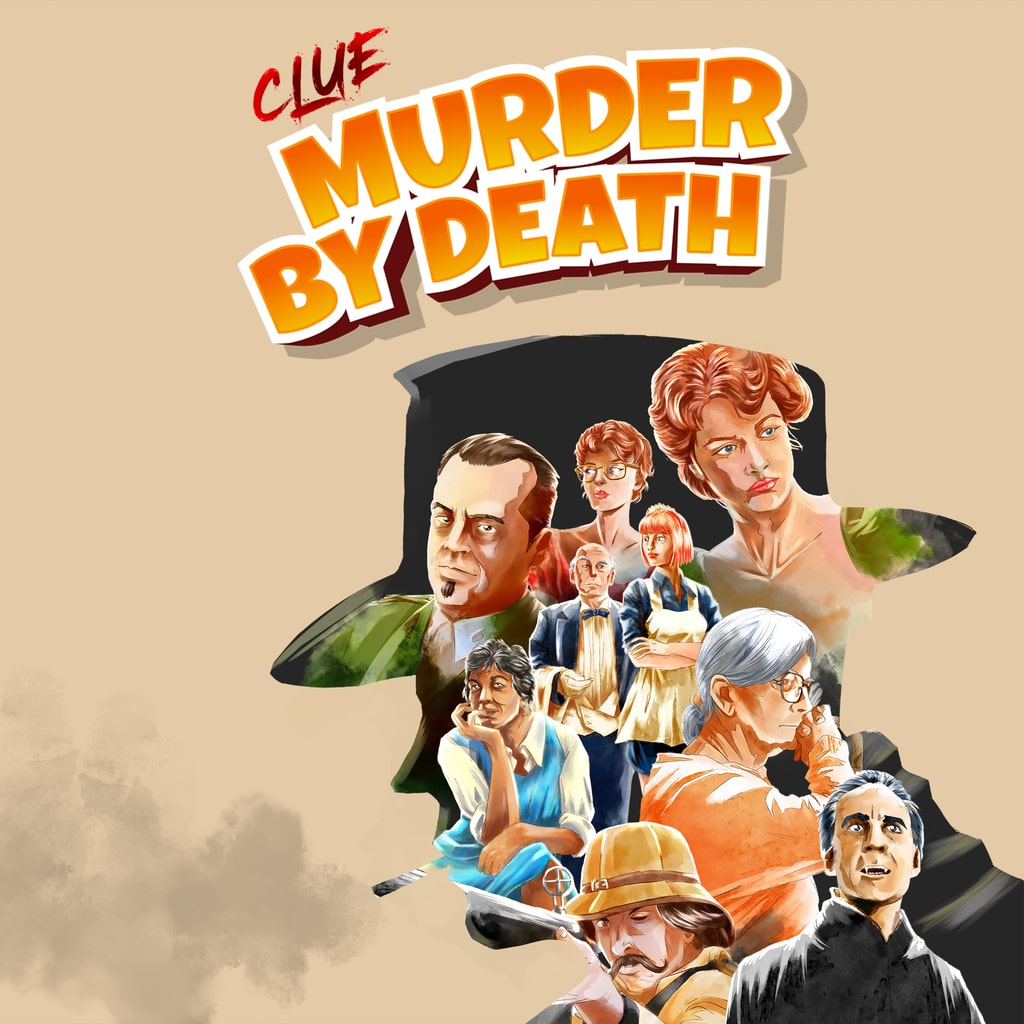
Few genres demand as much intellectual participation from players as the classic whodunnit. Inspired by the razor-sharp plotting of Agatha Christie and the deductive precision of Sherlock Holmes, Clue: Murder By Death, developed by Cocodrolo Games, attempts to modernize the detective formula with one bold twist: you have exactly 120 real-time minutes to solve the case before Scotland Yard arrives and ends your investigation.
It’s a high-stakes structure that immediately distinguishes the game from traditional narrative mysteries. Instead of leisurely exploration, you operate under constant pressure. Time never pauses. Clues don’t conveniently wait.
You investigate.
Or you lose the case.
The Setup: A Murder in 1930s England
The setting is a sprawling 1930s English manor — imposing, shadowed, and thick with secrets. A body has been discovered. The residents are suspicious. Motives overlap like cigarette smoke in a drawing room.
The presentation leans into vintage charm with a slight edge of dark humor. Wood-paneled halls, flickering fireplaces, and jazz-inflected ambient music establish mood without becoming theatrical caricature.
The tone walks a careful line: serious but not grim. Tense but not oppressive.
It feels authentically inspired by British crime fiction without copying it outright.
The 120-Minute Real-Time Mechanic
This is the game’s defining feature.
You have two real-world hours per playthrough.
That’s it.
The clock does not stop while you:
- Explore rooms
- Examine objects
- Interrogate suspects
- Update your case board
It creates urgency unlike most narrative adventures. You must prioritize. You cannot speak to everyone. You cannot inspect every room.
And that’s deliberate.
Clue: Murder By Death is structured around multiple cycles. You’re not meant to solve everything in one run. Each 120-minute attempt reveals more context, more secrets, and sometimes, new contradictions.
This cyclical structure transforms failure into learning.
It also makes every decision weightier.
A Manor of Scale and Secrets
The manor itself is massive.
Over 165 rooms and 150+ interactive objects populate its isometric 3D layout. Bedrooms, studies, kitchens, servant quarters, hidden corridors — each space potentially holds evidence.
Exploration feels tactile. Clicking through drawers, examining letters, reading personal notes — these small details build a web of interlocking narratives.
However, the scale can feel overwhelming at first. Without careful note-taking, it’s easy to lose track of leads.
That’s where the Case Board becomes essential.
The Case Board: Your Lifeline
The in-game Case Board allows you to track suspects, motives, evidence, and contradictions.
And you’ll need it.
Because time doesn’t pause.
You must regularly update your deductions while the clock ticks down. Forget to document something? It may slip through your memory by the final accusation.
The absence of hand-holding is refreshing. The game doesn’t funnel you toward the correct suspect. It trusts your reasoning.
But that trust comes with risk.
Make the wrong accusation, and Scotland Yard closes the case — incorrectly.
The PoV System: Shifting Perspectives
Perhaps the game’s most inventive mechanic is its point-of-view system.
Each playthrough allows you to choose a different character perspective. These aren’t cosmetic swaps. Each character:
- Notices different clues
- Has unique dialogue options
- Interprets motives differently
- Holds biases and relationships
Playing as a suspicious heir yields different information than playing as a loyal staff member.
This system deepens replayability dramatically. It also complicates the truth. Facts are filtered through perception.
What one character sees as flirtation, another sees as conspiracy.
Truth becomes layered.
Interrogations: Words as Weapons
Conversations are the game’s lifeblood.
Interrogations are branching and reactive. You can press suspects aggressively, build alliances, or subtly extract information.
Tone matters.
Choose poorly, and a suspect may shut down or refuse further cooperation.
Form alliances, and characters might reveal hidden motives or corroborate alibis.
The writing is sharp without being overly verbose. Dialogue feels period-appropriate but accessible.
Occasionally, exchanges lean into dark humor — a raised eyebrow, a biting remark — that prevent the narrative from becoming dour.
Multiple Endings and Accusations
At the end of each 120-minute cycle, you must accuse someone.
There is no safety net.
Success depends entirely on your deductions. No cinematic reveal guides you toward the truth. No late-game cutscene fixes your mistakes.
And the game offers multiple endings — not just “right” or “wrong,” but nuanced outcomes shaped by your choices and alliances.
You may solve the murder but lose key relationships. You may identify the killer but miss the broader conspiracy.
It’s a system that rewards careful reasoning over brute-force trial and error.
Where It Falters
Ambition comes at a cost.
The real-time clock, while thrilling, can create stress that undermines thoughtful deduction. Players who prefer slower, contemplative mystery-solving may feel rushed.
Additionally, replaying the manor across multiple cycles risks repetition, especially if early clues repeat without significant variation.
Some character arcs feel underdeveloped compared to others, depending on the PoV chosen.
And while the isometric visuals are stylish, they occasionally obscure smaller interactable objects, requiring pixel-hunting patience.
Atmosphere and Sound
The original soundtrack is subtle and atmospheric — piano motifs and ambient strings that underscore tension without dominating scenes.
Sound design is restrained. Footsteps echo. Doors creak. Fireplaces crackle.
It’s immersive but not bombastic.
Visually, the game’s dark-vintage palette enhances mood, though lighting can occasionally obscure detail.
The Intellectual Payoff
What ultimately determines Clue: Murder By Death’s success is whether solving the mystery feels earned.
It does.
When you piece together contradictions, cross-reference alibis, and finally make a correct accusation, the satisfaction is immense.
It’s not cinematic spectacle.
It’s intellectual triumph.
Few games commit this fully to trusting the player’s deduction skills.
Final Verdict
Clue: Murder By Death is a bold reimagining of the detective genre, merging classic British mystery inspiration with a daring real-time investigation structure.
Its 120-minute loop creates genuine tension. The PoV system deepens replayability. The branching accusations reward careful reasoning.
While the clock may frustrate slower players and repetition can creep in across cycles, the intellectual payoff is undeniable.
This is a mystery that respects your intelligence.
But it won’t wait for you.