As a child, I remember going to the library: the feeling of pulling an old, dust-covered book from a forgotten shelf and wondering what secrets it might hold. Before the internet turned mystery into instant answers, knowledge felt dangerous in the best possible way. Films like Indiana Jones and Raiders of the Lost Ark feature globe-trotting adventure, archaeological treasure hunting, and 1930s-style action. The Mummy, Romancing the Stone, National Treasure, and The Lost City of Gold all referenced lost empires, ancient maps, strange symbols, and whispered legends about lost civilisations. It felt like there was a thrilling possibility that somewhere beneath history lies a truth humanity was never meant to uncover.
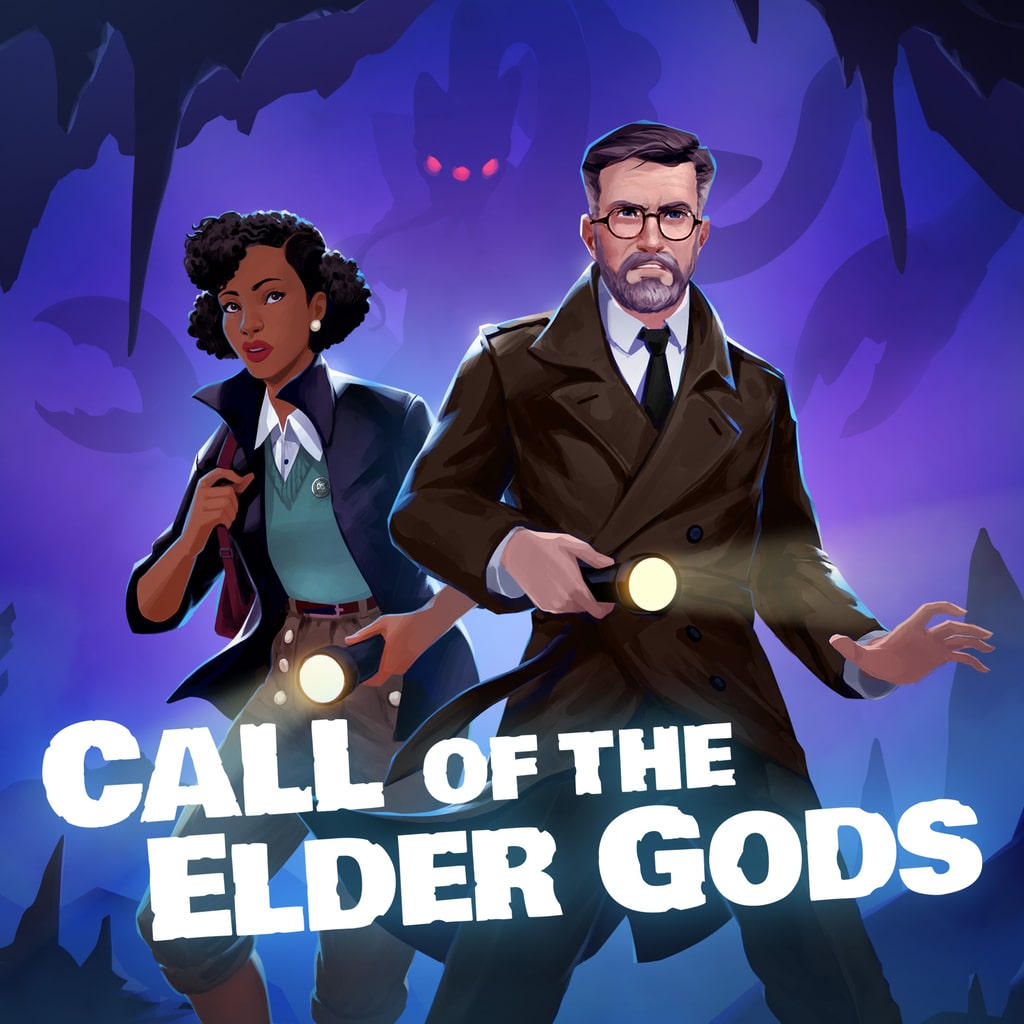
Out of the Blue Games taps directly into that fascination with Call of the Elder Gods, a sweeping Lovecraftian puzzle adventure that expands the intimate mystery of Call of the Sea into something far grander, stranger, and more emotionally devastating. Released this week and published by Kwalee, the sequel transforms cosmic horror into a globe-spanning journey through grief, obsession, and forbidden knowledge. It is a game that understands the true terror of Lovecraftian fiction is not simply the monsters lurking in the dark, but the realisation that humanity may never have mattered at all.
A Story Written Across Time
Set three decades after the events of Call of the Sea, the game follows Professor Harry Everhart and student Evangeline Drayton as they investigate impossible visions and ancient artefacts linked to Miskatonic University. Harry remains haunted by his wife Norah’s disappearance, while Evangeline experiences vivid dreams tied to something buried far beyond human understanding. Their partnership forms the game’s emotional core.
Harry bears the exhaustion of someone who has stared too long into the abyss. Evangeline, meanwhile, brings curiosity and youthful energy that gradually give way to fear as the mystery’s scope unfolds. Their dynamic never feels forced. Conversations flow naturally, balancing humour, vulnerability, and quiet dread to ground the increasingly surreal narrative.
Norah’s lingering presence as a narrative thread is especially effective. Her commentary, conveyed through journals and observations, creates an emotional continuity with the original game that longtime players will appreciate. Rather than simple fan service, her inclusion reinforces the story’s broader themes of memory, legacy, and the scars left by impossible experiences.
What begins as an academic mystery slowly spirals into a confrontation with forces older than civilisation itself. Yet despite the escalating cosmic scale, the story never loses sight of its human centre. Ultimately, it is a narrative about people trying to understand grief while confronting truths that shatter their grasp of reality.
Puzzle Design That Rewards Curiosity
Puzzle games live or die by their ability to make players feel intelligent without becoming frustrating. Call of the Elder Gods succeeds because it trusts players to pay attention. The puzzles are exceptional throughout the adventure. Unlike many narrative games, where puzzles feel like interruptions between story beats, these challenges are woven directly into the fabric of the world. Ancient astrological devices, cryptic language systems, shifting architecture, and intricate mechanical locks all feel believable within the environments they inhabit.
Some of the best puzzles require swapping between Harry and Evangeline across different locations and timelines, using information discovered by one character to progress with the other. This structure creates satisfying “aha” moments that reward observation and note-taking rather than brute-force experimentation.
A standout sequence inside a frozen research station in Svalbard perfectly demonstrates the game’s strengths. You slowly piece together fragmented documents, decipher scientific diagrams, and manipulate failing machinery while a blizzard howls outside. The tension comes not from combat or jump scares, but from the growing realisation that the station’s previous occupants uncovered something catastrophic.
Importantly, the hint system deserves enormous praise. Modern puzzle games often struggle to balance accessibility with challenge. Call of the Elder Gods handles this elegantly by allowing players to customise exactly how much assistance they want. Gentle nudges appear first, followed by increasingly detailed guidance only if requested. It respects both seasoned puzzle fans and newcomers who simply want to experience the story without getting stuck for hours.
Cosmic Horror with Human Emotion
Lovecraft-inspired games often misunderstand what makes cosmic horror effective. Many focus entirely on tentacles, madness, and monstrous imagery, overlooking the existential fear beneath it all. Call of the Elder Gods avoids that trap.
The horror here emerges through scale and implication. Ancient cities stretch beyond comprehension. Impossible geometries twist space itself. Strange entities operate by laws humanity cannot grasp. The game constantly reminds players how small and fragile human beings are. Yet it balances that existential terror with deeply personal storytelling.
Harry’s grief over Norah shapes nearly every interaction. Evangeline’s growing fear of losing herself mirrors the player’s own descent into uncertainty. Even side characters carry emotional weight rather than serving solely as exposition. This emotional grounding prevents the cosmic horror from feeling detached or abstract. The unimaginable becomes terrifying precisely because it threatens people we care about.
The fully voice-acted performances elevate this considerably. Yuri Lowenthal delivers one of his strongest dramatic performances in years as Harry, capturing exhaustion and determination without slipping into melodrama. Cissy Jones gives Evangeline warmth and intelligence that make her gradual psychological unravelling genuinely unsettling.
A Gorgeous World of Impossible Architecture
Visually, Call of the Elder Gods is stunning. Powered by Unreal Engine 5, the game embraces a painterly art direction that lends its environments an almost dreamlike quality. Rather than pursuing photorealism, the developers lean into rich colours, atmospheric lighting, and surreal architecture that always feels slightly unreal.
The variety of locations keeps the journey fresh throughout. One moment you are exploring candlelit university libraries filled with ancient manuscripts. The next you are traversing crimson deserts beneath alien constellations or wandering impossible cities suspended outside normal space and time.
The art design particularly shines in the game’s more otherworldly sequences. Non-Euclidean structures fold impossibly into themselves. Staircases spiral towards stars that should not exist. Entire environments subtly shift as you move through them, creating a constant sense of instability.
Eduardo De La Iglesia’s soundtrack ties everything together beautifully. The score drifts between melancholic piano pieces, eerie ambient textures, and swelling orchestral dread without ever overwhelming the atmosphere. Music often fades almost completely during puzzle-solving segments, allowing environmental sounds and distant echoes to dominate the experience. The result is a world that feels hypnotic rather than simply frightening.
A Few Cracks in the Manuscript
For all its strengths, Call of the Elder Gods occasionally struggles under the weight of its ambition. The pacing slows noticeably in the middle chapters, particularly when the game focuses on elaborate, multi-stage puzzles back-to-back. While the puzzles remain high quality, the narrative momentum briefly loses urgency during these stretches.
Some players may also find the lore overwhelming. The game delves deeply into cosmic mythology, ancient civilisations, and metaphysical concepts, which occasionally verge on excessive exposition. Fans of Lovecraftian fiction will likely enjoy this density, but newcomers may feel slightly lost during the later revelations.
Movement can also feel a little stiff at times. Exploration remains immersive, though traversal occasionally lacks the fluidity expected of modern first-person adventures. Still, these issues rarely overshadow the experience.
Final Verdict
Call of the Elder Gods is an outstanding sequel that expands nearly every aspect of its predecessor without sacrificing the emotional intimacy that made Call of the Sea memorable.
Out of the Blue Games has crafted a puzzle adventure brimming with intelligence, atmosphere, and genuine emotional depth. Its mysteries are absorbing, its puzzles consistently rewarding, and its cosmic horror resonates because it never forgets the fragile humanity at the story’s centre. This is not horror driven by cheap scares or relentless violence. It is horror rooted in curiosity itself — the dangerous, irresistible urge to keep turning the pages long after you realise the truth waiting at the end may destroy you.