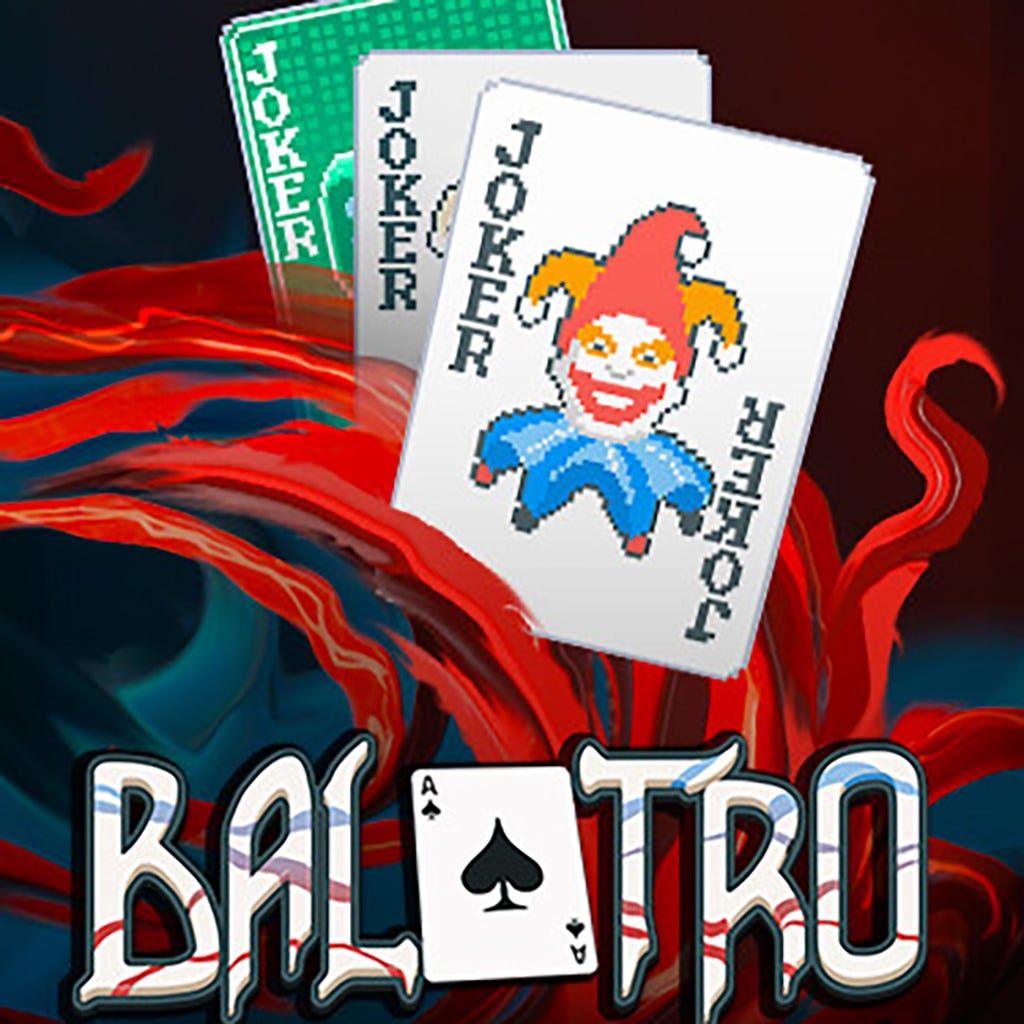
Few indie games arrive quietly and then completely reshape an entire genre. Balatro is one of those rare releases — a game that initially looked like a clever novelty (“What if poker was a roguelike?”) but quickly evolved into one of the most addictive, intelligently designed strategy experiences of the modern era.
Originally released in February 2024 across PC and consoles, LocalThunk’s solo-developed phenomenon has since spread to nearly every platform imaginable. Now, with the arrival of a dedicated Nintendo Switch 2 version — featuring smoother performance, enhanced rumble feedback, and a precise new Mouse Mode — Balatro feels more refined than ever.
Two years after launch, the question isn’t whether Balatro is good. The real question is why it works so unbelievably well.
Poker, But Completely Broken (In the Best Way)
At its core, Balatro uses standard poker rules as its foundation. You build hands — pairs, straights, flushes, full houses — and score points based on their value. Anyone with basic card knowledge can understand the opening minutes.
But within moments, the game begins dismantling your expectations.
You aren’t gambling against opponents. Instead, you’re battling escalating score requirements called Blinds, trying to generate increasingly absurd point totals through deck manipulation and modifiers. A simple pair that initially scores a few dozen chips can eventually generate millions — even billions — through layered synergy systems.
That escalation is where Balatro transforms from familiar card game into strategic obsession.
The Joker System: Pure Genius
The defining mechanic — and the reason Balatro has effectively created its own subgenre — is the Joker system.
Across a run, you collect Jokers that fundamentally alter how scoring works. There are over 150 of them, and nearly every one changes your approach entirely.
Examples include:
- Multipliers for specific suits or hand types
- Bonuses triggered by discarding cards
- Effects that activate in sequence depending on Joker placement
- Economy-based buffs rewarding spending or saving money
Individually, Jokers are interesting. Together, they become chaotic engines of exponential scoring.
A run might evolve into:
- turning every card into a single suit,
- deliberately playing weak hands for massive bonuses,
- or building absurd chains where one Joker triggers five others in cascading multipliers.
The brilliance lies in how the game encourages experimentation. “Bad” strategies often become unstoppable once the right combination appears. Every run feels like discovering a loophole the game somehow allows — like you’re cheating a casino that wants you to win.
Familiar Cards, Infinite Possibilities
Beyond Jokers, Balatro layers multiple progression systems that continuously reshape your deck:
- Tarot Cards modify individual cards permanently.
- Planet Cards level up specific poker hands.
- Vouchers provide run-wide bonuses.
- Spectral effects introduce riskier, high-reward transformations.
This means your deck slowly mutates into something unrecognizable from a standard poker setup.
You might:
- duplicate Aces until your deck barely resembles poker,
- downgrade cards strategically to trigger bonuses,
- or build around unconventional hands like High Card instead of Royal Flushes.
The genius design decision is that traditional poker hierarchy eventually becomes irrelevant. A well-built “bad” hand can outperform the best possible real-world hand — reinforcing the game’s theme of bending rules until they break.
The Roguelike Loop That Devours Time
Like the best roguelikes, Balatro thrives on momentum.
Runs typically last 30–45 minutes, but they rarely feel that long. Each round provides immediate decisions:
- Buy or save money?
- Upgrade your deck or chase rare Jokers?
- Risk everything on a synergy that might fail?
Failure never feels punishing because progress unlocks new decks, modifiers, and challenges that dramatically change future runs.
This constant drip-feed of discovery fuels the infamous “just one more run” effect. You lose, immediately understand why, and instantly want to try again with a new strategy.
Few games achieve this level of mechanical clarity paired with psychological pull.
Presentation: Hypnotic Minimalism
Visually, Balatro is deceptively simple.
The game adopts a CRT-inspired aesthetic — fuzzy scanlines, saturated colors, and glitchy transitions — making every round feel like playing on a haunted casino machine from an alternate timeline.
Animations are subtle but impactful:
- cards snap satisfyingly into place,
- multipliers cascade across the screen,
- numbers explode into surreal scoring spectacles.
Sound design plays an equally important role. The looping soundtrack is calm yet tense, reinforcing the trance-like rhythm of decision-making.
It’s not flashy in a traditional sense, but it becomes hypnotic after extended play — perfectly matching the game’s addictive structure.
Switch 2 Version: The Best Portable Experience Yet
The new Nintendo Switch 2 edition elevates an already excellent game through smart hardware integration rather than unnecessary reinvention.
Key improvements include:
- Smooth 60 FPS performance, making animations feel cleaner.
- HD Rumble 2, adding tactile feedback when scoring combos trigger.
- Mouse Mode, allowing players to drag cards quickly using Joy-Con precision or touch input.
Mouse Mode, in particular, is transformative. Optimizing Joker order — a high-level strategy element — becomes significantly faster and more intuitive compared to traditional controller navigation.
Given Balatro’s short-run structure, the handheld format suits it perfectly. It’s dangerously easy to start a run during a short break and realize an hour has passed.
Accessibility and Depth
One of Balatro’s greatest achievements is balancing accessibility with extreme depth.
New players can succeed using basic poker logic, while advanced players dive into mathematical optimization and synergy theory. High-level play involves understanding trigger order, probability manipulation, and long-term economic planning.
Yet the game never feels intimidating. Information is presented clearly, tooltips are excellent, and experimentation is encouraged rather than punished.
It’s rare to see a strategy game simultaneously welcoming and endlessly deep.
Minor Drawbacks
Despite its brilliance, Balatro isn’t flawless.
Runs can occasionally hinge too heavily on RNG when shops refuse to offer synergy-enabling Jokers. Skilled play mitigates this, but unlucky streaks do exist.
Additionally, players uninterested in numerical optimization may eventually find the loop repetitive after dozens of hours — though that threshold is remarkably high.
But these issues barely dent the overall experience.
Final Verdict
Balatro is one of the most important indie games of the decade — a masterclass in elegant design, player psychology, and emergent strategy. By combining familiar poker rules with roguelike creativity, it creates a gameplay loop that feels endlessly fresh despite its minimalist structure.
The Switch 2 version only strengthens an already exceptional game, offering perhaps the most comfortable and responsive way to play yet.
Whether you’re a strategy veteran or someone who’s never touched a deckbuilder before, Balatro proves that genius design doesn’t require complexity — only perfect ideas executed flawlessly.
It’s not just addictive. It’s foundational.