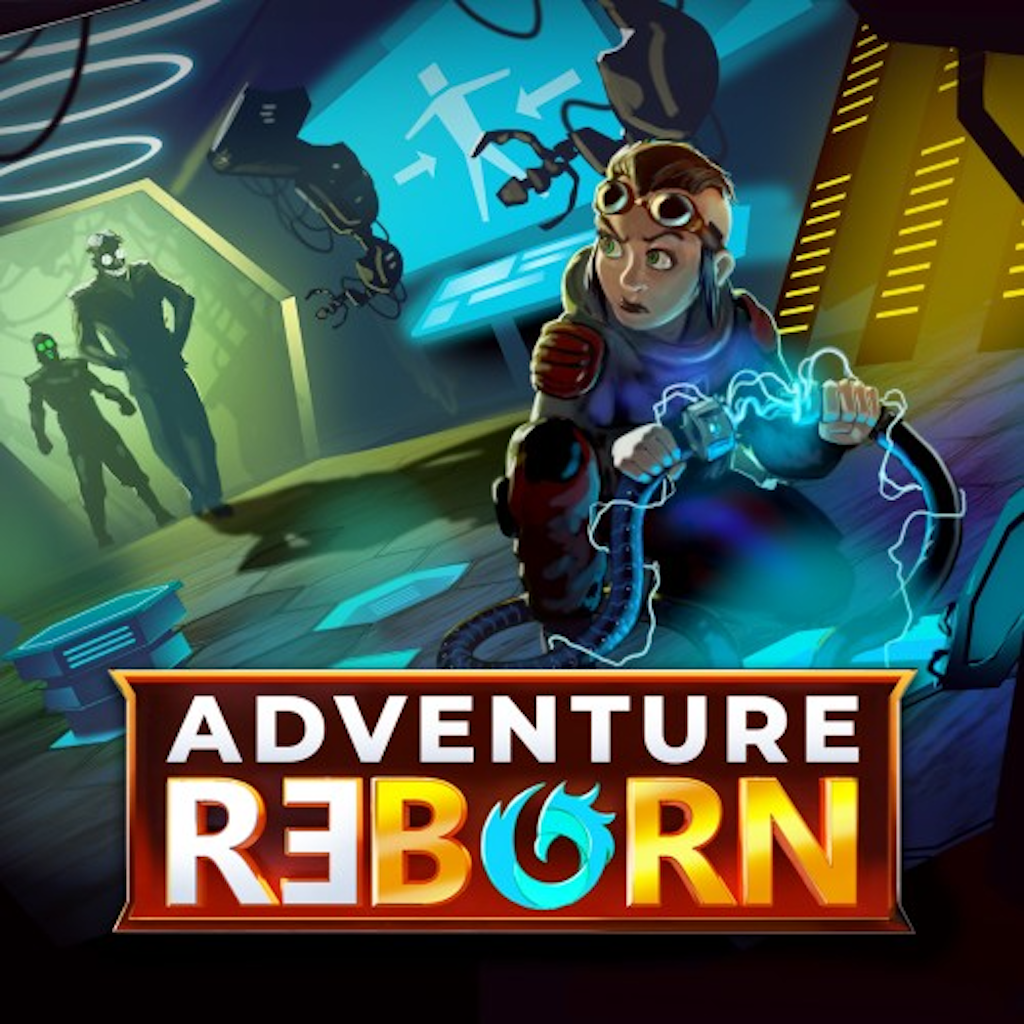
In an era where many adventure titles aspire to cinematic spectacle or narrative bombast, Adventure Reborn stakes its claim with an earnest focus on exploration, emergent problem-solving, and environmental storytelling. Designed to evoke curiosity over constant spectacle, this game reframes adventure not as a checklist of quests but as a tapestry of interconnected discoveries, layered mysteries, and player-driven interpretation. It is an experience that privileges atmosphere and discovery over linear narrative thrust — a bold choice that both distinguishes it and, at times, constrains its appeal.
What Adventure Reborn sets out to achieve is clear: a world that feels alive, layered, and waiting to be interpreted. It builds on classic adventure sensibilities — exploration, puzzle interaction, non-combat challenges, hidden lore — and presents them in a context where pacing and ambience matter as much as solutions. The result is a game that resonates with players who appreciate slow reveals and context-driven engagement, but may test the patience of anyone expecting constant action or overt narrative guidance.
Premise and Worldbuilding
Adventure Reborn does not begin with an overt exposition. There is no prologue with voiceovers, no ticking clock threatening apocalypse, and no immediate goal rammed into players’ faces. Instead, it opens with mystery: a protagonist awakened in a strange world, fragments of memory shrouded in symbolism, and a landscape populated with relics of a forgotten civilisation. The world itself — a verdant archipelago threaded with ancient ruins — is the real protagonist, a place that seems to have lived many lifetimes and quietly invites players to peel back its layers.
Players soon learn that the central narrative is less about explicit plot beats and more about thematic exploration. The game presents archaeological artefacts, environmental puzzles, and fragmented inscriptions that hint at cultural rise and fall, technological ascendance and collapse, and philosophical examinations of identity, memory, and legacy. These fragments are seldom delivered with verbose exposition; instead, they are couched in visual context and interpretive space. Players are encouraged to connect dots, form hypotheses, and construct meaning at their own pace. This design choice is a double-edged sword: it can yield moments of genuine epiphany, but it also demands patience and intellectual engagement that not all players will find intuitive.
Gameplay: Exploration, Puzzles, and Discovery
Mechanically, Adventure Reborn is rooted in exploration and environmental interaction. The game does not burden players with an inventory of combat weapons or action-oriented skill trees. Instead, interaction is focused on traversal tools, item manipulation, and context-sensitive puzzles that reveal deeper layers of world logic.
Exploration is the heart of the experience, and the world rewards curiosity. Verdant forests conceal hidden shrines; tidal caves open only at specific times of day; seemingly innocuous inscriptions may become keys to deeper mysteries when viewed from alternate perspectives. Furthermore, the map design subtly guides players through pacing zones — open vistas that encourage free movement, and intimate ruins that demand careful observation. This interplay between space and discovery keeps exploration compelling without resorting to arbitrary markers or GPS-style guidance.
Puzzle design in Adventure Reborn warrants special praise. Puzzles range from spatial reasoning — aligning fractured mosaics, activating ancient mechanisms in correct sequences — to multi-layered environmental logic. Importantly, these challenges are never artificial obstacles; they are always woven into the narrative fabric of the world. Solving them feels like uncovering a secret rather than ticking a mechanical box. While some puzzles may feel obtuse on first encounter, the game’s design encourages iterative experimentation, often rewarding partial insights with subtle audiovisual feedback rather than with blunt failure cues.
One standout mechanic is the contextual observation system. Players can focus on elements in the environment and trigger a “reflection mode,” which highlights relational cues — echoes of past inscriptions, faint traces of ancient glyphs, or spatial symmetries that the unaided eye might overlook. This encourages a deeper engagement with the world rather than reliance on trial-and-error hacks.
Visual and Audio Presentation
Visually, Adventure Reborn is a striking world. Its art direction embraces natural beauty without sacrificing readability. Lush greenery, weathered stone, glinting water surfaces, and atmospheric lighting all contribute to a sense of presence. The world feels lived in, as though successive waves of inhabitants have shaped and reshaped these lands over untold years. Ruins and artefacts are textured with believable wear and decay, hinting at long-buried stories that beckon discovery.
The game’s environmental rendering is complemented by a carefully crafted day-night cycle and dynamic weather, both of which influence ambience and traversal. For example, certain paths are accessible only during daylight, while others emerge with the fog at dawn or recede under the moon’s glow. These temporal elements do not merely decorate; they serve as an integral aspect of world logic.
Audio design in Adventure Reborn is similarly attentive. Ambient soundscapes — rustling leaves, distant bird calls, the lap of water against stone — create a tapestry of acoustic presence that enhances immersion. The soundtrack is restrained and evocative, weaving gentle melodies with atmospheric textures that accentuate exploration and reflection rather than dominating it. Together, visuals and audio establish a mood that balances serenity with latent mystery — a crucial aesthetic choice given the game’s contemplative pacing.
Pacing and Player Engagement
Pacing in Adventure Reborn is measured and intentional. This is not a title designed for rapid completion or episodic thrill peaks. Early sections move slowly, introducing players to core systems, contextual cues, and the spatial logic of the landscape. Later segments escalate in complexity, not through faster action, but through deeper puzzles and more intricate environmental storytelling.
This pacing suits players who enjoy unraveling complexity in thoughtful, incremental stages. However, it can feel languid to those accustomed to action-driven progression or more conventional narrative delivery. Some players may find the lack of explicit objectives disorienting early on, and a minority of puzzles risk feeling impenetrable without frequent revisits to earlier areas or notes.
Importantly, Adventure Reborn does not punish players for exploration detours. In lieu of a strict checkpoint or chore-list progression system, it fosters moments of serendipitous discovery. Players might stumble into a hidden chamber far from any quest waypoint, uncovering artefacts that enrich narrative context. For many, this freedom is a strength; for others, it may feel like a lack of direction.
Strengths and Limitations
Strengths:
- Deep, contemplative world built around interpretive narrative rather than explicit exposition
- Thoughtful puzzle design integrated into environmental logic
- Rich atmospheric presentation, both visual and audio
- Rewarding exploration mechanics that encourage curiosity
- Reflective, open-ended pacing that supports emergent discovery
Limitations:
- Pacing may feel slow or opaque for action-oriented players
- Narrative ambiguity may frustrate players seeking defined story arcs
- Early game progression can feel directionless without internal motivation
- Some puzzles verge on overly cryptic without clear visual cues
Final Verdict
Adventure Reborn is an adventure game in the truest sense — not defined by combat waves or timed missions, but by curiosity, piecing together meaning, and the joy of discovery. Its world invites players to ponder, to observe, and to reflect, rewarding those willing to slow down and engage deeply with spatial puzzles and environmental storytelling. The title excels at generating atmosphere and mood, crafting a sense of place that lingers long after play sessions end.
This is not a game for everyone. Its deliberate pace and narrative subtlety demand patience and interpretive engagement. Players seeking fast-paced action or overt cinematic narrative will likely find it less compelling. But for those who appreciate exploratory puzzles, layered lore, and experiential storytelling, Adventure Reborn stands as one of the most thoughtful and immersive entries in the genre.
Ultimately, Adventure Reborn doesn’t so much tell a story as it builds a world that feels worth exploring — a rare and rewarding ambition in a market crowded with spectacle.