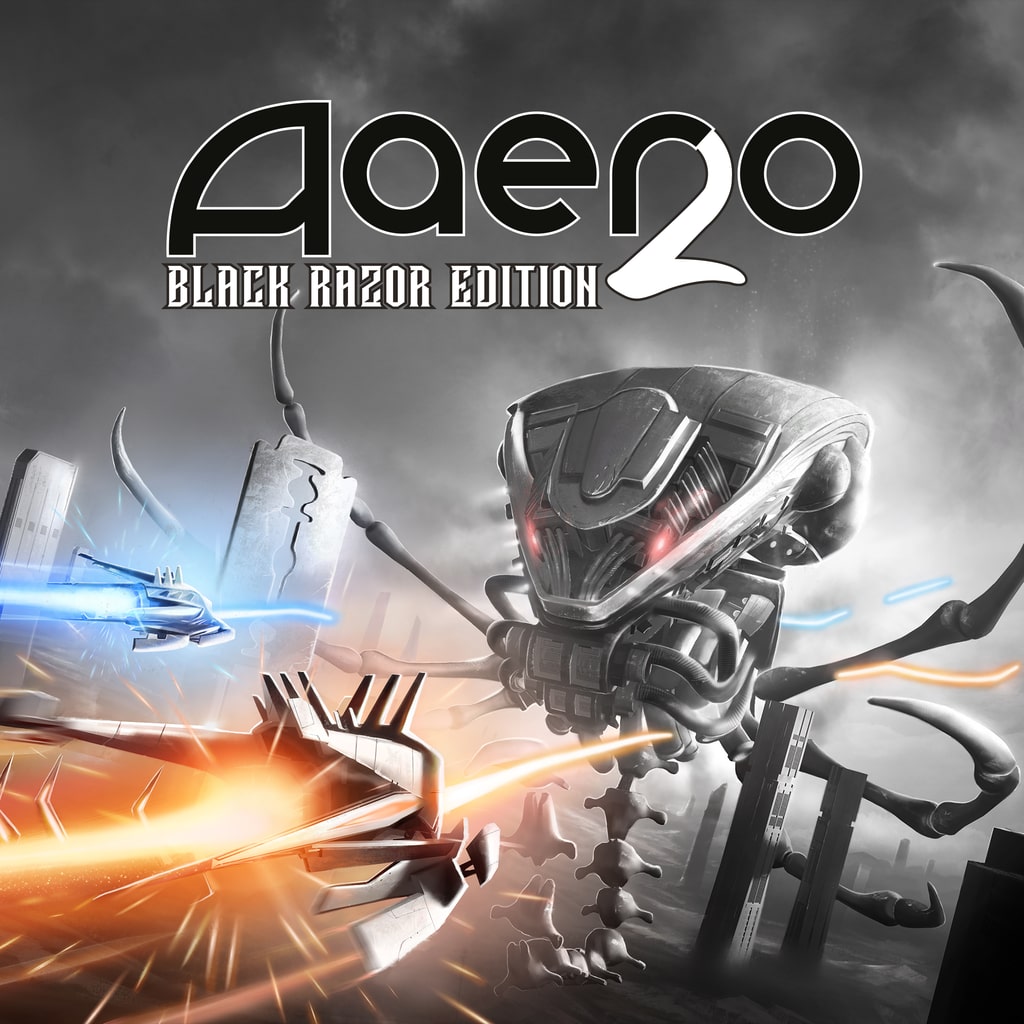
Aaero2: Black Razor Edition takes a confident step forward from its predecessor, refining the core idea of rhythm-driven flight into something leaner, sharper, and more mechanically assured. Where many music-based games treat soundtracks as accompaniment, Aaero2 insists that music is the structure. Every movement, dodge, and attack is bound to audio cues, turning each level into a kinetic score that players must learn to read as much as they hear.
The Black Razor Edition frames this experience as definitive, not through excess content or cosmetic additions, but through focus. It strips away anything that distracts from the central loop: speed, precision, and musical flow. The result is an experience that is both demanding and absorbing, rewarding players who commit fully to its rhythm-first philosophy.
Visual Identity and Sense of Motion
Visually, Aaero2 is striking without being indulgent. Environments are abstract and luminous, built from sharp geometry, glowing trails, and high-contrast colour palettes that emphasise clarity at speed. This is a game designed to be read instantly, even when moving at breakneck velocity.
The Black Razor Edition leans into darker tones and sharper highlights, giving the visuals a more aggressive edge than the original. Particle effects, light streaks, and enemy silhouettes are carefully tuned to avoid visual overload. In a genre where clarity can easily be sacrificed for spectacle, Aaero2 shows restraint.
Camera movement is smooth and confident, maintaining a consistent sense of forward momentum. Crucially, the game avoids unnecessary cinematic flourishes that might disrupt player focus. The ship, the track, and the incoming threats are always readable, reinforcing the importance of flow over flair.
Core Gameplay: Rhythm as Navigation
At its core, Aaero2 is a high-speed rail shooter fused with rhythm mechanics. Players pilot a ship along predetermined paths, tracing musical ribbons while dodging obstacles and destroying enemies in time with the soundtrack.
This structure creates a unique relationship between movement and sound. Following the beat is not optional; it is the safest and most effective way to survive. Deviating from the rhythm often results in mistakes, reinforcing the idea that success comes from listening as much as reacting.
Combat is streamlined but impactful. Weapons feel responsive, and enemy patterns are designed to sync with musical phrasing rather than arbitrary timing. This integration ensures that combat never feels separate from navigation—it is part of the same musical language.
Flow State and Difficulty Curve
Aaero2 excels when it achieves flow, that elusive state where player input, visual feedback, and audio cues align seamlessly. During these moments, the game feels less like a test of reflexes and more like a performance. Success becomes instinctive rather than calculated.
The difficulty curve is firm but measured. Early stages introduce mechanics clearly, allowing players to acclimate to the speed and rhythm demands. As the game progresses, complexity increases through denser enemy placement, tighter timing windows, and more aggressive visual layering.
Crucially, the challenge rarely feels unfair. Failures are typically the result of losing rhythm or overcorrecting movement rather than unpredictable design. This fairness reinforces the learning loop, encouraging players to improve through repetition rather than trial-and-error frustration.
Music and Audio Integration
Music is the foundation of Aaero2, and the Black Razor Edition treats it with respect. Tracks are high-energy and varied, leaning into electronic and metal-infused styles that complement the game’s intensity. Rather than acting as background, the soundtrack actively shapes level design, enemy behaviour, and player movement.
Audio feedback is precise and informative. Hits, dodges, and successful ribbon tracing all produce distinct cues that reinforce timing and accuracy. This clarity is essential, particularly during later stages when visual information becomes dense.
One of the game’s strengths is how it encourages players to learn the music. Familiarity with a track directly translates to improved performance, blurring the line between memorisation and mastery.
Structure and Replayability
Aaero2 is structured around discrete levels, each built around a specific track. This episodic approach suits the game’s rhythm-driven design, allowing players to focus on mastering individual performances rather than grinding through a continuous campaign.
Replayability is central to the experience. Score chasing, cleaner runs, and improved accuracy provide natural incentives to revisit stages. The Black Razor Edition reinforces this by presenting challenges that reward precision and consistency rather than sheer completion.
However, players seeking narrative motivation or dramatic progression may find the structure sparse. Aaero2 is not interested in storytelling beyond abstract framing. Its rewards are mechanical and experiential rather than emotional.
Controls and Responsiveness
Controls are tight and responsive, a non-negotiable requirement for a game built around speed and rhythm. Movement feels immediate, and the ship responds predictably even during rapid directional changes.
The game does not overload players with inputs. Instead, it focuses on doing a few things exceptionally well. This simplicity supports mastery, allowing players to concentrate on timing and spatial awareness rather than memorising complex control schemes.
Pacing and Player Engagement
Sessions in Aaero2 tend to be intense but compact. Levels are designed to deliver sustained focus without overstaying their welcome. This makes the game well-suited to repeated short sessions, though extended play can be mentally taxing.
The Black Razor Edition maintains momentum throughout, rarely allowing the pace to dip. While this consistency reinforces immersion, it also limits tonal variety. Players looking for moments of calm or contrast may find the experience relentlessly focused.
Accessibility and Limitations
Aaero2 makes few concessions to accessibility beyond clear visual design and responsive controls. The reliance on rhythm and speed may pose challenges for some players, and there are limited options to significantly reduce difficulty without altering the core experience.
This uncompromising stance aligns with the game’s identity, but it inevitably narrows its audience.
Final Verdict
Aaero2: Black Razor Edition is a disciplined, confident evolution of rhythm-based action design. It understands the power of flow and builds every system around achieving and sustaining it. By prioritising clarity, responsiveness, and musical integration, it delivers an experience that feels purposeful and refined.
While its narrow focus and lack of narrative depth will not appeal to all players, those who connect with its rhythm-driven philosophy will find a deeply satisfying and replayable experience. Aaero2 does not aim to be broad—it aims to be precise, and in that ambition, it largely succeeds.