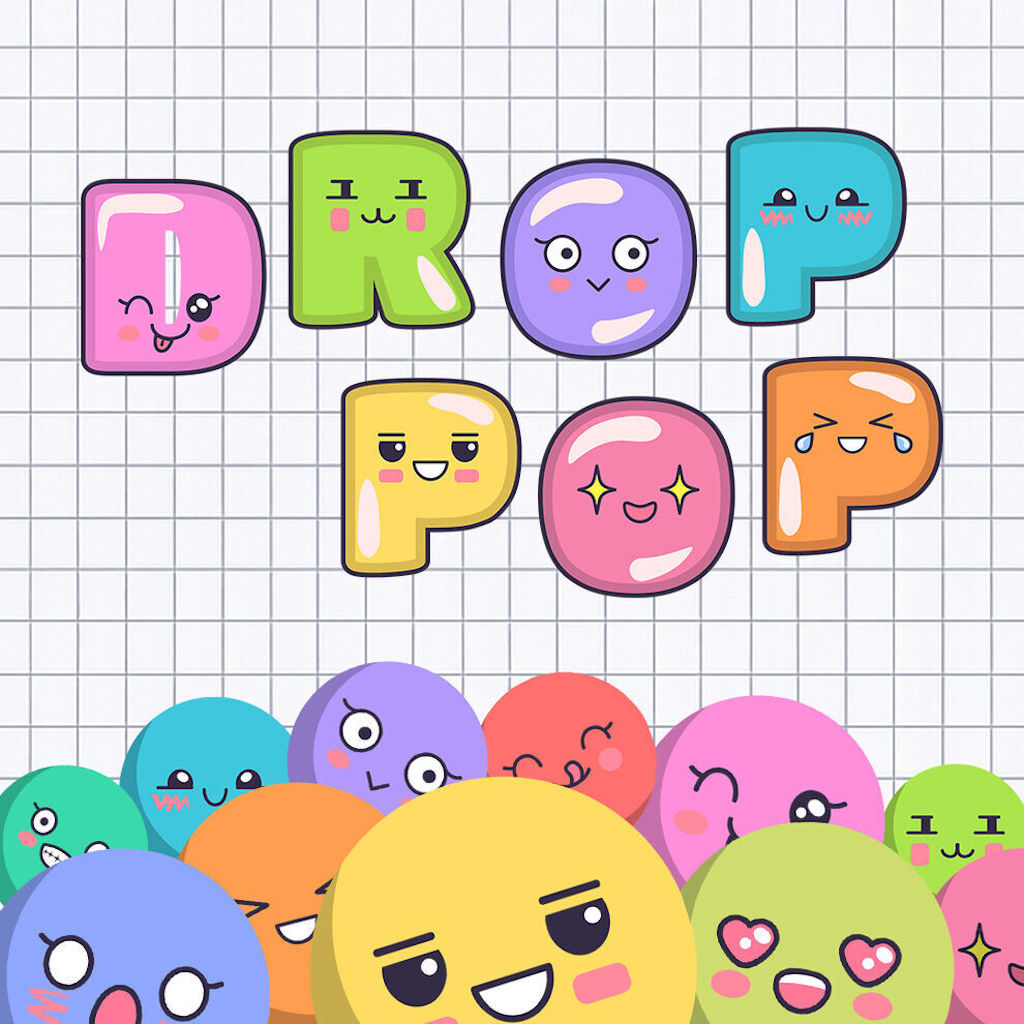
There’s a special kind of magic in puzzle games that don’t demand your attention but quietly earn it anyway. Drop Pop is built entirely around that magic. At first glance, it looks like the kind of mobile-style distraction you might dip into for a few minutes while waiting for something else. In practice, it becomes the thing you didn’t realise you were waiting for.
The premise is almost disarmingly simple: drop colourful balls onto a board, connect matching ones, and watch them merge into larger versions. That’s it. No complicated rules. No tutorials that overstay their welcome. No layers of mechanics designed to intimidate. Just colour, motion, and the quiet satisfaction of making things combine into something bigger.
Yet beneath that simplicity lies a surprisingly addictive puzzle loop that makes Drop Pop hard to put down.
The Pleasure of the Merge
The core mechanic revolves around dropping balls into a play space where gravity and placement determine how they interact. When two matching balls touch, they merge into a larger ball of the next tier. Larger merges mean higher scores and more efficient use of space.
That physicality is key. This isn’t a static match-three grid. Balls roll, bump, stack, and settle in ways that feel natural and slightly unpredictable. You’re not just matching — you’re managing space, angles, and future possibilities.
The satisfaction comes from setting up chain reactions. You drop one ball into a carefully prepared gap, and suddenly three merges happen in sequence, clearing space and boosting your score in a single elegant moment. Those small, cascading victories are what keep the loop compelling.
Every drop feels meaningful.
Relaxation Without Emptiness
Drop Pop proudly advertises that it has no timers, no pressure, and no stress — and it delivers on that promise. You can take as long as you want to line up your next move. There’s no punishment for thinking, no ticking clock forcing rash decisions.
This makes the game instantly welcoming. You can play in a completely relaxed state, dipping in for a few minutes or settling into a longer session without any mental strain.
However, the lack of pressure doesn’t mean the game lacks challenge. The challenge comes from space management and forward planning. As the board fills up, every placement becomes more critical. You start thinking several moves ahead, trying to avoid blocking off future merges or trapping small balls in awkward corners.
It’s calm, but not mindless.
The Subtle Depth of Planning
At first, you’ll play reactively — dropping balls wherever they seem to fit. But as your understanding grows, so does your strategy.
You begin to intentionally stack smaller balls near each other, creating merge opportunities for later. You leave gaps for specific sizes. You plan for the long game, trying to engineer large, high-value merges rather than chasing quick, easy ones.
That shift from casual placement to deliberate planning is where Drop Pop reveals its depth. The mechanics never change, but your approach does. You start treating the board like a puzzle box rather than a container.
And when your plan works — when a carefully prepared setup results in multiple merges in a row — the satisfaction is immense.
Score Chasing and Leaderboards
While the gameplay is designed to be relaxing, the inclusion of leaderboards adds a competitive undercurrent for those who want it. You can ignore it entirely and simply play for personal enjoyment, or you can lean into the score-chasing aspect and try to beat records set by other players.
This dual design is clever. It means the game can be both a meditative experience and a challenge-driven one depending on your mood.
The scoring system rewards larger merges disproportionately, encouraging you to take risks and plan for big combinations rather than settling for safe, small ones. That tension — between safe play and ambitious setups — gives each session a unique rhythm.
You’re constantly asking yourself: do I secure the easy merge now, or gamble on something bigger later?
Clean, Calming Presentation
Visually, Drop Pop leans into soft colours, smooth animations, and a clutter-free interface. The balls are bright and distinct without being overwhelming, and the board is easy to read at a glance.
The animations are particularly satisfying. Merges feel smooth and tactile, with just enough feedback to make each successful connection feel rewarding. Watching balls roll into place and combine has an oddly hypnotic quality.
The sound design complements this perfectly. Subtle effects and gentle audio cues reinforce the calming atmosphere without becoming repetitive or intrusive.
Everything about the presentation supports the game’s relaxing philosophy.
Easy to Learn, Hard to Stop
One of the strongest aspects of Drop Pop is how immediately accessible it is. You understand how to play within seconds. There’s no learning curve, no complex systems to grasp.
But stopping? That’s another matter.
Because each session flows naturally into the next, it’s incredibly easy to say, “I’ll just try one more round.” There’s always the feeling that you could have played that last board slightly better. That you could have set up one more big merge. That your score could have been just a bit higher.
This constant sense of near-improvement is what makes the game so sticky.
Where Simplicity Limits Variety
The very simplicity that makes Drop Pop so appealing can also limit its long-term variety. The core gameplay loop never changes. There are no new mechanics introduced, no evolving board conditions, and no alternate modes to mix things up.
While the puzzle depth comes from player skill rather than mechanical complexity, some players may eventually wish for small variations or additional twists to keep things feeling fresh over extended play.
That said, for a game built around relaxation and repetition, this consistency is arguably part of its charm.
A Perfect “In-Between” Game
Drop Pop excels as a game you play between other things. Between tasks. Between larger games. Before bed. With a cup of tea. It doesn’t demand emotional investment or intense focus, yet it still provides meaningful engagement.
It’s the kind of game that fits into your routine rather than taking it over.
And in today’s landscape of high-intensity, high-commitment titles, that’s a welcome change.
Final Verdict
Drop Pop proves that simple ideas, when executed with care and polish, can be incredibly compelling. Its relaxing, pressure-free design is paired with satisfying merge mechanics and subtle strategic depth, making it easy to pick up and hard to put down. While it could benefit from more variety over time, it succeeds brilliantly at what it sets out to be: a calming, addictive puzzle experience that quietly earns hours of your time.