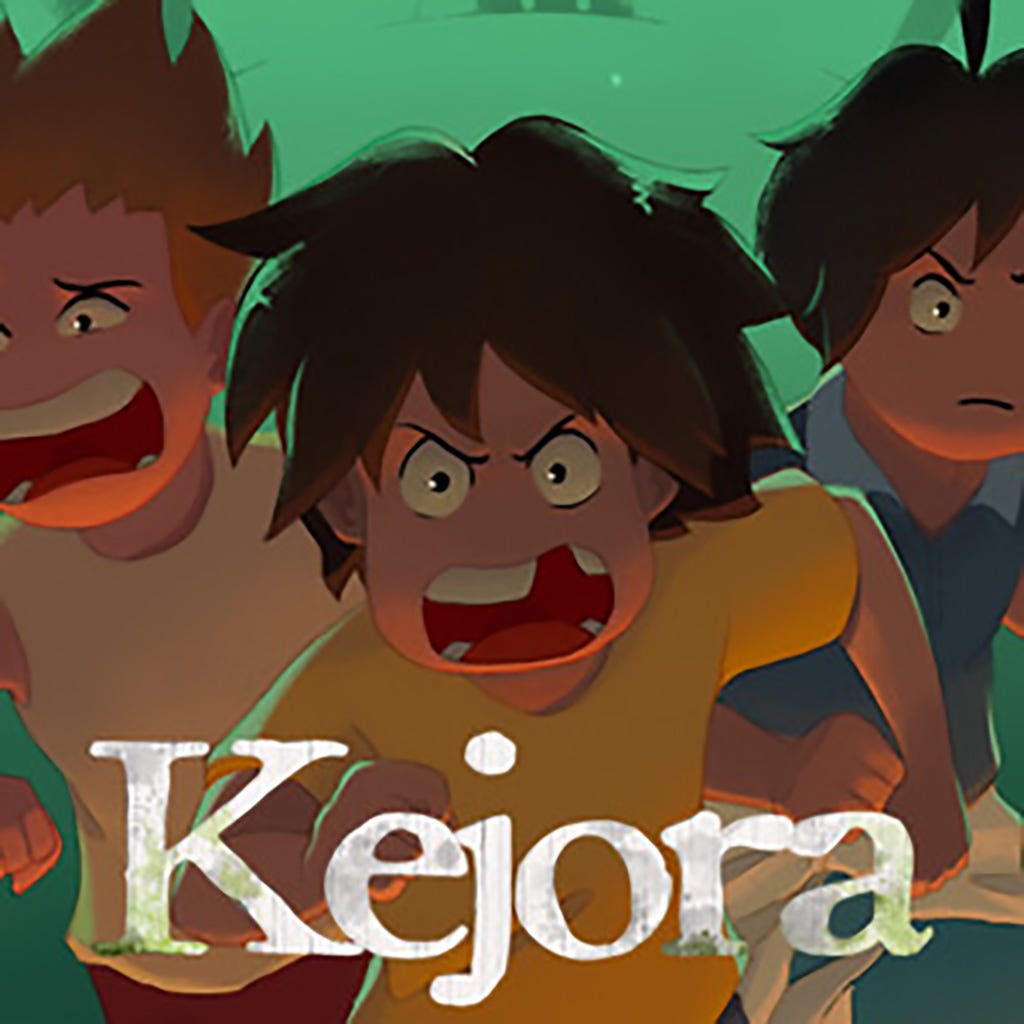
In a field crowded with action blockbusters and high-stakes competition, narrative and exploration games like KEJORA remind us that video games can also be spaces for contemplation, introspection, and lyrical emotion. Named after the Malay word for “star” or “morning star,” KEJORA unfolds like a gentle constellation of moments — each one subtle, evocative, and steeped in atmosphere.
Rather than testing reflexes or demanding mastery of complex systems, this game invites you to wander, observe, and absorb. It embraces simplicity in mechanics but depth in mood, emotion, and theme. The experience is deliberately paced, encouraging players to savour each beat rather than rush toward an endpoint.
This is not a “game” in the traditional sense of high tension and clear metrics of success. It is an experience — like a short story, a poem, or a photograph rendered in motion. And like those forms, KEJORA is at its best when it fosters reflection and feeling over spectacle.
Story and Themes: Quiet Reflection Under Open Skies
At its heart, KEJORA is a story about coming to terms with distance — emotional, geographic, temporal — and the quiet ways we navigate that distance from moment to moment. The narrative rarely speaks in outright exposition. Instead, it unfolds through:
- Environmental cues
- Character gestures
- Vignettes of daily life
- Music and sound design
- Subtle contextual hints
You are not given a traditional journal, quest log, or prominent narrator. Instead, what little backstory exists is discovered through observation and interpretation. There is an open-endedness to the way the story reveals itself, meaning that two players may walk away with different impressions based on what touched them.
Thematically, the game explores:
- Memory and melancholy
- Connection and silence
- Growth and letting go
- The quiet weight of ordinary days
The title’s emphasis on star imagery and night as metaphors reinforces these ideas. Stars signify constancy and distance, and KEJORA uses celestial imagery as a poetic backdrop to its human moments.
Gameplay and Core Mechanics: Exploration With Intention
Mechanically, KEJORA is minimal — but that minimalism is by design rather than limitation.
Core Loop
The core gameplay loop revolves around:
- Exploration: Moving through a series of beautifully rendered environments
- Interaction: Touching objects, listening to ambient storytelling beats
- Environmental Puzzles: Light contextual puzzles that open paths or unlock scenes
- Discovery: Finding optional bits of story or space that reward patience
There are no combat systems, no skill trees, and no high-score goals. Instead, progression unfolds organically as the player engages with the spaces and moments the game offers.
For players used to heavy mechanics or incentive structures like XP, collectibles that force flagging, or competitive challenges, KEJORA might initially feel underwhelming. But for those willing to embrace its rhythm, the result is an atmospheric journey that feels deeply personal and spacious.
Movement and World Interaction
Movement is smooth and intuitive. There’s a gentle quality to how your character traverses hills, walks through towns, or climbs gentle ridges of landscape. No controls feel overloaded — every input has purpose, every mechanic is unobtrusive.
Interaction is often as simple as approaching an object or location. The narrative blossoms around these interactions, but never insists on lamps-on storytelling. A discarded notebook, a swing blowing lightly in the wind, or the distant silhouette of a figure can all unfold meaning without verbosity.
This design choice turns KEJORA into an invitation: not to conquer, but to comprehend.
Visual Presentation: Art as Atmosphere
One of KEJORA’s greatest strengths is its visual aesthetic. The game embraces painterly environments that evoke a sense of place even when they are sparse of details.
The world feels hand-crafted:
- Soft edges and gentle palettes
- Warm light at dawn and dusk
- Crisp nighttime skies sprinkled with stars
- Natural and human-made structures that feel weathered, familiar, or quiet
Textures are not hyper-real; instead, they are evocative. They invite your mind to fill in gaps rather than overwhelm your senses with noise.
This visual approach reinforces the game’s thematic tenor: that the beauty of a place isn’t merely in its clarity, but in the impressions it leaves behind.
Audio Design: Sonic Nuance and Emotional Resonance
KEJORA’s audio design deserves praise. Ambient sounds — wind, distant footsteps, the creak of old wood — are spatially rendered with subtlety. These sound cues are not distracting; rather, they anchor screen space in tactile reality.
Music is sparing and intentional. The score leans into:
- Melancholy piano motifs
- Quiet reverb that extends moments
- Ambient harmonies that mirror emotional atmosphere
This restrained approach ensures that music supports rather than overshadows the moment. In a genre defined by tension and resolution, KEJORA chooses consideration over conflict — and the audio design mirrors this choice beautifully.
Pacing and Emotional Engagement
The pacing in KEJORA is at once its most beautiful asset and its most polarising one.
There are no timers. No waves of enemies. No urgent quests.
Just space — and time to breathe in it.
This pacing encourages a contemplative state akin to reading a novel at dusk rather than sprinting through a gripping action story. Some players will find this refreshing; others may struggle to maintain engagement without traditional incentives.
For those open to its flow, KEJORA can evoke a surprising range of emotion — nostalgia, quiet wonder, sadness that lingers like a half-remembered dream.
Replayability and Longevity
Unlike traditional adventure or RPG titles that rely on mechanical progression for replay value, KEJORA’s replayability is thematic rather than systemic.
Players may choose to revisit:
- Optional scenes or interactions they missed
- Alternative visual routes
- Sensory experience of landscape and sound
- Emotional resonance with moments that felt personal
In this sense, KEJORA rewards not mastery, but mindfulness. It isn’t a game you “complete” in the conventional sense; it’s one you return to for reflection.
Where It Could Improve
No game is perfect, and KEJORA has a few areas that may not land for every player:
- Minimal Mechanics: Players seeking depth in mechanical systems may feel the design too sparse.
- Slow Pacing: The unhurried flow is beautiful but may feel aimless to players who prefer more structure.
- Abstract Narrative: Ambiguous storytelling can be evocative, but may also feel vague or disconnected to those who favour clarity.
These criticisms aren’t failings so much as style choices — but they do shape who the game will most appeal to.
Final Verdict
Pros:
- Rich, meditative atmosphere with emotive worldbuilding
- Fluid, intuitive exploration without distraction
- Atmospheric art and audio that reinforce thematic intent
- Narrative that rewards attention and personal interpretation
Cons:
- Mechanics are minimal by design
- Pacing feels slow compared to mainstream titles
- Narrative ambiguity isn’t for every player
Summary:
KEJORA is an introspective journey disguised as a game. Its beauty lies not in complex systems or flashy spectacle, but in quiet spaces, meaningful interactions, and emotional nuance. Where many games shout for attention, KEJORA whispers — and in that whisper, there is grace.
For players who enjoy exploration, atmosphere, and narrative subtlety, this is a worthy journey. It may not satisfy those seeking adrenaline or mechanical depth, but for thoughtful engagement and immersive reflection, KEJORA shines brightly.