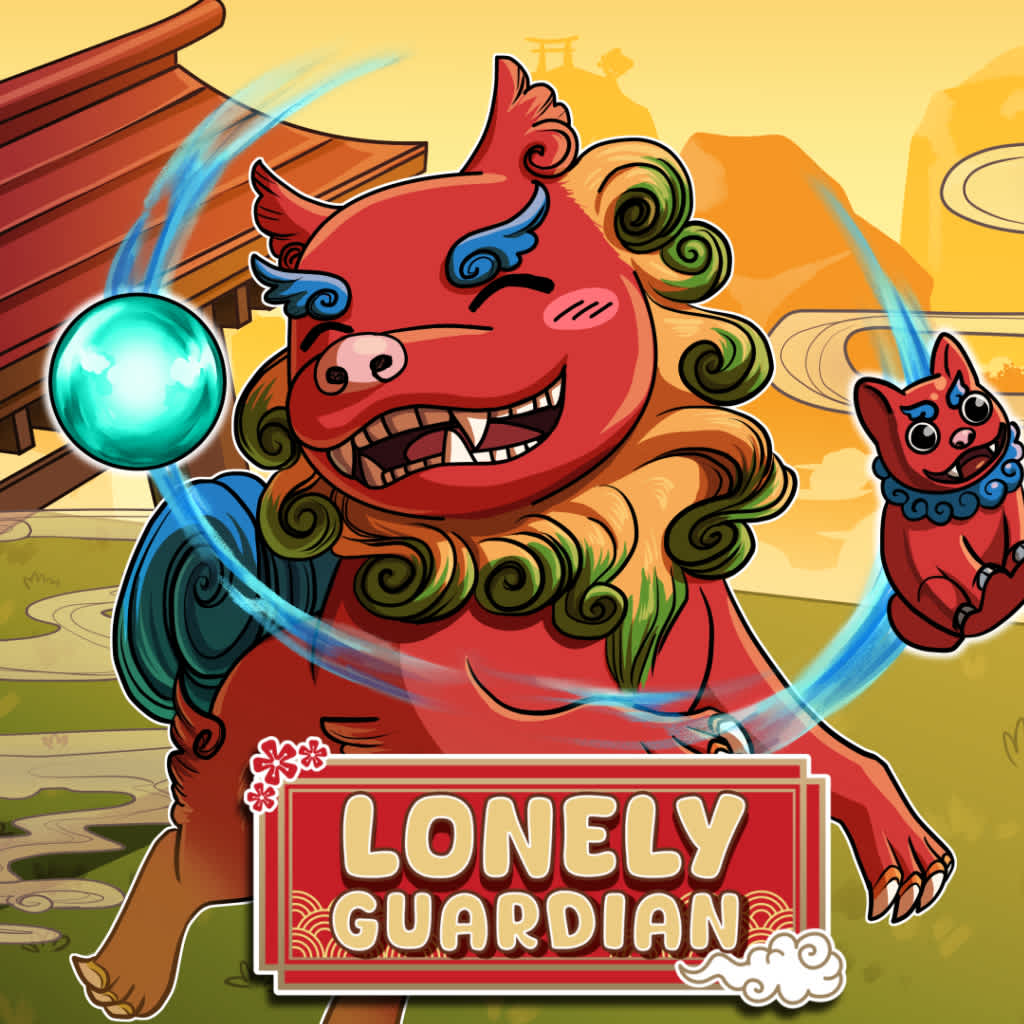
In a crowded landscape of action and tower-defense hybrids, Lonely Guardian distinguishes itself not with frenetic pace or high-octane spectacle, but with measured tension, thoughtful pacing, and a surprisingly evocative theme: the solitude of duty. It’s a game about vigilance, sacrifice, and strategy, wrapped in a minimalist aesthetic that emphasises moments of calm as much as pressure. While not without imperfections, Lonely Guardian is a distinctive and compelling experience that rewards patience, planning, and emotional engagement as much as tactical mastery.
This is not an adrenaline-driven blastathon. It’s a meditation on constraint and choice — a game that finds depth not in explosive action, but in the quiet tension before the storm.
Less Chaos, More Care
Lonely Guardian begins with simplicity: you are a solitary protector tasked with guarding a sacred artifact against waves of encroaching threats. The setup feels familiar — defensive positioning, enemies approaching in patterns, limited resources to deploy abilities — yet the game subverts expectations by turning restraint into a meaningful mechanic.
Instead of overwhelming assault after assault, Lonely Guardian paces its encounters. There are gaps between enemy waves where strategy and resource management matter just as much as the action itself. These quiet intervals, when taken alongside the game’s atmospheric presentation, reinforce a sense of responsibility rather than mere survival. You’re not just holding ground — you’re guarding something precious.
It’s this tone that gives Lonely Guardian its emotional resonance. It is, in a sense, a game about loneliness — but also about persistence and purpose.
Gameplay: Layered Defense Meets Strategic Consideration
At its core, Lonely Guardian blends tactical defense with real-time positioning. You control your Guardian in an open arena, placing defensive elements, timing special abilities, and repositioning dynamically as threats emerge from predictable but varied points.
The mechanics are deceptively rich. Early on, you’ll manage basic defenses — static barriers, simple traps, and straightforward abilities. These teach core concepts: how to prioritise threats, where to funnel enemy paths, and how to maintain effective spacing between waves.
But as the game progresses, the decisions deepen:
- Resource allocation: Do you bank energy to deploy a powerful defensive aura later, or spend it now on quick-deploy traps?
- Unit synergies: Some defenses are cheap and plentiful but easily overwhelmed; others are expensive but turn the tide if placed correctly.
- Positioning: The Guardian isn’t stationary. Where you stand influences not just threat responses, but the effective range of abilities.
This blend of macro strategy and micro decisions elevates Lonely Guardian beyond the rote wave-management of many tower-defense derivatives. Every level feels like a puzzle with multiple possible solutions — and discovering your preferred approach is part of the joy.
Aesthetic Restraint With Purpose
Visually, Lonely Guardian adopts a deliberately muted style: earthy tones, quiet environments, and minimal flourishes that emphasise atmosphere over spectacle. This aesthetic isn’t a lack of ambition — it’s a considered choice that aligns perfectly with the game’s theme.
Enemies are distinct without being overly busy; defensive elements are clear and readable; and your Guardian stands out without dominating the screen. The choice to avoid flashy particle effects or loud, chaotic visuals serves the gameplay well, especially when clarity of information is crucial.
Sound design follows the same philosophy. Ambient audio — distant winds, low hums, and soft environmental cues — sets a mood without commanding attention. Combat sound effects are muted but effective, punctuating encounters without overwhelming the ears. The soundtrack is contemplative, leaning into minimalist textures that underscore solitude rather than spectacle.
Together, these elements create a cohesive aesthetic that prioritises tone and communication over sensory overload — a choice that feels rare and welcome in modern action titles.
Difficulty and Balance
One of Lonely Guardian’s most impressive achievements is how it handles difficulty. The game never feels unfair, but it does demand mastery of its systems. Difficulty increases not via bullet sponges or artificial health pools, but through strategic complexity — layering enemy behaviours, resource constraints, and timing pressure in ways that require players to anticipate rather than react.
Early waves feel like tutorials in disguise, allowing you to practise placement, timing, and basic prioritisation. Later encounters, however, require careful planning and thoughtful adaptation. Quickly placed defenses may hold early threats, but they crumble when later enemies shift patterns or sink deeper into armour.
This progression respects player learning. The challenge never feels like a sudden leap, yet there’s a tangible sense of growth. Strategies that worked early in the game must be refined or entirely rethought as new mechanics emerge.
That said, the game isn’t without occasional balance quirks. Some defensive tools — especially when unlocked at intermediate tiers — can feel significantly more effective than others, leading players to favour a subset of tactics and potentially narrowing the playstyle variety early on. With future patches or balancing updates, this is an area that could be improved. But as it stands, these quirks rarely derail the experience — they’re more like efficiency hubs to explore than hard walls to overcome.
Narrative Through Isolation
Lonely Guardian doesn’t lead with exposition, cutscenes, or dialogue. Instead, its story unfolds through environmental storytelling and subtle context. As you progress, you glimpse hints of a wider world — weathered relics, occasional inscriptions, and contextual flavour that enriches the narrative without dominating the experience.
This restrained approach works well for the game’s thematic core. Solitude is not just a gameplay mechanic — it’s narrative tone. The lack of chatter, overt plot twists, or dramatic character arcs reinforces your role as a lone sentinel in a quiet, uneasy world.
For players who prefer narrative density or character-driven stories, this may feel minimalist. But for those who enjoy storytelling through atmosphere and implication, it’s deeply satisfying.
Replayability and Endgame
Once the primary progression curve is completed, Lonely Guardian doesn’t simply switch off. Multiple systems encourage continued engagement:
- Optional challenge modes: Harder waves, restricted resources, and altered enemy patterns provide replay value for experienced players.
- Score optimisation: For those who enjoy refining strategy, comparing efficiency or completion times extends longevity.
- Tactical exploration: Small changes in placement order, ability timing, or defensive composition can yield drastically different outcomes and offer rich replay potential.
It’s not an endless sandbox, nor does it promise indefinite evolution — but it does respect the notion that mastery is a moving target rather than a static endpoint.
Final Thoughts
Lonely Guardian is a standout example of what happens when a game chooses clarity of design over superficial spectacle. Its aesthetics reinforce its themes, its mechanics invite thoughtful engagement rather than frantic reflexes, and its pacing is defined by tension and release rather than constant escalation.
This is a game that rewards careful thinkers and patient planners. It’s not for everyone — those expecting high-octane action or bombastic set pieces may find its tempo restrained — but for players who appreciate atmospheric design, deliberate strategy, and subtle narrative tone, it offers a richly rewarding experience.
In a genre that sometimes prioritises chaos, Lonely Guardian is a guardian of balance itself: quiet, observant, and quietly compelling.