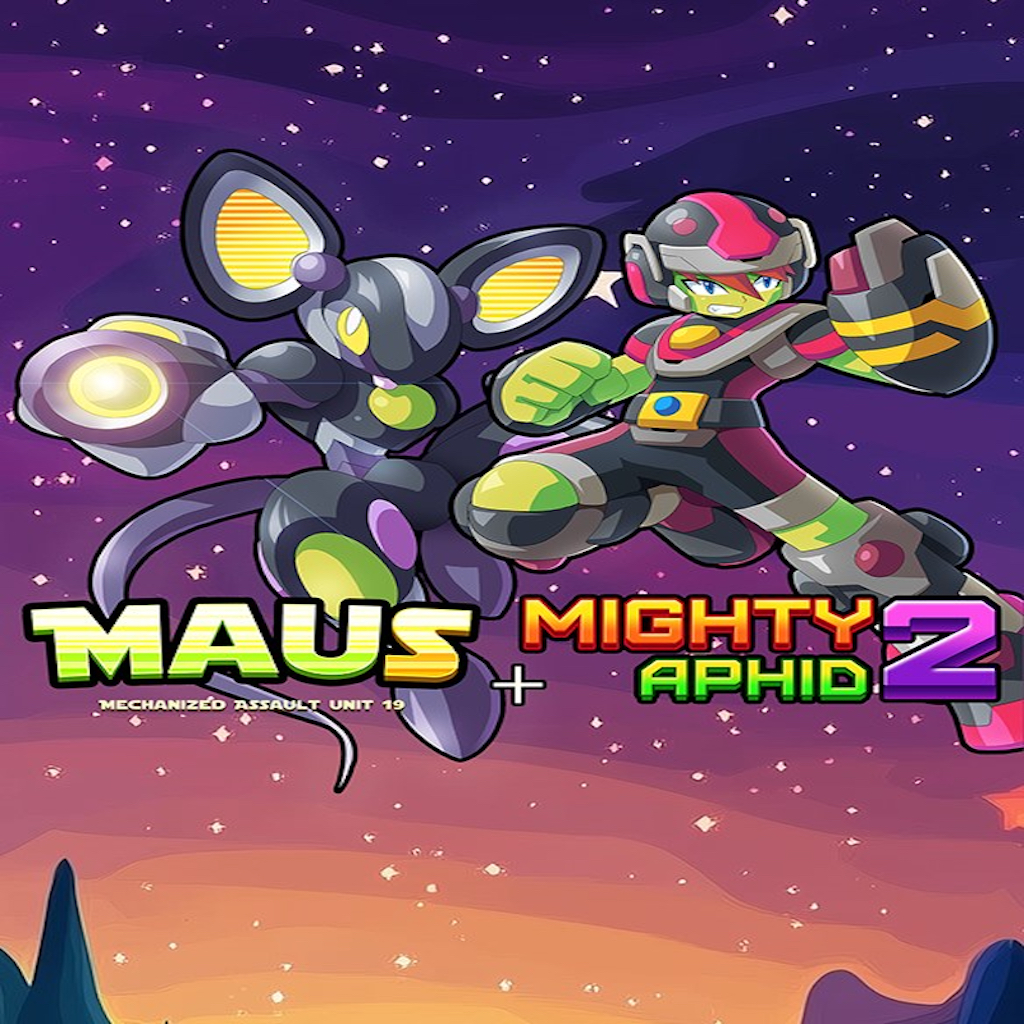
Bundles in gaming can be a mixed bag — sometimes a few forgotten titles dusted off alongside a headliner, other times a purposeful pairing of experiences that complement one another. M.A.U.S + Mighty Aphid 2 falls heavily into the latter category: two distinctive, boldly designed games that occupy different corners of the action genre but share a zeal for kinetic fun, player expression, and mechanical ingenuity. Whether taken together as a package or savoured individually, both games showcase what happens when developers take familiar frameworks and twist them into something strange, vibrant, and hugely enjoyable.
In a market increasingly dominated by sprawling open worlds and AAA spectacle, this double release is a refreshing reminder of how compelling concise, creative gameplay experiences can be.
M.A.U.S — Tactical Pacing With Explosive Payoff
M.A.U.S (short for Mobile Autonomous Utility System) opens the bundle with a mechanic-driven approach that rewards patience as much as skill. It doesn’t wear its intentions on its sleeve; instead, M.A.U.S invites you to learn its rhythms — to breathe, plan, and then strike with purpose.
Strategy in Motion
At its core, M.A.U.S is an action strategy hybrid. Players control a mobile unit in top-down space, navigating hostile environments and clearing out waves of enemies using a modular arsenal. The twist lies not in the tools you’re given, but in how you choose to wield them. Instead of one-button shooting sprees, the game emphasizes strategic positioning, resource management, and thoughtful deployment of abilities.
The pacing here is a standout feature. Combat isn’t a blur of reactions; it’s about anticipation. Enemies telegraph their approach, spaces open and contract, and each encounter feels like a puzzle to be solved on the fly. M.A.U.S rarely feels unfair, but it takes effort — and that effort is rewarded not just with success, but with a growing sense of mastery.
This is tactical design done well: simple rules, emergent complexities, and encounters that evolve rather than repeat.
Systems That Empower
One of M.A.U.S’s greatest strengths is how it encourages experimentation. Weapons and utilities can be swapped, upgraded, and custom-tuned to suit your preferred playstyle. Whether you favour a defensive posture with area control tools or an aggressive build focussed on raw damage, the systems accommodate different strategies without feeling unbalanced.
Resource scarcity adds weight to decision-making. Do you expend valuable energy on clearing a room quickly, or do you pull back, conserving resources for what comes next? These small micro-decisions add up, imbuing each run with tension and consequence without ever becoming punishing.
Difficulty is tuned with finesse. The game respects its players’ time, offering challenge without cruelty — a balance that that it strikes consistently throughout.
Presentation and Polish
Visually, M.A.U.S favours clean clarity over graphical excess. Units, enemies, and environments are readable and distinct, even in hectic moments. This functional design aids gameplay, ensuring that players can focus on decisions rather than deciphering visuals.
Sound design is equally effective. Audio cues provide important feedback — enemy alerts, ability triggers, and environmental sounds all communicate useful information without noise clutter. The soundtrack adapts fluidly to pacing, underscoring tension or calm without dominating the mix.
This isn’t a game about spectacle; it’s about execution. And every design choice supports that goal.
Mighty Aphid 2 — Supersonic Platforming With Attitude
If M.A.U.S is measured and tactical, Mighty Aphid 2 is its kinetic opposite: loud, fast, and gleefully over the top. This sequel channels classic run-and-gun mechanics while injecting its own brand of insectoid insanity, creating an experience that’s equal parts nostalgia and innovation.
Reflexes and Rhythm
Mighty Aphid 2 puts you in control of a hyper-powered insectoid hero blasting through stages teeming with quirky enemies, environmental hazards, and frenetic momentum. Movement is crisp — a satisfying blend of precision platforming and high-speed execution. Every jump feels intentional, every dodge a promise of survival.
Combat is frantic but never chaotic. Weapon pickups, bombs, and special attacks add layers of strategy to what might otherwise be pure reflex play. Enemies are varied in behaviour and attack patterns, demanding that players stay sharp and responsive rather than just rapid.
The level design wears its lineage proudly — there are echoes of genre classics in its pacing and structure — but Mighty Aphid 2 never feels derivative. Instead, it takes familiar notes and rearranges them into something fresh: a beat you can’t help but move to.
Style With Substance
Part of Mighty Aphid 2’s success lies in its identity. The visuals are vibrant, with character design that balances whimsy and grit. Stages feel alive, not just obstacle courses, and animated background elements add depth without cluttering the foreground.
The audio complements the aesthetic perfectly. A pumping soundtrack propels action forward, cues punctuate hits and misses with satisfying punch, and ambient effects keep each stage feeling energetic and dynamic.
Where some action games can feel empty behind their speed, Mighty Aphid 2 uses its audio and visual design to build a world you care about — even if it’s wild and absurd.
Challenge That Respects the Player
Difficulty in Mighty Aphid 2 is well calibrated. Early levels act as excellent tutorials — not through intrusive prompts, but through thoughtful level transitions that teach mechanics organically. Midgame introduces obstacles that feel like genuine tests of skill, and boss encounters cap stages with satisfying duels that require pattern recognition and precision.
The game doesn’t hold your hand, but it doesn’t ever feel unfairly cruel. Deaths are learning opportunities, and checkpoints are generous enough to keep momentum flowing without cheapening the challenge.
Replayability is solid. Time trials, hidden collectibles, and optional challenges extend engagement beyond the main campaign, offering reasons to return even after completion.
Two Experiences, One Unified Voice
Together, M.A.U.S and Mighty Aphid 2 showcase two sides of well-executed action design: one abstract and methodical, the other quick and exuberant. What unifies them is a dedication to player agency, carefully tuned mechanics, and a clear understanding of rhythm — whether that rhythm is the calm before an encounter or the pulse of a frenetic boss fight.
Both games do what they set out to do with confidence. There’s no shallow imitation of bigger titles here, only thoughtful explorations of what makes action games gratifying: choice, consequence, and that moment of mastery when a run clicks into place.
Minor Hiccups
No bundle is without slight flaws. M.A.U.S, for all its tactical grace, occasionally introduces pacing dips where long stretches can feel quieter than the tension the title sets up. In Mighty Aphid 2, the sheer pace and visual busyness may overwhelm players who prefer more measured gameplay.
These nitpicks are minor in the context of overall quality — rough edges on polished gems.
Final Thoughts
The M.A.U.S + Mighty Aphid 2 bundle is a rare double feature where both games stand confidently on their own while offering complementary experiences. Whether you lean into the thoughtful ebb and flow of M.A.U.S or the rapid, gleeful rhythm of Mighty Aphid 2, you’re getting refined mechanics and creative vision, not just surface thrills.
This is the sort of package that reminds players why smaller action titles still matter: clarity of design, respect for player engagement, and a willingness to explore ideas without losing sight of fun.