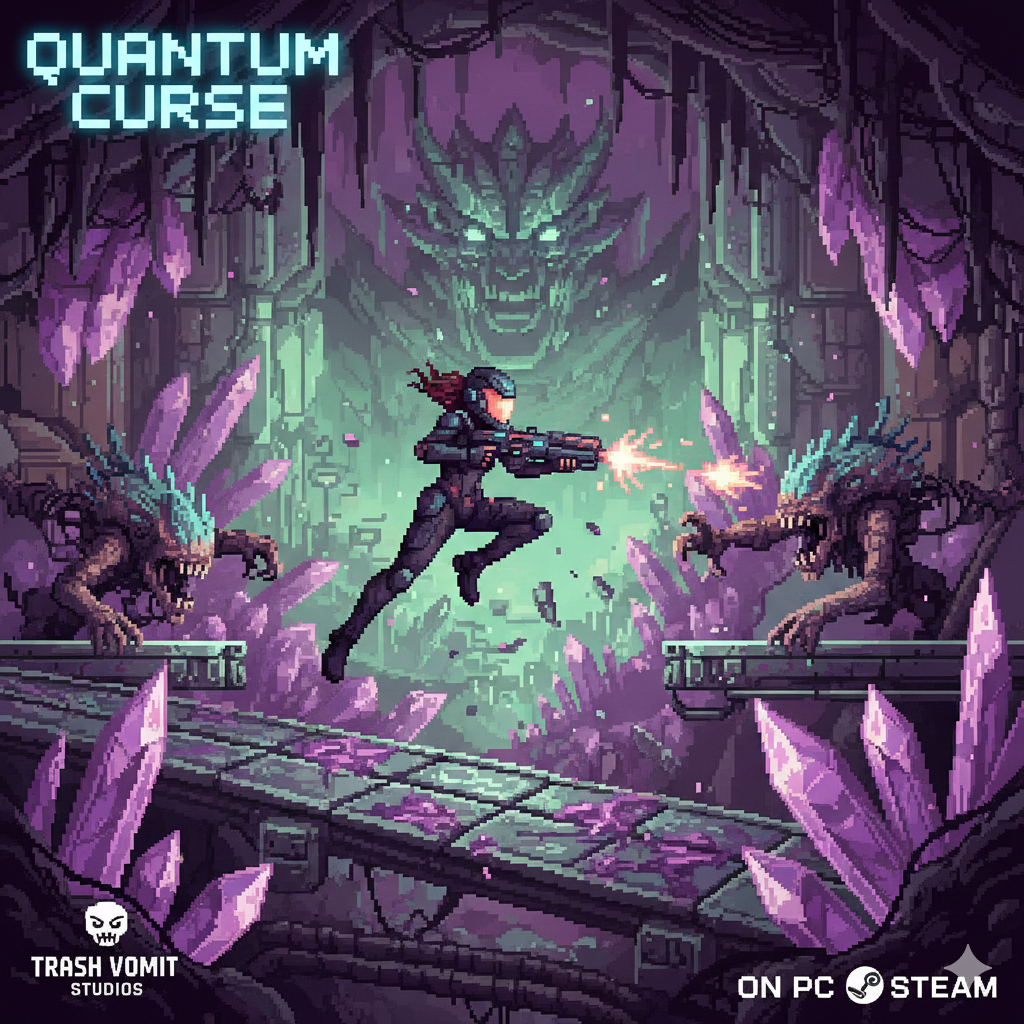
In a genre crowded with atmospheric exploration and retro-inspired mechanics, Quantum Curse positions itself as a confident and ambitious Metroidvania that blends sci-fi mystery, methodical combat, and thoughtful environmental design. Rather than chasing spectacle or overwhelming players with constant action, the game focuses on discovery, progression, and the slow unraveling of a world shaped by scientific hubris. The result is an experience that feels deliberate, tense, and rewarding — especially for players who enjoy exploration-driven design grounded in strong thematic cohesion.
After extended time navigating its interconnected regions, mastering its combat systems, and engaging with its layered progression mechanics, Quantum Curse emerges as a well-constructed indie title with a clear vision. While it occasionally stumbles under the weight of its own ambition, its strengths far outweigh its shortcomings.
Narrative and Worldbuilding
Quantum Curse places players in the role of a test subject caught in the aftermath of a catastrophic scientific experiment. Awakening in a derelict research facility with fragmented memories and strange new abilities, players are tasked with uncovering the truth behind the experiment, the fate of the facility’s staff, and the nature of the quantum forces now shaping reality.
Narrative delivery is intentionally restrained. Rather than relying on cutscenes or heavy dialogue, the game tells its story through environmental storytelling, scattered data logs, cryptic terminals, and visual cues embedded within the world itself. This approach rewards careful observation and exploration, allowing players to piece together the narrative at their own pace.
While this style may feel opaque to players who prefer explicit storytelling, it fits perfectly with the game’s themes of uncertainty, discovery, and fractured reality. The story never dominates the experience, but it provides enough intrigue to motivate exploration and contextualise progression.
Exploration and Level Design
Exploration is the backbone of Quantum Curse. The world is divided into multiple interconnected laboratory zones, each with its own identity, hazards, and traversal challenges. From sterile research halls and power-starved reactor chambers to corrupted quantum zones that defy conventional physics, each area introduces new mechanics and visual cues that keep exploration engaging.
The Metroidvania structure is well-executed. Progression is gated by abilities that meaningfully change how players interact with the environment. New movement options open previously inaccessible routes, encouraging backtracking that feels purposeful rather than tedious. Shortcuts gradually knit the map together, reinforcing a strong sense of spatial coherence.
Environmental puzzles are integrated naturally into level design. Rather than existing as isolated challenges, they are woven into traversal itself, requiring players to manipulate platforms, activate quantum nodes, or shift environmental states to progress. These puzzles rarely feel intrusive and generally complement the game’s pacing.
Quantum Mechanics and Puzzle Design
One of Quantum Curse’s defining features is its use of quantum-themed mechanics. Certain areas allow players to manipulate objects or environmental states tied to quantum energy, altering physics, activating alternate paths, or reshaping hazards. These mechanics add variety and reinforce the game’s sci-fi identity.
When used well, these sequences feel inventive and satisfying, forcing players to think spatially and experiment with cause-and-effect interactions. However, not every quantum puzzle lands perfectly. A handful rely more on trial-and-error than clear logic, which can momentarily disrupt flow. Even so, these moments are the exception rather than the rule and rarely derail overall enjoyment.
Combat and Enemy Variety
Combat in Quantum Curse is deliberate and measured. Players begin with basic weaponry and gradually unlock upgrades and abilities that expand combat options. Encounters emphasise positioning, timing, and awareness rather than button-mashing, rewarding players who learn enemy patterns and terrain advantages.
Enemy variety is solid. Early foes serve as training tools, introducing movement and attack fundamentals, while later enemies demand more tactical engagement through shields, ranged attacks, or aggressive behaviour. Environmental hazards often intersect with combat, adding tension and forcing players to stay alert.
Boss encounters are a standout feature. Each boss is visually distinct and mechanically focused, testing mastery of recently acquired abilities. These fights feel challenging but fair, relying on pattern recognition and execution rather than artificial difficulty spikes.
Progression and Player Growth
Progression in Quantum Curse is both tangible and satisfying. New abilities not only enhance combat effectiveness but fundamentally reshape exploration. Mobility upgrades in particular — such as advanced jumps, dashes, or traversal tools — transform how players approach the world, breathing new life into earlier areas.
Upgrades are carefully paced. The game avoids overwhelming players with options, instead introducing systems gradually so that each new tool feels meaningful. Optional upgrades and hidden items reward thorough exploration, providing incentives for players who enjoy uncovering every secret.
The sense of growth is reinforced through difficulty scaling. As player capabilities expand, enemy encounters and environmental challenges escalate accordingly, maintaining balance and tension throughout the experience.
Visual and Audio Presentation
Visually, Quantum Curse embraces a detailed pixel art style that balances retro sensibilities with modern clarity. Environments are clearly readable, enemy animations are expressive, and effects such as energy pulses and environmental distortions reinforce the game’s scientific themes.
Lighting and colour play an important role in guiding exploration. Subtle contrasts highlight interactive elements and hazards, reducing reliance on intrusive UI markers. While some mid-game areas can feel visually similar, overall presentation remains cohesive and atmospheric.
Audio design supports immersion effectively. Ambient tracks establish mood without overpowering gameplay, while sound effects provide crucial feedback during combat and puzzle interactions. The soundtrack may not be immediately memorable, but it complements the experience well and reinforces tension during key moments.
Difficulty Curve and Accessibility
The difficulty curve in Quantum Curse is largely fair and well-judged. Early sections ease players into mechanics, while later regions demand more precision and planning. Failure rarely feels punitive, and checkpoints are placed generously enough to minimise frustration.
However, accessibility options are limited. Players seeking adjustable assist settings or extensive control customisation may find the game less accommodating. While genre veterans will appreciate the challenge, newcomers to Metroidvania design may need time to acclimate.
Critiques and Limitations
Despite its strengths, Quantum Curse is not without issues. Narrative delivery, while thematically appropriate, can feel too fragmented for players seeking emotional connection or character development. Some puzzle sections could benefit from clearer visual feedback, and a few mid-game areas overstay their welcome due to similar visual design.
Additionally, while the quantum mechanics are conceptually strong, their implementation could be expanded further to create more memorable late-game challenges.
Final Verdict
Quantum Curse is a strong and confident entry into the Metroidvania genre, offering thoughtful exploration, satisfying progression, and a compelling sci-fi atmosphere. Its commitment to environmental storytelling and deliberate pacing makes it especially appealing to players who value discovery and immersion over constant action.
While it doesn’t reinvent the genre, it refines its core ideas with care and consistency, delivering an experience that feels both challenging and rewarding.