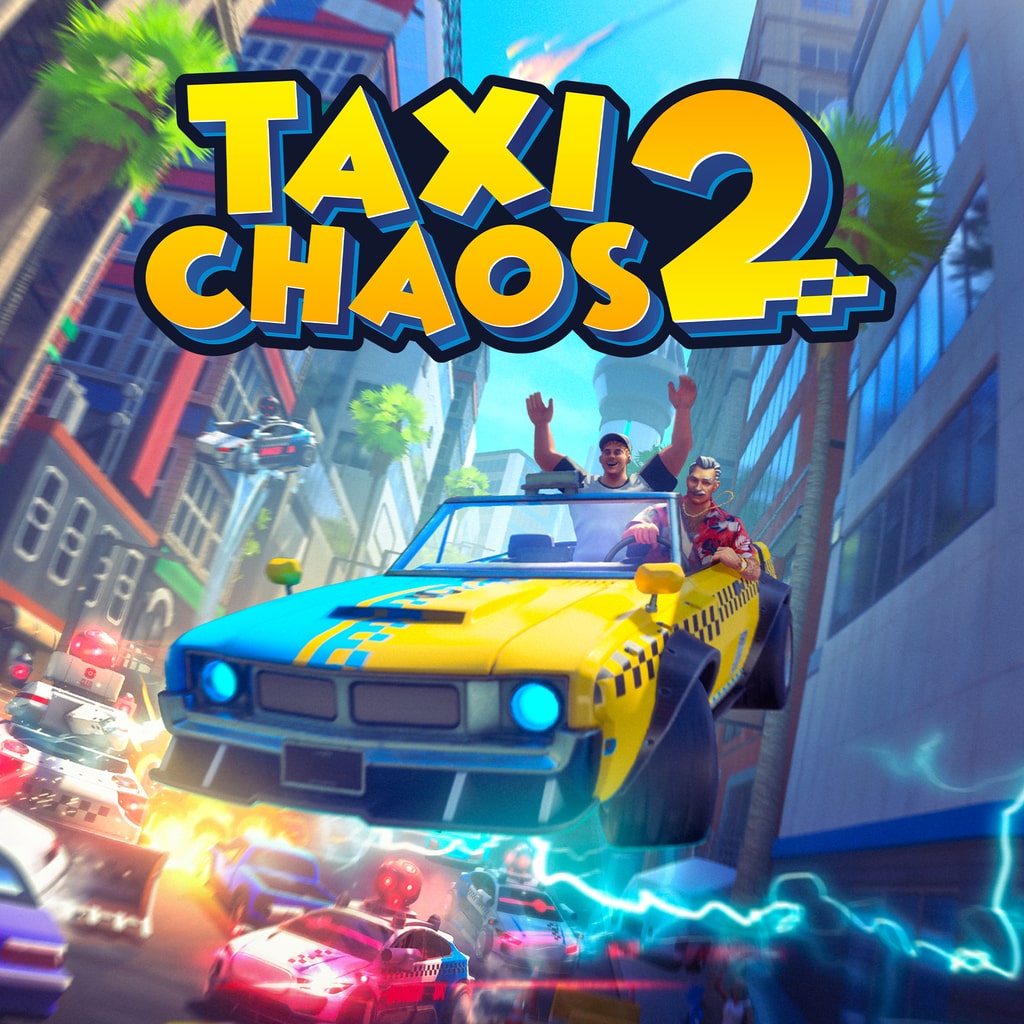
Taxi Chaos 2 is the ambitious sequel to the 2021 arcade driving game Taxi Chaos, doubling down on high-energy city navigation, over-the-top passenger pickups, and physics-friendly traffic mayhem. Like its predecessor, the game forgoes simulation realism in favour of fast reflexes, chainable stunt scoring, and a colourful open city to explore. The result is a title that genuinely feels designed for players seeking immediate thrills, chaotic momentum, and a sense of unrestrained freedom behind the wheel.
The original game divided opinion: some players embraced its joyous absurdity, while others found its rough edges limiting. Taxi Chaos 2 retains the series’ visceral core but attempts to improve in almost every direction—expanding its city, deepening its mission structure, and refining its traversal and scoring systems. The end result is a bold, often exhilarating experience that still stumbles in places, but ultimately feels more coherent, confident, and fun than the first outing.
Core Gameplay and Mechanics
Taxi Chaos 2 centres around picking up passengers, racing against the clock, and delivering them to their destinations with style, all in a vibrant, destructible city environment. Gameplay follows a simple loop: accept a fare, navigate traffic, dodge obstacles, and reach the drop-off as quickly (and stylishly) as possible.
The core driving mechanics embrace arcade sensibilities rather than realism. Steering is responsive, acceleration feels punchy, and the physics system is willing to send your taxi careering into nearby objects without consequence. This is intentional: the game is built for momentum, and the exaggerated physics contribute to its signature “controlled chaos” aesthetic.
Nitros, air boosts, and skid mechanics provide additional movement options, allowing players to string together high-risk, high-reward manoeuvres. These systems deepen the experience beyond simple navigation, transforming ordinary street routes into dynamic scoring opportunities. Skilled players can unlock combo chains by linking drifts, near misses, and verticality—rewarding creative routing rather than rote path-following.
World Design and Environments
Taxi Chaos 2’s city is a significant evolution over the original. The metropolitan environment feels larger, more detailed, and more integrated, featuring distinct districts that range from neon-lit downtown streets to scenic waterfronts and congested suburban boulevards. These varied districts help mitigate visual repetition and keep exploration fresh.
Each zone presents its own set of traversal challenges. Tight alleyways encourage precision, while wide boulevards invite full-throttle boosting. While the game does not reach the narrative depth of open-world epics, its cityscape delivers on variety and spatial awareness—key ingredients for a game all about movement.
Dynamic traffic and pedestrians add flavour, making each run feel alive even when it feels a bit like controlled mayhem. However, the density of moving objects can sometimes overwhelm the eye, particularly at high speeds or during big combos. While this chaotic energy is part of the game’s charm, it occasionally degrades readability—especially when paired with uneven frame pacing in busier areas.
Missions, Modes, and Progression
Taxi Chaos 2 expands significantly on the progression systems introduced in its predecessor. The campaign structure is built around a series of timed missions, each with optional secondary objectives that promote replays. These can include reaching a destination under a stricter time limit, avoiding collisions, or chaining high-score combos.
These layered objectives are a welcome addition. They give missions flexibility and replay value, nudging players to approach familiar routes with fresh strategies. Some missions also introduce modifiers—restricted boosts, night driving, or environmental hazards—that alter the pacing and force adaptation.
Progression unlocks new taxis (each with slightly different handling characteristics), cosmetic liveries, and city districts, creating tangible rewards that encourage continued play. While the handling differences between vehicles are subtle, they are enough to justify experimentation and help tailor the experience to individual playstyles.
The game also offers a more robust score attack mode and local leaderboards, emphasising competitive replayability beyond the main story arc.
Visual Presentation
Visuals in Taxi Chaos 2 are bold, saturated, and unapologetically playful. The cityscape is populated with bright signage, diverse architecture, and animated traffic that encourages both visual interest and immediate navigation decisions.
While environments are often lively, they do occasionally feel cluttered. Asset reuse is noticeable in some districts, and the aggressive visual effects—motion blur, particle bursts, heavy bloom during boosts—can sometimes make the scene feel overly busy. These choices serve the game’s frenetic pace well, though they may not appeal to players who prefer visual restraint.
That said, character and taxi designs are colourful and memorable, and the UI is clean and intuitive, ensuring that essential information (time remaining, fare icons, combo meters) remains readable under pressure.
Audio and Atmosphere
Audio design in Taxi Chaos 2 leans into exaggerated feedback and high-energy presentation. Engines roar with satisfying punch, tire squeals emphasise aggressive driving, and collision sounds are impactful without being unsettling. The soundtrack tilts toward upbeat, rhythmic tracks that bolster adrenaline without becoming distracting.
Vocal snippets from passengers are brief and somewhat repetitive, but they add personality and serve as helpful orientation cues during missions. Environmental sound effects—honking horns, city ambience—contribute to immersion without overwhelming the core driving experience.
The overall audio profile supports the game’s arcade identity, keeping the beat fast and the energy high.
Accessibility and Difficulty
Taxi Chaos 2 is accessible by design. Basic controls are intuitive, and the game provides generous assistance for new players. Early missions serve as informal tutorials, gradually introducing mechanics without overwhelming.
The difficulty curve is adjustable through mission ranking and optional challenges, allowing players to find their preferred sweet spot between relaxed cruising and aggressive scoring. Hardcore players can chase perfect runs and leaderboard placements, while casual drivers can enjoy the narrative missions without obsessing over combo chains.
However, terrain readability and occasional visual overload can increase challenge unintentionally—particularly in high-traffic sections or during heavy boost chaining. This is less a design flaw and more a stylistic consequence of the game’s chaotic energy.
Strengths and Weaknesses
Strengths
- Fast, responsive arcade racing with strong momentum
- Deep scoring and combo systems that reward creativity
- Varied missions with secondary objectives and modifiers
- Expandable progression with unlockable vehicles and districts
- Energetic audio and playful visual identity
Weaknesses
- Visual clutter can impact readability at high speed
- Asset reuse in some areas limits environmental variety
- Technical performance inconsistencies in busy scenes
- Narrative is light and functional rather than memorable
Final Verdict
Taxi Chaos 2 is a worthy sequel that refines and expands the frantic arcade formula of its predecessor. With deeper mission structure, improved progression, and an enlarged, expressive city to explore, it delivers a highly replayable experience built around speed, risk, and reward. While its visual exuberance occasionally crosses into overload and its narrative takes a back seat to mechanics, the core thrill of outracing time and chaining spectacular plays remains compelling.
For fans of arcade racers that prioritise momentum and theatrical driving over simulation accuracy, Taxi Chaos 2 provides fast, chaotic fun with enough structure and variety to keep players engaged well beyond the opening missions.