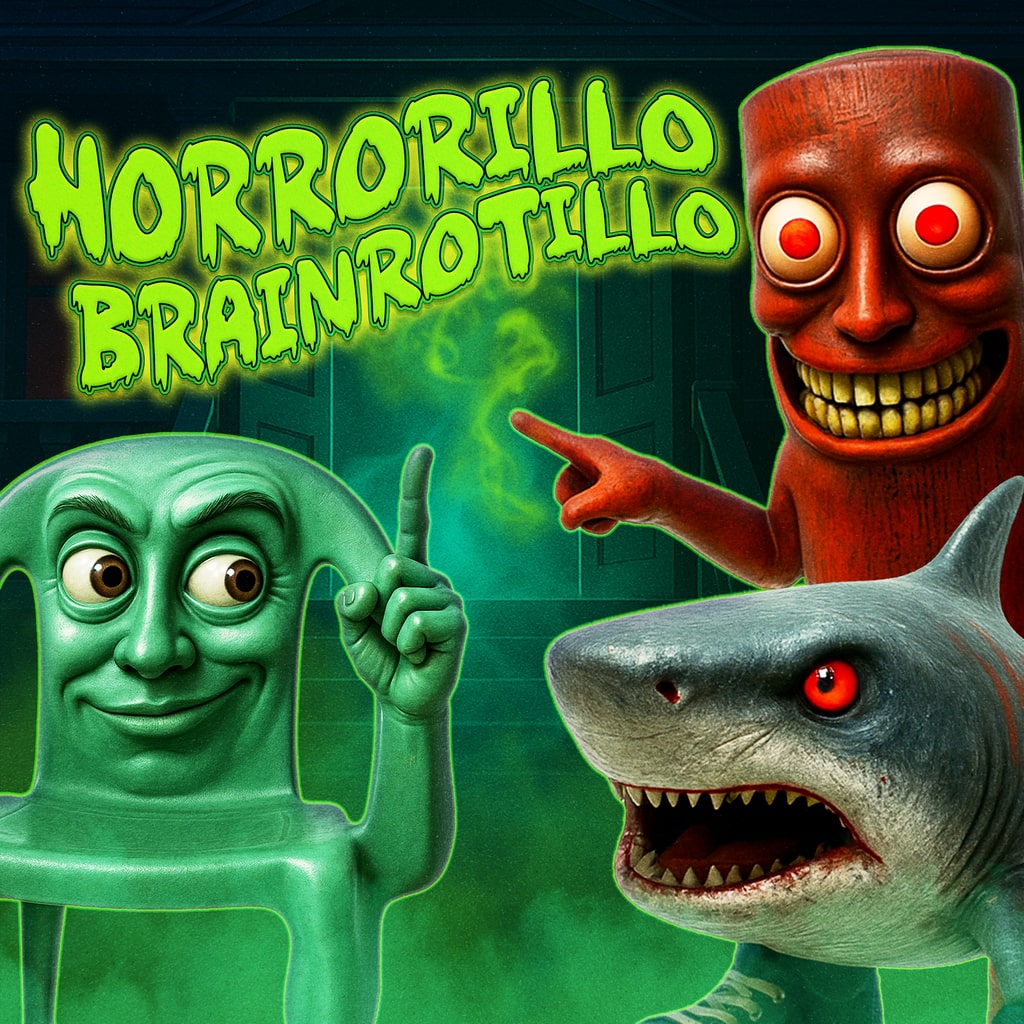
Horrorillo Brainrotillo is an aggressively surreal indie horror experience that sits somewhere between internet-era absurdism and psychological endurance test. It is a game that weaponises repetition, discomfort, and intentional incoherence to create an atmosphere that feels less like traditional horror and more like a prolonged mental assault. Rather than aiming for cinematic scares or structured storytelling, Horrorillo Brainrotillo leans fully into “brainrot” culture—distorted audio, looping visuals, nonsense dialogue, and unsettling imagery designed to disorient and exhaust the player.
This is not a horror game in the conventional sense. There are no carefully paced set-pieces, no elegant narrative arcs, and little interest in clarity. Instead, Horrorillo Brainrotillo is about sensory overload and psychological friction, forcing players to exist within a hostile audiovisual space where meaning is unstable and relief is rare. Whether this approach feels inspired or intolerable will depend heavily on player tolerance for experimental design.
Concept and Tone
The game’s defining trait is its commitment to absurdist horror. Horrorillo Brainrotillo deliberately blurs the line between comedy, discomfort, and dread, often within the same moment. Visuals are distorted, characters behave irrationally, and audio loops repeat phrases until they lose all meaning. The game draws heavily from internet horror aesthetics, meme culture, and anti-design philosophy, creating an experience that feels intentionally “wrong.”
Rather than guiding players through a story, the game drops them into a fractured world that operates on its own internal logic—or lack thereof. Events occur without explanation, environments shift unpredictably, and the player is left to question whether progression is even occurring in a traditional sense. This ambiguity is central to the game’s identity, but it also makes Horrorillo Brainrotillo inaccessible to players who expect structure or payoff.
Gameplay and Interaction
Gameplay in Horrorillo Brainrotillo is minimalistic and often deliberately obtuse. Players move through a series of environments, interact with objects, and trigger events, but these actions rarely follow conventional logic. Objectives are unclear, feedback is inconsistent, and progression can feel arbitrary.
Movement and interaction are simple by design, placing emphasis on endurance rather than mastery. The challenge does not come from complex mechanics, but from navigating a space that actively resists understanding. Players must tolerate repetition, ambiguity, and sudden tonal shifts while searching for visual or audio cues that suggest progress.
In many moments, the game feels more like an interactive installation than a traditional video game. Success is measured not by skill or efficiency, but by persistence—by staying engaged long enough to push through confusion and discomfort.
Horror Design and Psychological Impact
Horrorillo Brainrotillo’s approach to horror is unconventional but effective in its own way. It relies heavily on psychological irritation, using repetition, noise, and visual distortion to wear down the player’s composure. Sounds loop excessively, visuals flicker or warp, and familiar elements reappear in altered forms, creating a sense of mental fatigue.
Jump scares are rare and often understated. Instead, horror emerges from the feeling of being trapped in a system that refuses to resolve itself. The lack of clear rules or progress markers generates anxiety, particularly as players begin to question whether their actions matter at all.
This method can be genuinely unsettling, especially for players sensitive to sensory overload or loss of control. However, it is also divisive. What some players will interpret as effective psychological horror, others will see as irritation masquerading as design.
Visual Presentation
Visually, Horrorillo Brainrotillo embraces low-fidelity chaos. Environments are intentionally crude, featuring distorted textures, harsh lighting, and jarring colour palettes. Character models are often grotesque or cartoonishly unsettling, leaning into an uncanny aesthetic that feels deliberately unpolished.
This rough presentation is not the result of technical limitation so much as artistic intent. The visuals are meant to feel unstable, uncomfortable, and exhausting, reinforcing the game’s core themes. At times, this works extremely well, creating moments of genuine unease. At other times, it can feel visually repetitive, especially during extended sessions.
The lack of visual clarity is both a strength and a weakness. It enhances the sense of disorientation, but can also make navigation frustrating rather than frightening.
Audio and Sensory Design
Audio is arguably Horrorillo Brainrotillo’s most aggressive tool. The game makes heavy use of distorted voices, looping phrases, static, and abrasive sound effects. Music, when present, is unsettling and irregular, often cutting in and out without warning.
This sound design is extremely effective at creating discomfort, but it also risks overstaying its welcome. Extended exposure can feel mentally draining rather than suspenseful, which may cause some players to disengage prematurely.
Importantly, the audio design is consistent with the game’s concept. It does not seek to entertain, but to irritate, unsettle, and overwhelm. Players who understand and accept this intention are more likely to appreciate what the game is attempting to do.
Pacing and Length
Horrorillo Brainrotillo is relatively short, but its intensity makes it feel longer than it is. The lack of clear structure or milestones means time perception becomes distorted, which aligns with the game’s themes but can test patience.
Pacing is intentionally uneven. Periods of apparent inactivity are punctuated by sudden audiovisual assaults, preventing players from settling into a comfortable rhythm. This unpredictability sustains tension but also limits replayability.
The game is best experienced in a single sitting, where its oppressive atmosphere can fully take hold. Breaking it into shorter sessions risks diluting its impact.
Accessibility and Player Considerations
Accessibility is limited. Horrorillo Brainrotillo makes little effort to accommodate players sensitive to flashing visuals, loud audio, or cognitive overload. This lack of options is consistent with its artistic vision, but it also narrows its audience significantly.
Players prone to sensory fatigue, anxiety, or motion discomfort should approach with caution. This is not a game designed for comfort or inclusivity; it is intentionally abrasive.
Replayability and Longevity
Replay value is low. Much of the game’s impact comes from surprise, confusion, and initial exposure. Once the structure—or lack thereof—is understood, subsequent playthroughs lose much of their potency.
That said, Horrorillo Brainrotillo is more likely to be discussed than replayed. Its value lies in the experience itself rather than long-term engagement.
Strengths and Weaknesses
Strengths
- Bold, uncompromising artistic vision
- Effective use of psychological discomfort
- Memorable, unsettling audiovisual design
- Unique identity within the horror genre
Weaknesses
- Extremely divisive design philosophy
- Minimal gameplay depth
- Limited accessibility options
- Low replay value
Final Verdict
Horrorillo Brainrotillo is not a game designed to be enjoyed in the traditional sense. It is an endurance-based psychological experience that embraces irritation, confusion, and absurdity as its primary tools. For players interested in experimental horror, internet-inspired surrealism, and boundary-pushing design, it offers something genuinely distinctive.
However, its lack of structure, abrasive presentation, and minimal interaction will alienate many players. This is a niche experience, best approached with clear expectations and a tolerance for discomfort.
For those willing to engage with its chaos on its own terms, Horrorillo Brainrotillo leaves a lasting, if exhausting, impression.