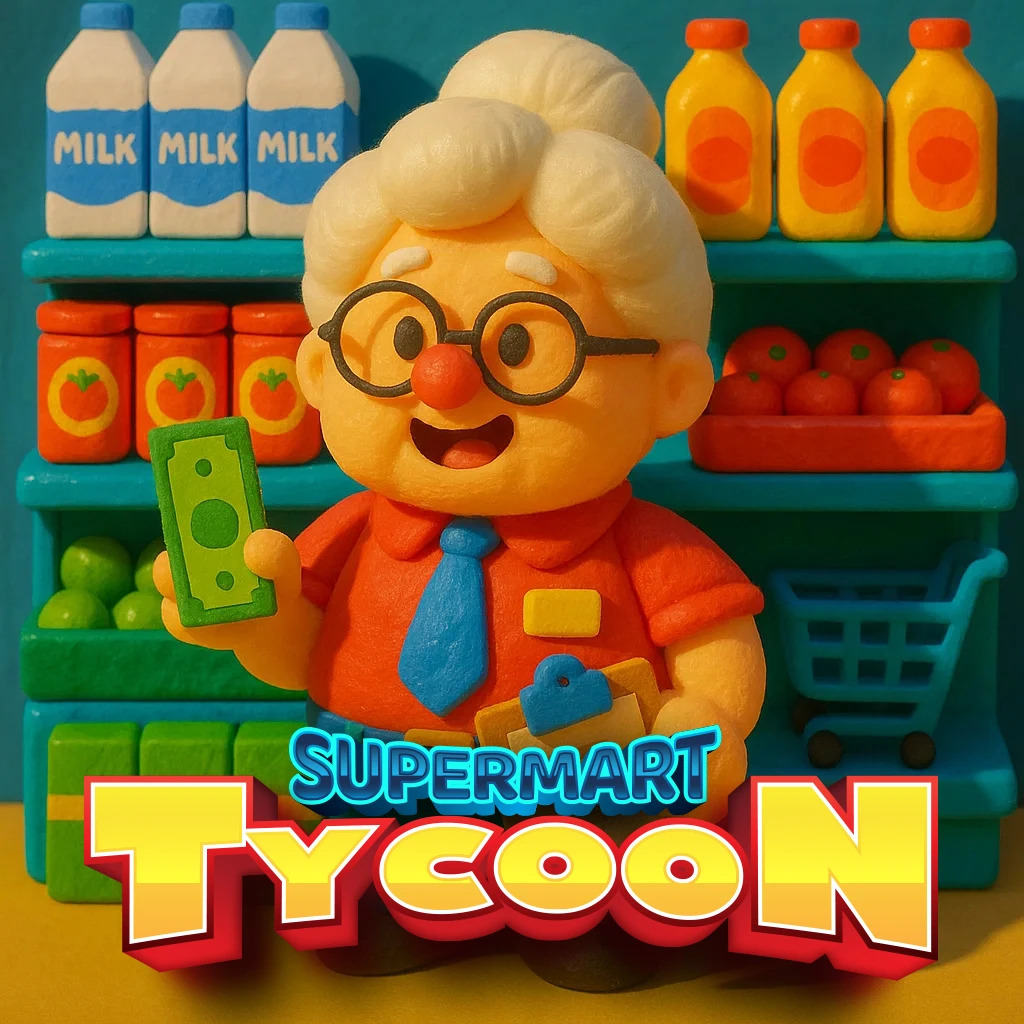
Supermart Tycoon is a managerial simulation that places players in control of their very own supermarket empire. If you’ve ever dreamt of organising aisles, juggling inventory, satisfying customers, and maximising profits — all without needing accountants or floor staff — this title will feel like a natural fit. It blends thoughtful resource management with lighthearted progression systems, making it accessible for casual players while offering enough systems depth to appeal to long-term tycoon fans.
While it doesn’t break new ground in the genre, Supermart Tycoon delivers a solid and satisfying experience for those who enjoy watching numbers climb, optimising layouts, and experiencing the warm glow of a well-run establishment. Its strengths lie in accessible complexity, clear progression, and a genuinely enjoyable sense of growing from humble beginnings into a bustling retail hub — even if some systems lack polish or long-term depth.
From Corner Shop to Retail Giant: Setting and Premise
You begin Supermart Tycoon with a modest space and a modest budget, tasked with converting a bare-bones retail area into a thriving supermarket. The early game is deliberately gentle: a few product categories, simple customer demands, and limited staff. This introductory phase acts as both tutorial and foundation, letting players learn core systems without being overwhelmed.
As stores expand, the game scales gracefully. More product categories unlock, new customer demographics arrive, staff hiring becomes an essential task, and competition from rival supermarkets enters the picture. The narrative isn’t heavy-handed — there’s no drama or story quest — but there’s a strong sense of progression that comes from watching your enterprise evolve.
This slow build from small store to major brand is one of the game’s most fulfilling arcs. Whether you’re named “Supermart Corner” or “MegaMart Empire,” the sense of ownership and growth is constant and compelling.
Gameplay Core: Balanced Simplicity With Strategic Decisions
Supermart Tycoon excels by offering depth without needless complexity. It walks a smart line between accessible management and strategic choice.
Inventory and Product Management:
Stocking the right mix of products is central. Each category has its own demand curve — snacks sell fast but yield smaller profits, whereas niche items sell slowly but with higher margins. Players must monitor what moves quickly, what sits on shelves, and what needs to be discounted to free up valuable stock space.
The game communicates these dynamics clearly through intuitive UI and charts. This transparency encourages experimentation, which is fundamental to tycoon gameplay.
Staff and Roles:
Staff management adds another layer to consider. You recruit cashiers, stockers, cleaners, and specialised roles like marketers or floor supervisors. Employee skills and morale influence store performance: happy, well-trained staff work faster and with fewer errors, while mistreated or unskilled workers slow checkout lines and frustrate customers.
Although hiring isn’t as deep as in heavy management titles, it serves the game well by reinforcing the idea that people matter in your retail success.
Store Layout and Flow:
Store layout isn’t purely cosmetic. Strategic placement of high-turnover items near entry points and thoughtful shelving can increase sales. Clear aisles reduce customer frustration and improve throughput. This aspect of design invites creativity: players can optimise layouts for efficiency or experiment with unconventional arrangements purely for fun.
While the grid-based placement system is straightforward, it allows enough room for meaningful experimentation.
Customer Dynamics and Demand Patterns
Customers in Supermart Tycoon aren’t static. They exhibit behaviours tied to time of day, pricing, promotions, and product variety. Morning rushes see breakfast items fly off shelves; evenings bring heavier traffic for dinner foods. Seasonal trends further encourage shifts in stock strategy.
These dynamics keep gameplay engaging: no single plan dominates forever. Prices need adjusting, demand forecasts must be observed, and product categories swapped in or out to align with evolving customer patterns.
Occasionally, customer feedback — delivered through satisfaction ratings — calls out store weaknesses. Low product variety, long queues, or poorly placed amenities can all erode satisfaction and reduce repeat business. This feedback loop ensures players feel accountable for both big decisions and small refinements.
Progression and Challenges
Progression in Supermart Tycoon is smooth and motivating. Completing objectives unlocks new product lines, aesthetic upgrades, and larger store spaces. Players steadily scale operations and encounter more complex decisions as their empire grows.
There are also event-based challenges — sales weekends, delivery delays, or competitor promotions — that introduce short-term pressure. These moments shake pacing in a way that’s refreshing; they demand tactical responses and prevent the experience from stagnating.
However, some of the late-game challenges could be deeper. Once core systems are understood and optimised, later stages offer less new strategic content and more scaling of existing mechanisms. For players who love intricacy and finely-tuned sub-systems, this can feel like a plateau.
Visual and Audio Presentation
Visually, Supermart Tycoon has a clean, friendly aesthetic. Shelves, aisles, customers, and staff are well-animated and easy to interpret at a glance. The UI prioritises clarity, with colours and icons that convey vital information without visual clutter. You always know how your store is performing and why.
Sound design is unobtrusive but effective. Background music maintains a light, upbeat tempo that fits the gameplay, and ambient audio — scanner beeps, customer chatter, footsteps — reinforces the retail environment without becoming irritating in longer sessions.
While Supermart Tycoon doesn’t aim for visual realism or cinematic scale, its aesthetic choices perfectly suit its genre and tone: cheerful, orderly, and focused on play rather than spectacle.
Strengths and Limitations
Strengths:
- Accessible but strategically engaging management systems
- Clear, intuitive UI and presentation
- Meaningful progression with frequent unlocks
- Dynamic customer behaviour and demand variation
- Fun visual style and lighthearted tone
Limitations:
- Late-game depth can stagnate for advanced sim fans
- Lack of narrative context or character arcs
- Staff management is functional but not deeply developed
- Some challenges feel repetitive at higher levels
Final Verdict
Supermart Tycoon is a delightful simulation that delivers just the right mix of strategy, accessibility, and charm. Its greatest achievement is how it makes management feel meaningful without overwhelming players with complexity. The core loop — stock, staff, sell, optimise — consistently rewards thoughtful decision-making, and the satisfaction of watching your supermarket flourish is genuinely rewarding.
While not a simulator in the deepest sense, and with limitations in late-game complexity, this title has a strong appeal for fans of casual tycoon games and those looking for a relaxing management experience with real strategic merit.