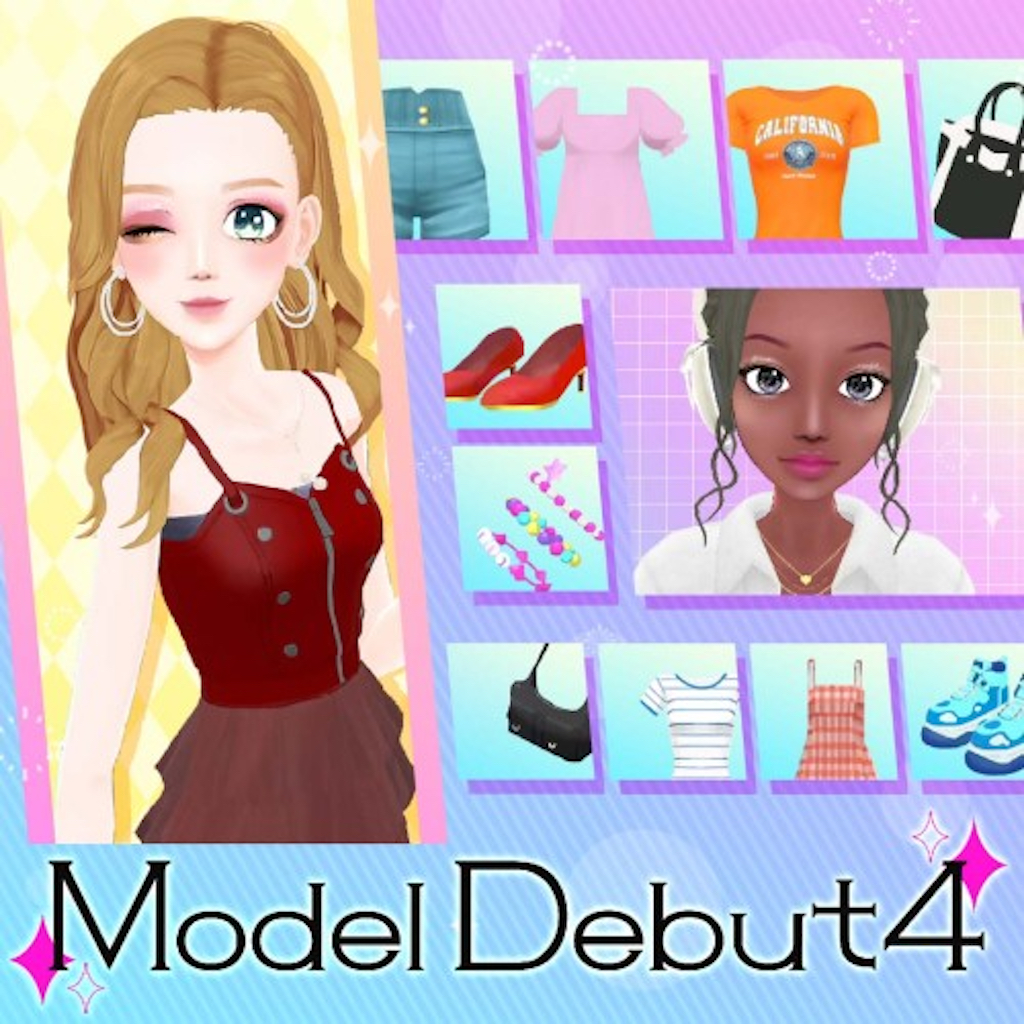
Model Debut4 is a game that understands its audience with remarkable clarity. As the latest entry in Shin Sophist’s long-running fashion simulation series, it continues to refine a formula built around self-expression, lifestyle aspiration, and gentle progression. On Nintendo Switch, Model Debut4 is less concerned with challenge or competition and more focused on creating a safe, engaging space where creativity and routine coexist. It is not a game that chases broad appeal, but one that confidently serves a specific niche — and largely succeeds in doing so.
A Lifestyle Fantasy, Not a Traditional Game
From the outset, Model Debut4 frames itself as a lifestyle experience rather than a conventional game. Players step into the role of an aspiring model navigating the fashion world, balancing photoshoots, social engagements, personal relationships, and self-improvement. The tone is aspirational and warm, presenting the modelling industry as collaborative and supportive rather than cutthroat or exploitative.
There is a narrative structure guiding progression, but it functions more as scaffolding than as a driving force. Story events unfold gradually, introducing new characters, opportunities, and lifestyle options. Dialogue is light and positive, emphasising encouragement, friendship, and personal growth. Conflict is minimal, and setbacks are framed as learning opportunities rather than failures.
This design philosophy defines the entire experience. Model Debut4 is not about overcoming adversity, but about maintaining balance and enjoying routine. For its intended audience, this creates a comforting and engaging loop. For others, it may feel lacking in tension or stakes.
Core Gameplay and Daily Structure
Gameplay in Model Debut4 revolves around daily scheduling and decision-making. Each in-game day offers a limited number of actions, such as attending photoshoots, practising skills, shopping for outfits, or spending time with friends. These choices influence various stats related to modelling success, confidence, and relationships.
The systems are easy to understand and forgiving. There is little risk of irreversible failure, and progression is steady even with suboptimal decisions. This accessibility ensures that players can experiment freely without fear of punishment, reinforcing the game’s relaxed tone.
However, this also limits depth. Once players understand optimal routines, decision-making becomes largely procedural. There are few meaningful trade-offs, and long-term strategy is minimal. Model Debut4 prioritises consistency over complexity, which suits its genre but restricts replayability for more systems-driven players.
Fashion and Customisation
Fashion is the heart of Model Debut4, and it is here that the game truly shines. Players have access to an extensive wardrobe featuring a wide range of outfits, accessories, hairstyles, and cosmetic options. Customisation is detailed without being overwhelming, allowing players to express personality through style choices.
Outfits are not merely cosmetic. Different fashion themes and trends influence photoshoot performance, encouraging players to curate looks thoughtfully. While the system is not deeply complex, it adds a satisfying layer of purpose to clothing selection beyond aesthetics.
The game’s partnership with nicola, a popular Japanese fashion magazine, lends authenticity to its designs. Clothing styles feel contemporary and cohesive, reinforcing the sense that players are participating in a stylised version of the real fashion world.
Social Systems and Relationships
Social interaction plays a significant role in Model Debut4. Players build relationships with friends, colleagues, and industry contacts through conversations and shared activities. These relationships unlock new opportunities, events, and narrative moments.
Dialogue is generally upbeat and supportive, reinforcing the game’s emphasis on positivity. While character personalities are distinct, they are broadly archetypal, and interactions rarely evolve beyond surface-level bonding. This limits emotional depth but ensures consistency with the game’s intended tone.
Relationship systems are functional rather than transformative. They serve as progression gates rather than narrative drivers, offering rewards without fundamentally altering the player’s journey. This reinforces the sense that Model Debut4 is about lifestyle maintenance rather than dramatic personal arcs.
Visual Presentation and Performance on Switch
Visually, Model Debut4 is clean, colourful, and polished. Character models are stylised and expressive, with smooth animations that suit the game’s light tone. Environments — from studios to cafés to city streets — are attractive but understated, providing context without distraction.
On Nintendo Switch, performance is stable. Load times are reasonable, controls are responsive, and the interface is well-adapted to both handheld and docked play. The game’s UI is clear and readable, though menu navigation can feel repetitive due to the frequency of daily actions.
While the visual style lacks ambition compared to larger simulation titles, it is consistent and functional. The emphasis remains on fashion presentation and character expression, which the game handles confidently.
Audio Design and Atmosphere
Audio design in Model Debut4 is subtle but effective. Background music is upbeat and unobtrusive, reinforcing the relaxed, aspirational atmosphere. Tracks loop frequently but are gentle enough to avoid fatigue during extended sessions.
Sound effects are minimal, serving primarily as feedback for menu navigation and actions. Dialogue is text-based, which places greater emphasis on writing rather than performance. While this limits emotional impact, it suits the game’s calm pacing.
The overall soundscape contributes to the sense of routine and comfort that defines the experience.
Pacing, Longevity, and Replayability
Model Debut4 is designed for steady, long-term play rather than intense sessions. Progression unfolds gradually, encouraging players to return daily and maintain routines. This structure suits handheld play particularly well, making it easy to engage in short bursts.
Longevity comes from completionist goals — unlocking outfits, maximising stats, and experiencing all events. However, replayability is limited. Once systems are mastered and content exhausted, there is little variation to justify restarting from scratch.
The game’s strength lies in consistency rather than surprise. It delivers exactly what it promises, but rarely exceeds expectations.
Final Verdict
Model Debut4 #nicola on Nintendo Switch is a confident, well-crafted fashion simulation that prioritises comfort, creativity, and routine over challenge or drama. Its accessible systems, extensive customisation, and positive tone make it a strong entry in its niche, particularly for players drawn to lifestyle-focused games.
While its shallow mechanics and low stakes may limit appeal for broader audiences, Model Debut4 succeeds by understanding its purpose and executing it with polish. It is not a game about winning or conquering, but about expression, balance, and enjoying the process — and within that scope, it delivers exactly what it sets out to do.
For its intended audience, Model Debut4 is a satisfying and welcoming experience. For everyone else, it remains a pleasant curiosity — charming, polished, and unapologetically specific.