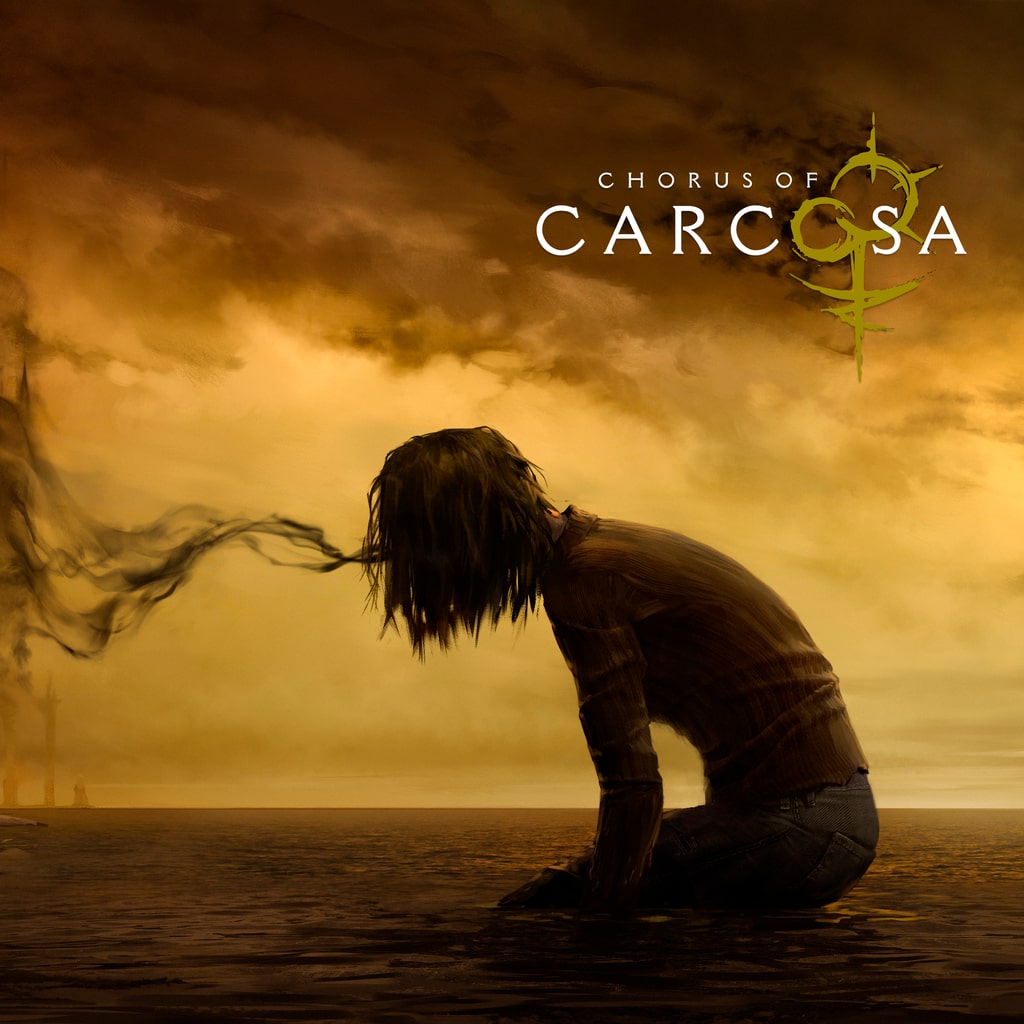
Developed and published by Chameleon 42, Chorus of Carcosa first arrived on PC in 2025, then made its way to consoles in 2026. It is a first-person psychological horror experience inspired by the mythos of R. W. Chambers’ The King in Yellow, filtered through a modern indie sensibility that prioritises atmosphere over spectacle.
You play as a sculptor living a quiet, isolated life until that peace is shattered one night by a knock at the door. A neighbour stands outside, blood-soaked and broken, and from that moment forward, nothing in your world remains stable.
What follows is not a straightforward story of survival. It is an unraveling. A descent into spaces that shift without warning, where hallways no longer lead where they should, and rooms remember things you never experienced.
Gameplay
At its core, Chorus of Carcosa is a stealth-driven exploration horror game built on tension rather than action. There are no combat systems to rely on, no way to overpower what hunts you. Your only tools are observation, patience, and the hope that silence is enough to keep you alive.
The central mechanic revolves around sound. Movement, interaction, even hesitation can produce noise that draws unwanted attention. The game constantly encourages restraint, turning even simple actions into moments of decision. Do you risk opening a door now, or wait until the distant sounds fade? Do you run, or trust that stillness will protect you?
This creates a deliberately slow pace, sometimes uncomfortably so. Progress is measured not by speed, but by how carefully you are willing to move through uncertainty.
The apartment building you explore is the central stage for everything. It is not static. Rooms shift, corridors extend or collapse, and familiar layouts become unreliable over time. What begins as a contained environment gradually becomes more fluid and disorienting.
Puzzles are woven into this structure, often tied to environmental observation rather than explicit instruction. The game rarely tells you what to do. Instead, it expects you to notice patterns, interpret anomalies, and accept ambiguity as part of the process.
This design approach can be deeply effective when it clicks. Solving a puzzle feels less like following instructions and more like uncovering something hidden beneath the surface of the world. However, it can also lead to moments of confusion where progression stalls without clear direction.
Atmosphere and World Design
If there is one area where Chorus of Carcosa consistently succeeds, it is atmosphere. The apartment building is dense with detail yet deeply oppressive. It feels lived in, but not comfortably so. Objects are placed as if they once had meaning, yet that meaning has long since decayed. Lighting is sparse and often unreliable, casting spaces in partial light that leaves more to the imagination than to confirmation.
Sound design plays a critical role in sustaining tension. Distant footsteps, structural creaks, and unexplained ambient noises create a constant sense of presence. Even when nothing is actively happening, the game never feels empty.
There is a particular kind of dread that builds from this restraint. Instead of overwhelming you with constant threats, it allows silence to become threatening in its own right. The absence of clarity becomes its own form of pressure.
Visually, the game leans into surreal distortion. Hallucinatory shifts in geometry and perspective blur the line between reality and perception. Hallways may stretch longer than they should. Doors may lead to impossible spaces. These changes are not always signposted, which enhances their unsettling effect but can also make navigation deliberately disorienting.
Narrative and Psychological Themes
Chorus of Carcosa is less concerned with telling a clear story and more focused on exploring psychological erosion. The protagonist’s descent is gradual and ambiguous. There is no single moment when reality breaks. Instead, it fractures slowly, through the accumulation of small inconsistencies and escalating surrealism.
The influence of The King in Yellow is felt in tone rather than in direct adaptation. Themes of madness, forbidden knowledge, and reality distortion are woven into the environment rather than explained outright. The game trusts players to interpret what they see, or at least to sit with the uncertainty.
This ambiguity is both a strength and a challenge. For players who enjoy piecing together fragmented narratives, it offers a rich space for interpretation. For those who prefer clearer storytelling, it may feel intentionally withholding.
Pacing and Player Experience
Chorus of Carcosa is a slow burn in every sense. The early sections are methodical, almost quiet to the point of discomfort. Progress requires patience, and the game rarely rewards haste. This pacing is essential to its horror design, but it also means engagement depends heavily on mindset. When it works, the slow build creates genuine tension. When it does not, it can feel as if the game is holding back too much.
The lack of guidance is another defining trait. Players are expected to explore, experiment, and sometimes fail before understanding what is required. This design choice reinforces immersion but can also lead to moments of frustration, particularly when progress depends on subtle environmental cues.
Final Verdict
Chorus of Carcosa is not a horror game that relies on spectacle. It is built on atmosphere, uncertainty, and psychological discomfort. It asks players to sit with ambiguity and accept that understanding may never come fully or cleanly.
Its greatest strength is its world design. The apartment building feels alive in a deeply unsettling way, constantly shifting just enough to keep you questioning what is real. Combined with its sound design and restrained pacing, this creates a persistent sense of unease that lingers long after individual scares.
However, its commitment to ambiguity is a double-edged sword. The same qualities that make it immersive can also make it difficult to navigate, both literally and narratively. Some players will find that tension rewarding. Others may find it exhausting. It is not a comfortable experience, nor does it try to be. What it offers instead is a slow, creeping unraveling of perception, delivered with confidence and restraint.