Fighting games have long been fond of health bars. You punch someone, their health goes down, you punch them some more, and eventually somebody falls over. GUTS looks at that familiar formula, laughs in its face, and asks an unpleasant question: what if the health bar simply did not exist and the only way to win was to remove every single one of your opponent’s limbs?
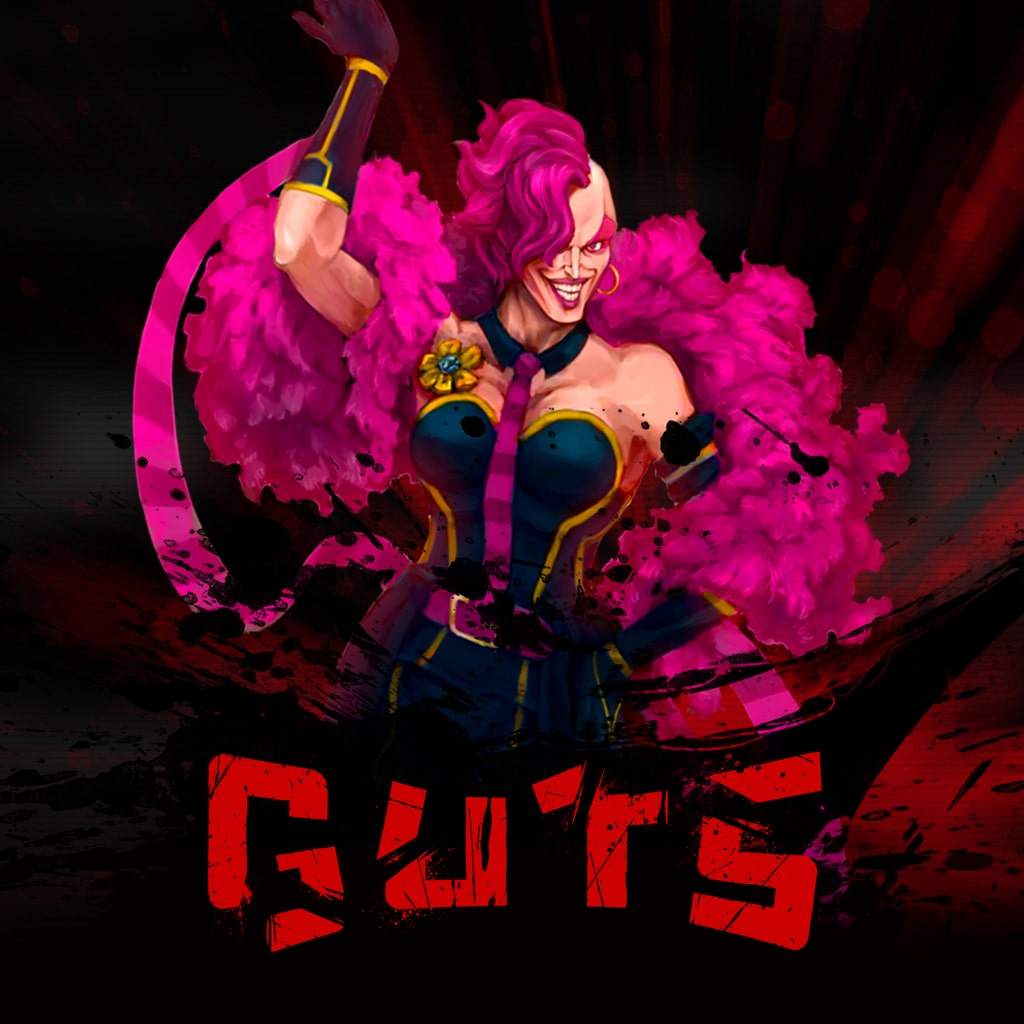
That is the gloriously stupid premise behind GUTS, short for Gory Ultimate Trash Show, a deliberately outrageous 2.5D fighting game from Flux Games and published by Libredia Entertainment. Set within a dystopian future game show, it replaces traditional fighting game conventions with a much simpler objective. You need to dismember your opponent completely, and even when the fight has been reduced to two tiny stumps desperately hopping around the arena, the battle continues.
It is difficult not to admire the sheer commitment to the idea. GUTS is violent, ridiculous, and very knowingly tasteless, but it is also built around a genuinely interesting combat concept. Losing a limb does not mean you have lost the fight. In fact, it can completely change the way you play, creating wonderfully absurd situations where a supposedly defeated fighter suddenly finds a way to turn the tables.
Health Bars Are So Last Season
The most interesting thing about GUTS is undoubtedly what happens when you remove the health bar. Instead of watching a numerical gauge gradually disappear, every attack can permanently alter your character’s physical state. Lose an arm and you have one less weapon. Lose a leg and your movement changes. Lose everything and you are somehow still in the fight.
It is an incredibly simple idea, yet it gives matches a strange sense of tension. In a traditional fighting game, taking damage can often feel abstract because the health bar tells you exactly where you stand. Here, the damage is much more obvious. Look at your character and you can immediately see that things are going badly.
That also creates fantastic opportunities for comebacks. A fighter who has lost multiple limbs might appear completely doomed, only to start hopping around the arena, desperately trying to land a decisive attack. Characters can even use their own severed limbs as projectiles, which is about as GUTS as a mechanic could possibly be.
There is a wonderfully dark sense of humour in watching someone throw their own arm at an opponent because they have run out of more conventional options. It is ridiculous, but it is also mechanically useful, which matters. The gore is not simply there for shock value. Dismemberment is the entire foundation of the combat system.
A Fighting Game With a Very Different Rhythm
Because the objective is so different, matches develop their own rhythm. You are not simply trying to land the biggest combo or chip away at a health bar until your opponent is finished. You are looking for opportunities to damage specific limbs and gradually make your opponent less able to fight back.
Heavy attacks, environmental hazards and special GUTS Moves all contribute to this process. There is a satisfying brutality to landing a particularly effective attack and seeing its consequences immediately. The match can suddenly change when one character loses an important limb, forcing both players to rethink what they are doing.
The control scheme is also deliberately accessible. GUTS does not demand the complicated quarter-circle inputs or lengthy command combinations associated with some traditional fighting games. That makes it relatively easy to pick up, particularly for players who might normally avoid the genre because they feel they need to memorise half a controller before they can compete.
That accessibility is one of the game’s strongest qualities. You can hand the controller to someone who has never played a serious fighting game, and they can understand the basic concept almost immediately. Hit your opponent, avoid being hit, remove their limbs and try not to lose yours.
Of course, understanding the controls and mastering the game are two different things. There is still room to learn about character abilities, attack ranges and positioning, and experienced players will naturally find more depth than someone simply mashing buttons. But GUTS wisely avoids putting an enormous wall between the player and the fun.
When Losing an Arm Is an Advantage
One of the most entertaining aspects of GUTS is that losing a limb does not necessarily mean the end is near. In some fighting games, taking damage simply lowers your health bar. Here, losing a limb can actually change your strategy in interesting ways.
A missing leg makes movement more awkward, while losing an arm affects how you can attack. The result is a kind of improvised combat where players are constantly adapting to their changing bodies. The later stages of a match can become particularly chaotic because neither fighter is operating under the same conditions as at the beginning.
That unpredictability is where the game finds much of its personality. A fight that looks completely one-sided can suddenly turn into something else entirely. Someone can be reduced to little more than a pair of stumps and still find a way to win, and there is something wonderfully ridiculous about the fact that the game allows this to happen.
The best fighting games often produce stories that players remember long after the match has ended. GUTS has plenty of potential for those moments. The friend who thought they had won until a severed arm came flying across the screen is exactly the sort of ridiculous memory that makes a party fighter worth returning to.
Nine Characters, Nine Flavours of Madness
The game features nine eccentric fighters, giving players a reasonable selection of personalities and play styles to experiment with. The character designs fit the overall tone, with nobody seeming particularly interested in behaving like a normal human being in a sensible fighting game.
That works because GUTS never pretends to be serious. Its dystopian game show setting provides the perfect excuse for the exaggerated violence and bizarre characters. Everything is presented with a wink, making it easier to appreciate the ridiculousness rather than becoming bogged down in the unpleasantness of what is actually happening on screen.
The character variety also helps the game feel more like a party fighter than a traditional competitive brawler. You can experiment with different fighters without needing to spend hours learning an enormous list of special moves. The emphasis is on discovering what each character can do and then figuring out how those abilities work within the dismemberment system.
There is not quite enough character depth here to rival the enormous rosters of the genre’s biggest names, but that is not really what GUTS is trying to achieve. Nine characters are enough to provide variety without overwhelming the game’s deliberately straightforward approach.
The Tarantino Influence
Calling GUTS Tarantino-style is easy to understand. The presentation has an exaggerated, knowingly trashy quality, and the violence is pushed so far beyond reality that it becomes dark comedy. The game is not interested in portraying combat as realistic or heroic. It is a ridiculous spectacle, and the presentation knows it.
That tone is essential, because without the humour the game’s central mechanic would quickly become exhausting. Dismemberment is a fairly grim concept when described literally, but GUTS turns it into slapstick absurdity. Watching two characters desperately trying to fight after most of their limbs have been removed is so exaggerated that it becomes almost cartoonish.
The dystopian game show setting also gives the violence a purpose within the fiction. These characters are effectively entertainers in a bizarre future spectacle, and the game embraces that idea rather than attempting to give the matches a serious military or martial arts context.
It is definitely not a game for everyone. Anyone uncomfortable with graphic cartoon violence is unlikely to find much here to enjoy. But for players who appreciate deliberately excessive dark humour, GUTS is clearly having a tremendous amount of fun with its own ridiculous premise.
More Than Just a Party Trick?
This is where things become a little more complicated. GUTS has an excellent central idea, but a great gimmick does not automatically make a great competitive fighting game. Some of the underlying movement can feel stiff, and hit detection is not always as precise as you would expect from a game where targeting individual limbs is so important.
That matters because the concept demands a degree of accuracy. If you are deliberately trying to attack an opponent’s leg or arm, you need to feel confident that your attacks are connecting where you intend. When the hitboxes feel imprecise, the game’s most interesting mechanic can occasionally become frustrating rather than satisfying.
There is also some repetition in the match structure. Once the novelty of dismembering your opponent has settled, you are still essentially repeating the same basic process from fight to fight. The limb system provides variation, but there is a limit to how much the same objective can change.
This is why GUTS feels more naturally suited to casual multiplayer than to the intensely competitive environment occupied by games such as Street Fighter or Tekken. It is at its best when everyone is laughing at what is happening rather than analysing frame data and demanding absolute precision.
A Story With Eighteen Endings
The single-player story mode at least offers more to explore beyond individual matches. With 18 distinct endings, there is an incentive to replay the campaign and see how different choices and outcomes can affect the story.
That fits nicely with the game’s bizarre game-show setting. The story is not simply an excuse to fight a series of increasingly difficult opponents. There is a sense that the characters have their own strange journeys to follow, and the multiple endings give players a reason to revisit the campaign.
It is not going to replace a traditional narrative adventure, but it adds welcome personality to what could otherwise have been an entirely multiplayer-focused experience. For players who enjoy unlocking different outcomes, there is enough here to encourage experimentation.
The local and online multiplayer options are likely to be where the game finds its strongest audience, though. GUTS feels built for those moments when you have another person sitting beside you and both of you are laughing at the increasingly ridiculous state of your fighters.
Bloody Good Fun, With a Few Bruises
GUTS is one of those games that is difficult to describe without sounding as though you have made half of it up. A fighting game in which two limbless characters continue battling, throwing their own severed arms and attempting to completely dismember one another sounds like the result of an exceptionally strange conversation. Yet somehow, it works.
The limb-based combat is genuinely inventive, and the decision to remove health bars gives the matches an identity of their own. The accessible controls make it easy to pick up, the eccentric characters fit the tone perfectly, and the local multiplayer can produce exactly the sort of chaotic moments that make a party fighter memorable.
It is not without problems. The stiff movement and occasional hitbox issues can undermine the precision of combat, while the relatively repetitive match structure limits how long the experience can remain fresh for players seeking serious competitive depth. There is also a sense that the brilliant central idea sometimes carries more weight than the systems surrounding it.
But I would much rather play a game with a wonderfully daft idea that occasionally stumbles than another technically competent fighting game that feels as though it was assembled from a checklist. GUTS has personality in abundance, and that counts for a lot.
The best thing about it is that it understands exactly what it is. This is not attempting to become the next great technical fighting game. It is a gloriously violent party brawler designed to make people laugh, wince and occasionally shout when a match they thought was over suddenly turns into a ridiculous comeback.
And honestly, watching two tiny stumps desperately hopping around an arena while attempting to beat each other to death is an image that is difficult to forget.