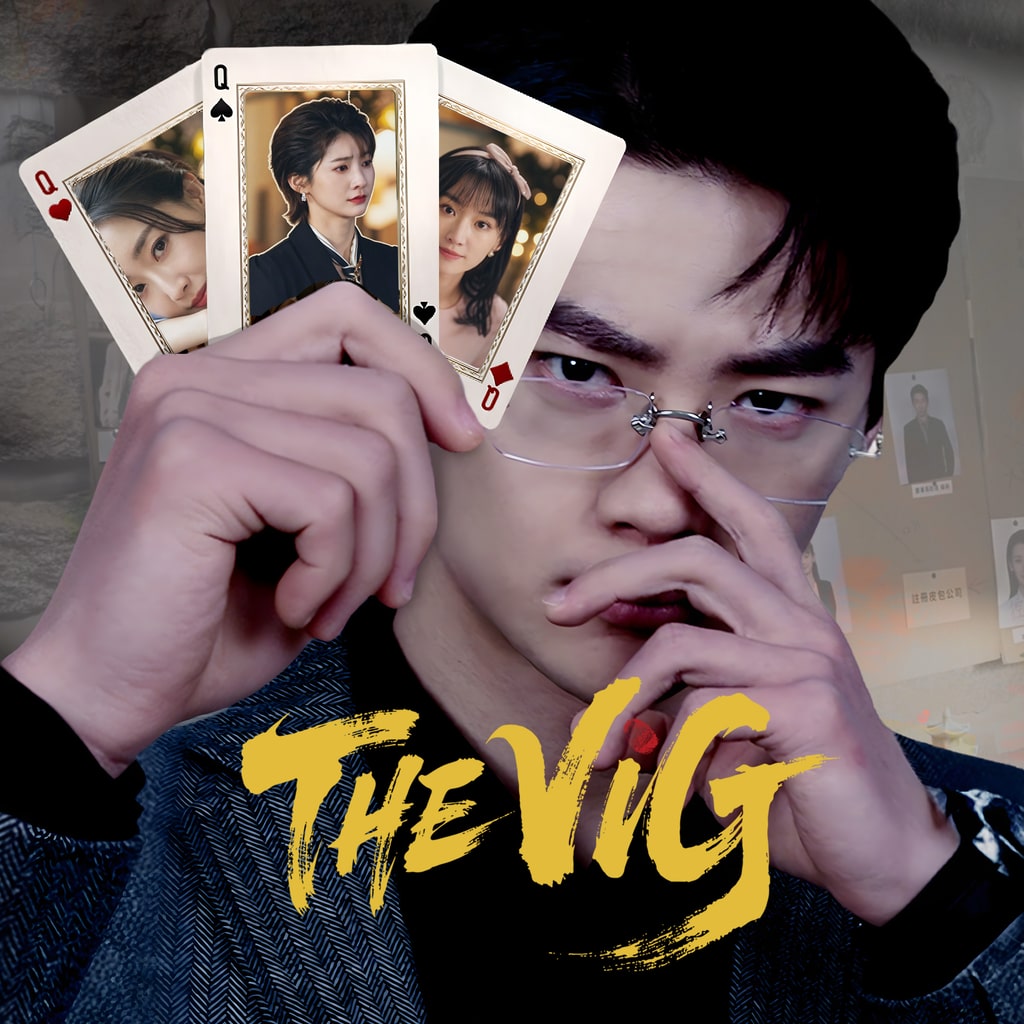
Revenge is rarely a simple matter. It sounds straightforward enough when you’re standing outside looking in, but once emotions, relationships, money and an enormous corporate conspiracy are involved, things have a habit of getting complicated. The Vig understands this perfectly, casting you as Shane, a man who has spent eight years waiting for the chance to settle the score after a conspiracy stripped him of everything.
Now operating under the alias Wu Wei, Shane infiltrates the powerful Yongqiang Group with one objective in mind. He needs answers, but getting them means navigating a workplace packed with ruthless people, hidden agendas and colleagues who may become considerably more important to him than he originally intended. What follows is a story-driven FMV adventure in which revenge is only part of the equation, because every relationship you build and every decision you make can push Shane towards a very different future.
Eight Years Of Anger
The opening premise immediately gives The Vig something to work with. Shane isn’t simply an ambitious newcomer looking to climb the corporate ladder. He is a man with a carefully constructed identity, and every conversation carries the risk that someone might discover who he really is.
That dual identity becomes the heart of the experience. As Wu Wei, Shane has to behave like an ordinary employee while secretly pursuing his own agenda. The tension comes from watching him move between those two worlds, particularly as the people around him start to become more than convenient tools in his revenge plan.
It is an old-fashioned thriller setup, but the live-action presentation makes it considerably more personal. Seeing actors deliver the dialogue and react to Shane’s decisions gives the story an immediacy that traditional text-based adventures don’t always achieve. When a relationship begins to change, you aren’t simply reading that someone is becoming suspicious or emotionally attached. You’re watching it happen.
Welcome To The Corporate Snake Pit
Yongqiang Group is not exactly the sort of workplace where you would want to organise a staff Christmas party. Behind the polished offices and professional conversations lies a world of power struggles, manipulation and secrets, and Shane has to work his way deeper into it without exposing himself.
The workplace mechanics are closely tied to the narrative. Dialogue choices and missions can help you gain important permissions, opening up new opportunities to investigate the company and uncover more of its secrets. That means conversations aren’t simply there to move the plot forward. They are part of the strategy.
This creates an interesting balance between being a convincing employee and pursuing your hidden objective. Sometimes the obvious choice isn’t the most useful, and building the right relationship can be just as important as finding the right piece of evidence. You are effectively playing office politics while carrying an enormous secret.
Every Choice Has Consequences
Branching narratives are nothing new, but The Vig makes them central to the experience. There are more than 20 possible endings, so Shane’s journey can ultimately take very different directions.
The appeal isn’t simply the number itself. What matters is that the decisions along the way help determine which version of the story you eventually experience. A conversation that seems relatively harmless at the time can influence a relationship later, while a decision made during one of Shane’s schemes can have much bigger consequences than expected.
That makes replaying the game considerably more tempting. Once you’ve reached one ending, you naturally start wondering what might have happened if you had trusted somebody else, pursued another relationship, or made a different decision during one of the more important confrontations. The first playthrough tells you a story. Subsequent playthroughs let you investigate the possibilities.
Revenge Gets Complicated
Shane’s relationships with Zhang Yun’er, Guan Guan and Xiao Man add an emotional layer that could easily have felt disconnected from the central revenge story. Thankfully, the game integrates these relationships into the wider narrative rather than treating them as completely separate diversions.
Building emotional connections while pursuing revenge creates some of the game’s more interesting dilemmas. Shane may enter a relationship with one goal in mind, only to discover that genuine feelings have complicated his carefully planned mission. At some point, the question shifts from whether he can get revenge to whether he still wants the same thing.
That is where The Vig finds some of its humanity. Revenge stories can become so focused on settling scores that the protagonist starts to feel like a machine working through a list of targets. Shane is more interesting when his emotions get in the way, because that is when his carefully controlled double life begins to crack.
Love, Lies And Bad Decisions
The romance routes are an important part of the experience, particularly because they can shape the emotional direction of Shane’s story. The game doesn’t simply offer a collection of optional dates that exist independently of the main plot. These relationships become entangled with the choices Shane is already making.
That can produce some uncomfortable situations. When you’re deliberately manipulating your position within a company while developing genuine feelings for someone, the line between honesty and deception becomes increasingly difficult to maintain. The game gets a lot of mileage from that tension.
The presentation also shifts during certain romantic encounters, adopting closer first-person perspectives that make the scenes feel more intimate. It is a small but effective change that separates these moments from the more conventional workplace sequences.
The FMV Difference
Live-action games live or die by their performances, and The Vig benefits considerably from a cast that largely sells the material. The story has a melodramatic quality, which suits the genre well.
The cinematography is another strong point. Rather than simply recording actors standing around delivering lines, the game presents its scenes with the visual language of a thriller. Office interiors, close-ups and carefully framed conversations help establish the sense that something bigger is happening beneath the surface.
It also gives the game a distinct personality. There is a particular pleasure in seeing a story like this unfold through real performances, because facial expressions and body language can communicate things that aren’t always obvious from dialogue alone. When the actors get it right, The Vig feels considerably more involving than its relatively simple interaction system might suggest.
Quick Time And Quick Decisions
It isn’t all about choosing dialogue, either. Quick-time events are woven into the experience, giving you moments when reflexes are as important as your ability to make the right conversational decision.
These sequences help prevent the game from becoming too passive. You’re still primarily experiencing a narrative, but there are moments when you need to react rather than simply select an option from a menu. This creates little bursts of tension that can work particularly well when the story is already escalating.
The balance isn’t always perfect, though. Some of these sequences can feel more like interruptions than meaningful gameplay, particularly when the underlying choice system is doing the heavier lifting. Still, they provide enough variety to stop the experience from becoming nothing more than an interactive television drama.
When The Police Get Involved
Shane’s problems extend beyond the walls of Yongqiang Group. His journey eventually brings him into contact with the police and human smugglers, broadening the story beyond the corporate environment.
These sections help the narrative build a stronger sense of danger. Shane isn’t simply trying to maintain a false identity at work any more. His actions have consequences outside the company, and the possibility of arrest becomes a real threat.
The escalation works because it gives the story somewhere to go. What begins as an infiltration gradually becomes considerably more complicated, with Shane forced to react to circumstances he cannot fully control. Revenge may have been the original plan, but plans rarely survive contact with reality.
When The Game Gets In Its Own Way
For all its strengths, The Vig isn’t without problems. Technical issues occasionally interrupt the experience, and save bugs can be particularly frustrating in a game where choices and branching paths are so important.
There are also moments when the English localisation lets the presentation down. Text can occasionally feel awkwardly translated or, worse, be cut off, making an otherwise important conversation unnecessarily difficult to follow.
These problems are especially noticeable because the production values elsewhere are reasonably strong. When the cinematography and performances are working well, technical hiccups stand out more than they would in a rougher-looking project. They don’t destroy the experience, but they do take some of the shine off it.
A Story Worth Replaying
The multiple endings are what ultimately give The Vig its longevity. A straightforward FMV story can be enjoyable once, but a branching narrative gives you a reason to return and explore different possibilities.
You might finish one playthrough with Shane escaping, only to discover that another set of decisions could result in his arrest. There are also paths that take the story in a more emotional direction, where revenge and love begin to compete.
That replayability suits the premise perfectly. Shane has constructed an identity to manipulate events, and replaying the game gives you the chance to manipulate those events yourself. You aren’t simply watching his fate unfold. You’re effectively asking how different the story becomes when one important decision changes.
The Best Kind Of Mess
There is something satisfyingly messy about The Vig. Shane starts with a clear objective, but the deeper he delves into Yongqiang Group, the harder it becomes to maintain control.
The people around him aren’t merely obstacles. They have their own emotions, ambitions and vulnerabilities, so Shane’s decisions can affect them as well as himself. The more successful his infiltration becomes, the more complicated his life grows.
Ultimately, that is what makes the story work. It isn’t really about whether revenge is satisfying. It is about what revenge costs, and whether the person pursuing it can still find something worth protecting once everything starts falling apart.
Final Verdict
The Vig is an ambitious FMV thriller that successfully blends corporate intrigue, revenge, romance and branching choices into a surprisingly involving interactive drama. Shane’s infiltration of Yongqiang Group provides a strong central hook, while his relationships with Zhang Yun’er, Guan Guan and Xiao Man add enough emotional complexity to keep the revenge plot from becoming predictable.
The production values are among its strongest assets. The cinematography gives the workplace thriller setting a convincing sense of scale, while the performances help sell the game’s more dramatic moments. The branching structure is equally important, with more than 20 endings giving players plenty of reason to return and see how different decisions reshape Shane’s fate.
It isn’t without rough edges. Technical hiccups, saving problems and some awkward English localisation occasionally pull you out of the story, while the quick-time events don’t always feel as essential as the narrative decisions. Those issues are frustrating, particularly in an experience where preserving your progress and understanding every choice matters.
Nevertheless, there is something genuinely compelling about The Vig. It takes the familiar ingredients of the revenge thriller and gives you control over the protagonist’s relationships, loyalties and ultimate fate. You can pursue revenge relentlessly, become tangled in romance, lose control of the situation or discover that there might be something beyond vengeance worth fighting for.
It may occasionally stumble, but when the performances, choices and story all line up, The Vig becomes exactly what a good FMV game should be: a drama where you aren’t merely watching somebody make terrible decisions. You’re the one making them.