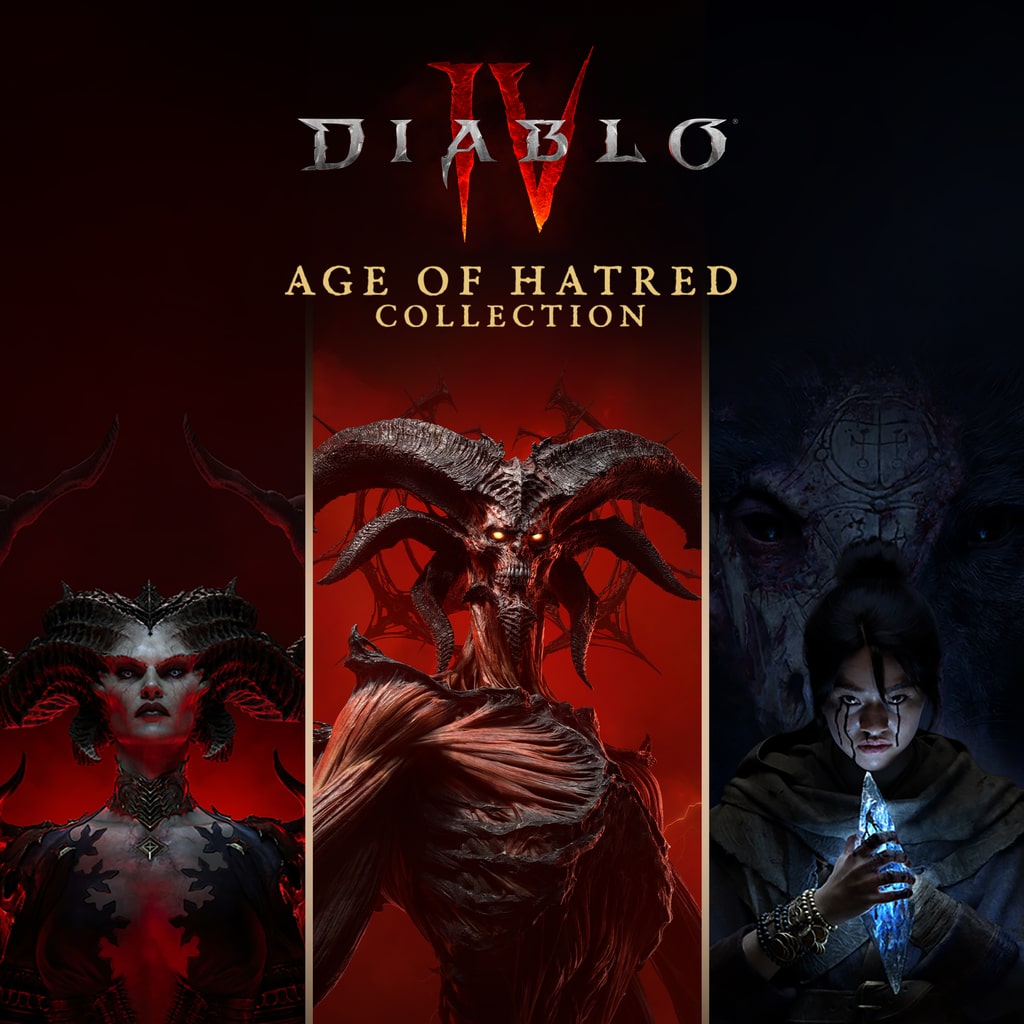
There is something wonderfully miserable about Sanctuary. It is a place where the skies are rarely clear, the villages are rarely safe, and the chances of bumping into a horrifying creature while simply trying to get from A to B are practically guaranteed. Yet somehow, despite the blood, misery and seemingly endless supply of demons, we keep coming back. Diablo IV: Age of Hatred Collection understands this perfectly, bringing together the base game, Vessel of Hatred and Lord of Hatred into one enormous dark fantasy adventure that is an impressively complete package.
For newcomers, this is arguably the most straightforward way to dive into Blizzard’s modern interpretation of the series. For returning players, it is a chance to experience the full story surrounding one of the franchise’s most dangerous figures, Mephisto, while gaining access to a huge amount of additional content, classes, regions and endgame activities. This is Diablo IV at its most ambitious, and there is an almost ridiculous amount of demon-slaying packed into the collection.
The funny thing is, though, Diablo has never really been about simply finishing the story. The campaign might give you a reason to venture into the darkness, but it is the promise of better loot, more powerful builds and just one more dungeon that keeps you there long after you probably should have gone to bed.
Welcome Back To Sanctuary
The story of Diablo IV is suitably bleak. Mephisto, the Prime Evil of Hatred, is spreading his influence across Sanctuary, and the consequences of that corruption are felt everywhere you go. Ancient enemies are stirring, cultists are gathering, and ordinary people are once again caught in the middle of a conflict involving powers far beyond their understanding.
It is classic Diablo territory, but the story’s scale has grown considerably. What begins as a battle for survival gradually becomes something much larger, carrying players through multiple campaigns and increasingly dangerous locations. The addition of Vessel of Hatred and Lord of Hatred makes the overall narrative feel more substantial, turning what was already a sizeable adventure into a sprawling saga.
The story is at its best when it remembers that Diablo works because of atmosphere as much as spectacle. Sanctuary is not a cheerful place, and Blizzard has never been afraid to lean into the misery. Villages have seen better days, religious fanaticism lurks around every corner, and there is a constant sense that humanity is barely keeping its head above water. And then you arrive, covered in enough equipment to make the average warrior extremely jealous, and start murdering everything in sight.
The Joy Of Making Things Very, Very Dead
At its heart, Diablo IV remains an action RPG about killing enormous numbers of enemies and taking their stuff. There is something almost therapeutic about it. You enter a dungeon, find a room full of demons, unleash an absurd combination of abilities, watch the screen erupt in explosions and numbers, then wander around picking up anything that looks remotely valuable. Rinse and repeat. It sounds simplistic when written down, but the sheer responsiveness of the combat makes it incredibly satisfying.
The beauty is that the eight available classes give that basic formula a huge amount of variety. You can approach the game in completely different ways depending on the character you choose and the build you create. Some players will want to get up close and personal, while others will prefer to stand at a distance and turn the battlefield into a magical killing zone.
The Spiritborn adds another fascinating option, bringing its own distinct identity to the roster, while the arrival of the Paladin and Warlock gives players even more ways to approach the endless war for Sanctuary. That variety is important because Diablo IV actively encourages experimentation.
Build It Your Way
Character builds are where the game becomes genuinely addictive. There is something immensely satisfying about finding an item that suddenly makes an ability you had previously ignored considerably more powerful. Before long, you are swapping equipment, adjusting skills, experimenting with synergies and wondering whether you can squeeze another little bit of damage out of your character.
That constant tinkering is the real engine behind Diablo IV. The numbers get bigger, the enemies get tougher and your build gradually becomes more ridiculous. Eventually you reach that wonderful point where a previously terrifying enemy is reduced to a pile of demonic goo in seconds, only for the game to introduce something even nastier.
It is an endless arms race, and somehow Blizzard makes you want to keep participating. The eight classes also ensure there is plenty of reason to start another character. Even after completing the campaign, there is always the temptation to try something completely different. That is particularly useful in a package this large, because you are unlikely to exhaust its possibilities after a single playthrough.
The Spiritborn, Paladin And Warlock
The additional classes help give the collection a sense of genuine expansion rather than simply feeling like a larger box containing the same game. The Spiritborn is particularly interesting because it offers a different flavour of combat and fits naturally into the supernatural world of Sanctuary. It feels suitably exotic without completely abandoning the mechanics that make Diablowork.
The Paladin brings a very different energy to the battlefield. There is something satisfying about taking a traditionally heroic archetype and dropping it into a universe as grim and unpleasant as Sanctuary. Meanwhile, the Warlock offers another opportunity to embrace the darker side of the game’s magic, giving players a class that feels perfectly at home among the demons and corruption. What matters most is that these additions do not simply provide new characters to level. They offer new ways to experience the same enormous world.
Nahantu And Beyond
One of the biggest strengths of the expanded package is the sheer variety of environments. Nahantu offers a significant change of scenery, bringing lush landscapes, jungle ruins and a distinct visual character to the adventure. It remains unmistakably Diablo, yet shows that Sanctuary can be far more visually diverse than endless grey corridors and ruined villages.
Then there are the Skovos Isles, which introduce a new setting and continue to expand the world beyond what players experienced in the original campaign. Exploration feels meaningful because there is always the possibility of finding another event, dungeon, enemy or piece of equipment worth investigating.
The world is also beautifully crafted. Diablo IV has a grim visual identity that occasionally borders on the grotesque, but there is real artistry behind it. Blood, ruined architecture, tortured landscapes and towering creatures combine to create a world that is horrible to look at in exactly the right way.
The Endgame Is Where The Addiction Begins
Completing the story is only the beginning. This is where the Age of Hatred Collection becomes almost absurd in value. Once the main campaigns are finished, there are increasingly demanding activities to tackle, stronger enemies to defeat and more powerful equipment to chase.
The refined endgame progression gives players plenty of reasons to keep developing their characters. Paragon progression, high-tier dungeon challenges, seasonal activities and increasingly difficult encounters provide a steady stream of objectives for anyone who simply cannot bring themselves to stop playing.
There is always another upgrade. That might be the best and worst thing about Diablo IV. You can spend an evening telling yourself you are only going to play for half an hour, then discover you have spent two hours chasing a slightly better piece of equipment. There is something wonderfully compulsive about that loop, although players who struggle to resist the lure of “just one more dungeon” should probably keep an eye on the clock.
A Beautifully Horrible World
Blizzard has always understood how important atmosphere is to Diablo, and the fourth game continues that tradition beautifully. The gothic horror aesthetic is consistently strong. Environments feel appropriately oppressive, enemies are suitably grotesque, and combat has plenty of visual impact. The cinematics are another highlight, offering moments of genuine spectacle and reminding you that this is a much larger story than the next dungeon on your map might suggest.
The audio work is equally impressive. Weapons crunch into demons, monsters roar, and the soundtrack knows when to sit quietly in the background and when to rise to something much more dramatic. The orchestral score adds considerable weight to the adventure, particularly during the larger story moments.
It is the sort of presentation that makes simply walking through Sanctuary enjoyable, even when you know something horrible is probably waiting around the next corner.
A Game Built To Be Played With Others
Although Diablo IV works perfectly well as a solo experience, multiplayer adds another dimension. There is something inherently enjoyable about playing alongside others when the screen is already filled with enemies, spells and explosions. Different classes can complement each other, and tackling difficult encounters as a group can make some of the game’s toughest challenges considerably more manageable.
Cross-play and cross-progression are also welcome additions, particularly for a game designed to be played over such a long period. Being able to continue your adventure across supported platforms removes one of the biggest annoyances of modern gaming and makes it easier to treat Diablo IV as a game you simply return to whenever the mood strikes. Whether you prefer playing alone in the darkness or teaming up with friends, Sanctuary is perfectly happy to accommodate you.
The Complete Diablo Experience?
Calling something the definitive edition is always a risky proposition. There will inevitably be something missing for somebody, particularly with a game that continues to evolve and expand. Yet the Age of Hatred Collection makes a convincing case for itself.
For somebody who has never played Diablo IV, this is an enormous amount of content in one package. You get the base game, the major expansions, additional classes, new regions, a substantial campaign, and enough endgame content to keep you occupied for an exceptionally long time.
For returning players, the appeal is slightly different. This is an opportunity to revisit Sanctuary with considerably more to see and do than at launch. The game has grown into something much larger, and the expanded experience feels considerably more complete as a result.
Final Verdict
Diablo IV: Age of Hatred Collection is a monstrous package in the best possible sense. It takes everything that made the original game addictive and wraps it in a much larger story, more classes, new environments, and a substantial endgame designed to keep players coming back long after the credits roll.
There are moments when the endless loot chase can feel repetitive, particularly if you have already spent hundreds of hours with the original Diablo IV. The sheer size of the experience can also be slightly intimidating for newcomers, as there is an awful lot to learn and an almost endless list of things you could be doing.
But that is also part of its appeal. This is a game that rewards curiosity. Try another class. Change your build. Venture somewhere you have never been. Take on a tougher dungeon. Find a ridiculous piece of equipment and build an entire character around it. There is always another excuse to head back into the darkness.
Most importantly, Age of Hatred Collection captures the strange magic that has always made Diablo so hard to put down. It is dark, violent, atmospheric and occasionally miserable, yet there is enormous satisfaction in carving your own path through that darkness and emerging on the other side stronger than before. Sanctuary may be doomed, but at least it has never been more entertaining to save.