There are few settings in the history of warfare that carry quite the same mixture of tragedy, endurance and controversy as Gallipoli. It was a campaign shaped by brutal terrain, desperate assaults and soldiers being asked to fight for every inch of ground under conditions that seemed determined to punish them for simply being there. BlackMill Games has already demonstrated a remarkable ability to translate the misery of the First World War into compelling multiplayer experiences, and Gallipoli takes that philosophy somewhere distinctly different. Rather than simply moving the familiar trench-warfare formula to a new backdrop, it captures the oppressive heat, exposed beaches and claustrophobic ravines of the Ottoman Front, creating an atmosphere in which every advance feels like a small miracle.
What makes Gallipoli particularly effective is its understanding of the difference between making a war game difficult and making it genuinely tense. This is not a shooter where you sprint into battle expecting to absorb a magazine before calmly returning fire. A single bullet can end your life, artillery can erase an entire position, and a poorly coordinated assault can leave your squad scattered across the landscape. It can be unforgiving, occasionally frustrating and sometimes downright cruel, but that cruelty is central to the experience. When you finally break through an enemy position after several failed attempts, the satisfaction comes from knowing you earned every metre.
Welcome to the Ottoman Front
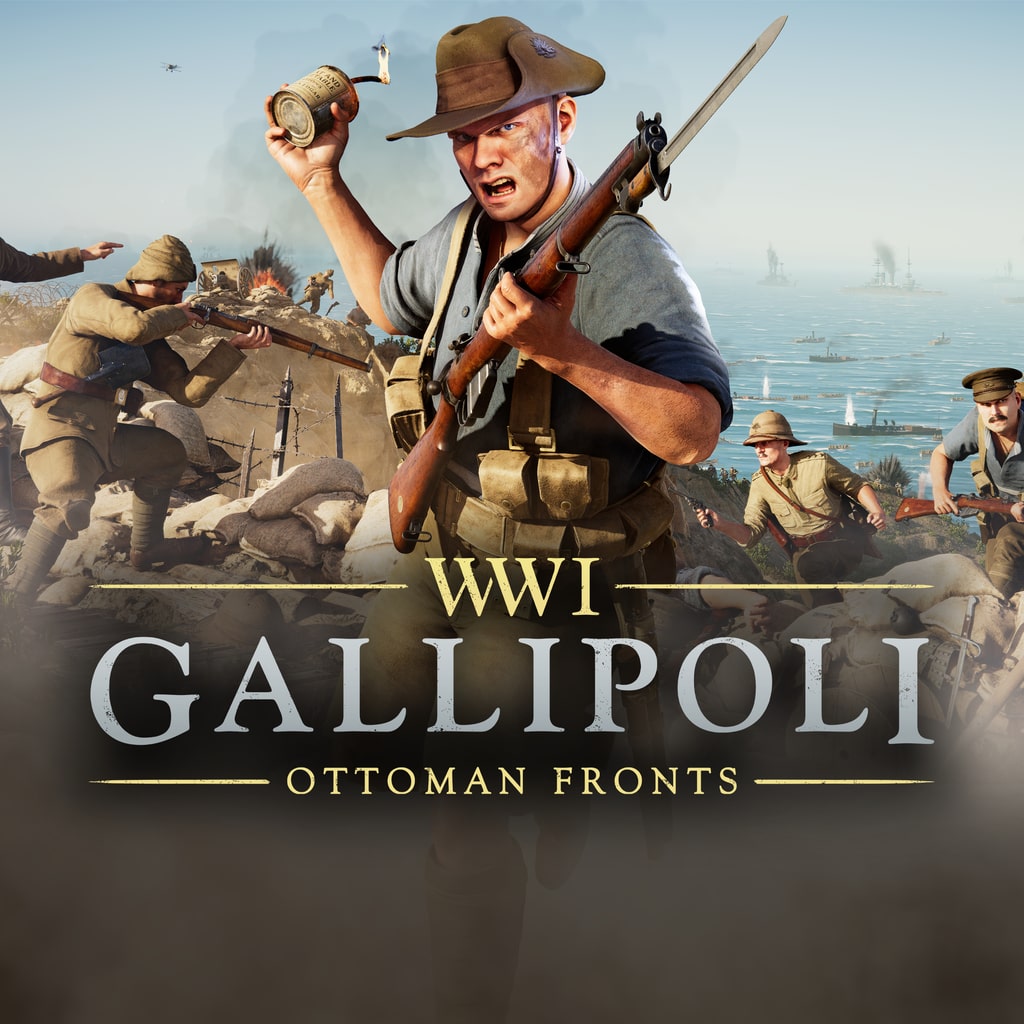
The Gallipoli campaign offers BlackMill Games a compelling setting, distinct from the muddy European battlefields that have dominated many First World War games. There are beaches, dry valleys, rocky ridges, trenches carved into hillsides, and open areas where the sun seems almost as dangerous as the soldiers shooting at you. The contrast between the beautiful Mediterranean landscape and the violence unfolding across it is striking.
The campaign’s environments effectively convey the difficulty faced by soldiers on both sides. There is little sense of a conventional battlefield with clearly defined lanes and comfortable defensive positions. Instead, the terrain constantly seems to work against you. A ridge can provide a valuable firing position one moment before becoming a death trap when an artillery barrage arrives.
That environmental storytelling is one of the game’s greatest strengths. You do not need lengthy cutscenes to explain how unpleasant the campaign was, because the landscape tells the story for you. Climbing a slope while enemy fire cracks overhead, or scrambling through a narrow trench with nowhere to retreat, can communicate more about the reality of the fighting than pages of exposition ever could.
Every Bullet Matters
At the heart of Gallipoli is the familiar yet wonderfully uncompromising gunplay that has become synonymous with the WW1 Game Series. Rifles feel heavy, deliberate and dangerous, while the pace of combat encourages patience rather than the sort of frantic trigger-pulling associated with modern military shooters. You have to think before exposing yourself, because the enemy only needs one good shot.
This creates a fascinating rhythm. You might spend several minutes carefully advancing behind cover, scanning windows and ridgelines for movement, only for everything to erupt into chaos when somebody finally spots you. Suddenly rifles are cracking from several directions, artillery is landing nearby and somebody is screaming for a medic. The game can go from eerily quiet to absolutely terrifying in seconds.
It is also a refreshing reminder that slower combat does not necessarily mean less exciting combat. In fact, Gallipoli often creates more tension by making you wait. Hearing an enemy rifle somewhere beyond a ridge, without knowing exactly where the shooter is, can be considerably more unnerving than facing ten enemies in an open arena.
Squad Before Soldier
The class-based structure is another important part of the experience. Rather than encouraging everyone to pick the most heavily armed soldier and charge towards the objective, Gallipoli gives players reasons to think about how their role contributes to the wider squad. Officers, machine gunners, riflemen and support roles all have their place, and a team that understands how those pieces fit together is far more effective than a collection of lone wolves.
This is particularly noticeable when attacking fortified positions. Machine-gun fire can pin defenders down while riflemen advance, officers coordinate support and other players work their way around the flank. When everything clicks, there is a satisfying sense of military cooperation that few shooters manage to reproduce.
Of course, multiplayer communities being what they are, you will inevitably encounter players who ignore teamwork entirely. Thankfully, the game can supplement human players with bots, which helps keep battles moving and prevents the battlefield from feeling completely empty during quieter periods. They are not a substitute for a coordinated human squad, but they serve a useful purpose.
The Beauty of a Brutal Battlefield
Visually, Gallipoli is a striking game. The dry landscapes, dusty trenches and rugged hills provide a markedly different visual identity from Verdun or Tannenberg, and the environmental lighting does much to establish the mood. The Mediterranean sun can make the battlefield look almost peaceful from a distance, which only makes the violence erupting across it feel more jarring.
The attention to period equipment is equally impressive. Weapons, uniforms and other military details help establish that this is a recreation of a specific conflict rather than a generic shooter wearing a First World War costume. The presentation also shows admirable restraint. The game does not need exaggerated explosions or Hollywood-style hero moments to create spectacle because the historical setting already provides plenty.
Sound design deserves special mention. Rifle cracks echo through valleys, artillery rumbles in the distance, and the general battlefield noise creates a constant sense of danger. Sometimes the most effective sound is the absence of sound, particularly when you are waiting behind cover, wondering whether the enemy has noticed your position.
Charging Into the Fire
Movement has also attracted attention, and this is an area where the game benefits from refinement. Traversing trenches and rough terrain feels more fluid than in some earlier entries, while the ability to charge with a bayonet adds another dimension to close-quarters encounters.
Bayonet charges are particularly memorable because they feel appropriately desperate. Running towards an enemy position with a rifle fixed for close combat is hardly a safe strategy, but when a squad commits to the attack together, there is an exhilarating sense of momentum. It is the sort of moment that can go spectacularly well or horribly wrong, often within seconds.
The dust and debris kicked up by explosions also play an important tactical role. An artillery strike does not merely create visual spectacle. The resulting cloud can temporarily obscure sightlines and provide an opportunity for advancing troops to move through exposed areas. It adds a welcome layer of battlefield unpredictability without turning the experience into an unnecessarily complicated simulation.
War Without the Glory
Perhaps the most important thing Gallipoli gets right is its tone. There is very little sense of glamorous heroism here. You are one soldier among many, and your life can disappear in an instant because someone several hundred metres away spotted your helmet.
That vulnerability gives the game an unusual emotional weight. Even when you are enjoying yourself, there is an awareness that the setting represents a real historical tragedy. The game does not need to lecture you about it. The sheer unpleasantness of its battles makes the point.
This is a shooter where survival feels like an achievement. Reaching the objective is satisfying, but surviving the journey there can be just as important.
A Few Cracks in the Trenches
Gallipoli is not perfect, and its uncompromising design will undoubtedly test the patience of players accustomed to more accessible shooters. The learning curve can be steep, particularly for newcomers who have not played the previous WW1 Game Series titles. Understanding where to position yourself, when to move, and how to read the terrain takes time.
There are also moments when the action becomes chaotic enough to make it hard to work out what killed you. That is arguably authentic to the setting, but authenticity does not always equal fun. A particularly brutal artillery strike can leave you wondering whether there was anything you could realistically have done differently.
Yet these issues are relatively minor when set against the larger experience. Gallipoli knows exactly what sort of shooter it wants to be, and it refuses to dilute that identity.
Verdict
Gallipoli is an excellent addition to BlackMill Games’ WW1 Game Series, one that feels justified rather than simply another map pack dressed up as a new game. Its Ottoman Front setting provides a distinctive backdrop, while the lethal gunplay, squad-focused combat and unforgiving objectives remain as compelling as ever. The new environments are arguably the star of the show, creating battles that feel open, exposed and desperately uncomfortable.
There is something oddly addictive about its brutality. You fail, learn the terrain, adjust your approach and try again. Eventually, perhaps after several attempts, your squad manages to push forward and capture the position that seemed impossible only minutes earlier. Those moments are where Gallipoli shines brightest.
It will not be for everyone. Players looking for fast respawns, generous health pools and constant action may find the pace frustrating, while newcomers may need time to understand its systems. For those willing to meet it on its own terms, however, there is a remarkably tense and atmospheric multiplayer shooter waiting in the dust.