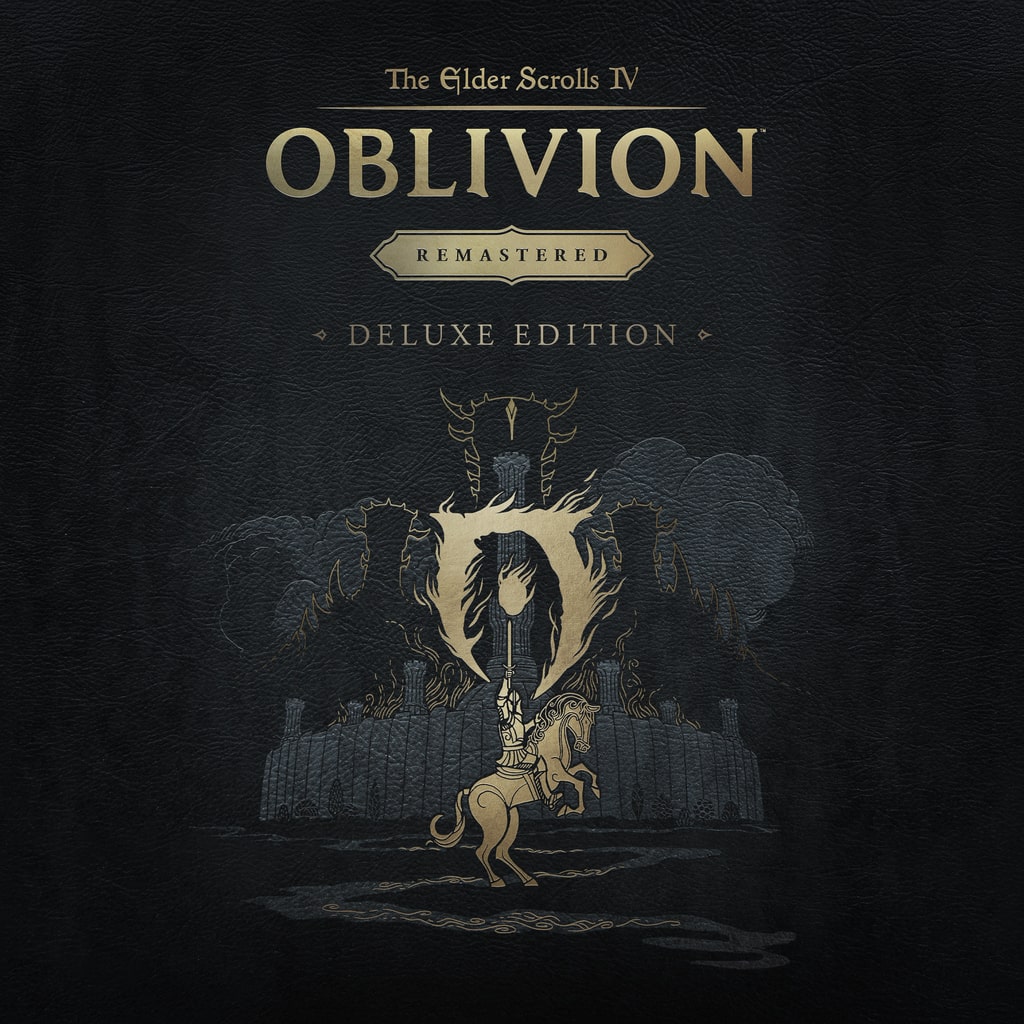
When Bethesda announced The Elder Scrolls IV: Oblivion Remastered – Deluxe Edition, fans of Tamriel’s golden age collectively held their breath. After nearly two decades, one of the most formative open-world RPGs of all time finally received the kind of treatment it always deserved—rebuilt with modern hardware in mind, outfitted with quality-of-life upgrades, and infused with a reverence for what made it so special in the first place. The result is a remaster that feels both nostalgic and refreshingly new, an RPG that reclaims its legendary status for a new generation while smoothing over much of its aged design.
From the moment you step out of the Imperial City’s sewers and gaze upon the rolling hills of Cyrodiil, Oblivion Remastered captures that unmistakable sense of awe the original inspired back in 2006. Bethesda’s complete visual overhaul, powered by the latest Creation Engine iteration, breathes life into every corner of the Empire’s heartland. The once-simplistic forests now burst with volumetric light and dense vegetation. Towns like Chorrol and Anvil look like living, breathing medieval communities. Character models, which once suffered from the uncanny “potato face” syndrome, now feature expressive faces, dynamic animations, and realistic skin shading.
The Deluxe Edition sweetens the deal with every piece of DLC and expansion integrated seamlessly into the base experience. From the eerie depths of The Shivering Isles to the opulent halls of Knights of the Nine, the content blends into the core game’s narrative rhythm more cohesively than ever before. Bethesda also added new side quests, expanded voice acting, and an optional “Director’s Commentary Mode” featuring insights from Todd Howard and the original development team—a delightful bonus for long-time fans and game historians alike.
But a remaster is only as strong as its gameplay updates, and here, Oblivion Remastered strikes a careful balance between modernization and authenticity. The once-clunky melee combat now feels more tactile, with improved hit detection, enhanced physics, and smoother weapon animations. Archery, in particular, benefits from better projectile physics and adaptive enemy reactions, making ranged combat far more rewarding than the original’s floaty feel. Magic has also been reimagined, drawing inspiration from Skyrim’s fluid casting system while retaining Oblivion’s deep spell customization. The result is a combat loop that feels faster, more engaging, yet still unmistakably Oblivion.
Leveling—arguably the most infamous aspect of the original—has been mercifully reworked. Gone is the opaque system that punished players for “inefficient” skill progression. Instead, experience now flows naturally from what you do, akin to Skyrim’s model, while still rewarding specialization and planning. The world’s enemy-scaling, once the bane of immersion, has also been toned down. Now, higher-level enemies feel appropriately challenging without the absurdity of bandits in full Daedric armor.
Bethesda’s approach to immersion extends beyond combat and systems. The Radiant AI, once groundbreaking but notoriously inconsistent, finally delivers on its original promise. NPCs follow believable daily routines, react dynamically to player choices, and hold unscripted conversations that feel organic. Town guards still bellow “Stop right there, criminal scum!”—but now they might actually remember your deeds in context, thanks to expanded reputation tracking and faction integration.
Of course, Oblivion Remastered doesn’t abandon its quirks, and that’s part of its charm. The vibrant, almost dreamlike color palette remains intact, a deliberate contrast to Skyrim’s colder tone. The humor, the eccentric dialogue, and the wild tonal shifts—from demonic invasions to cheese wheel collection quests—are preserved with care. Yet, subtle tweaks in pacing and quest design make the narrative flow more smoothly, particularly in the main questline, which benefits from modern cinematic framing and refined voice performances.
Performance-wise, the remaster runs beautifully across all platforms. On next-gen consoles and PC, Cyrodiil’s landscapes stretch far beyond their original draw distances, with stable 60fps (and even 120fps on capable systems). Load times are nearly instantaneous, and the new photo mode showcases just how striking the world can look under dynamic lighting. Bethesda also took community feedback to heart by integrating a robust mod support framework directly into the Deluxe Edition, encouraging players to further personalize their experience without breaking the game’s stability.
The sound design has seen similar love. Jeremy Soule’s iconic score has been fully re-recorded with a live orchestra, retaining its sweeping emotional pull while enhancing its depth and clarity. Ambient soundscapes—rustling trees, distant chants, the hum of magic—immerse players in a world that feels more alive than ever. Voice acting, too, benefits from better direction and expanded casting; though you’ll still hear a few familiar voices from the original, they’re now less repetitive and more nuanced.
Perhaps the most striking thing about Oblivion Remastered – Deluxe Edition is how effortlessly it bridges eras. It preserves the wonder and eccentricity that defined early open-world RPGs while offering the polish and accessibility modern audiences expect. You still feel that intoxicating freedom to wander off the beaten path, to stumble upon a ruin, and to lose yourself in the unpredictable magic of discovery. Yet, the friction points that once held Oblivion back—its technical rough edges, its unbalanced systems—have been largely ironed out, allowing the game’s soul to shine through unobstructed.
That said, purists may notice a few compromises. Some players might miss the exploitative charm of the old alchemy or the absurd unpredictability of enemy scaling. Others may find the updated art direction slightly too glossy compared to the original’s softer, painterly look. But these are small quibbles in what is otherwise a masterful restoration.
In an industry where remasters can often feel like lazy cash-ins, The Elder Scrolls IV: Oblivion Remastered – Deluxe Edition stands tall as an example of how to do it right. It honors its past without being shackled by it, enhances without erasing, and reintroduces one of gaming’s most magical worlds to a new generation. For returning heroes of Cyrodiil, it’s like coming home. For newcomers, it’s a revelation—a reminder of why The Elder Scrolls became a legend in the first place.
An extraordinary revival of a genre-defining RPG. Faithful, modernized, and overflowing with heart—this is Oblivion as it was always meant to be.