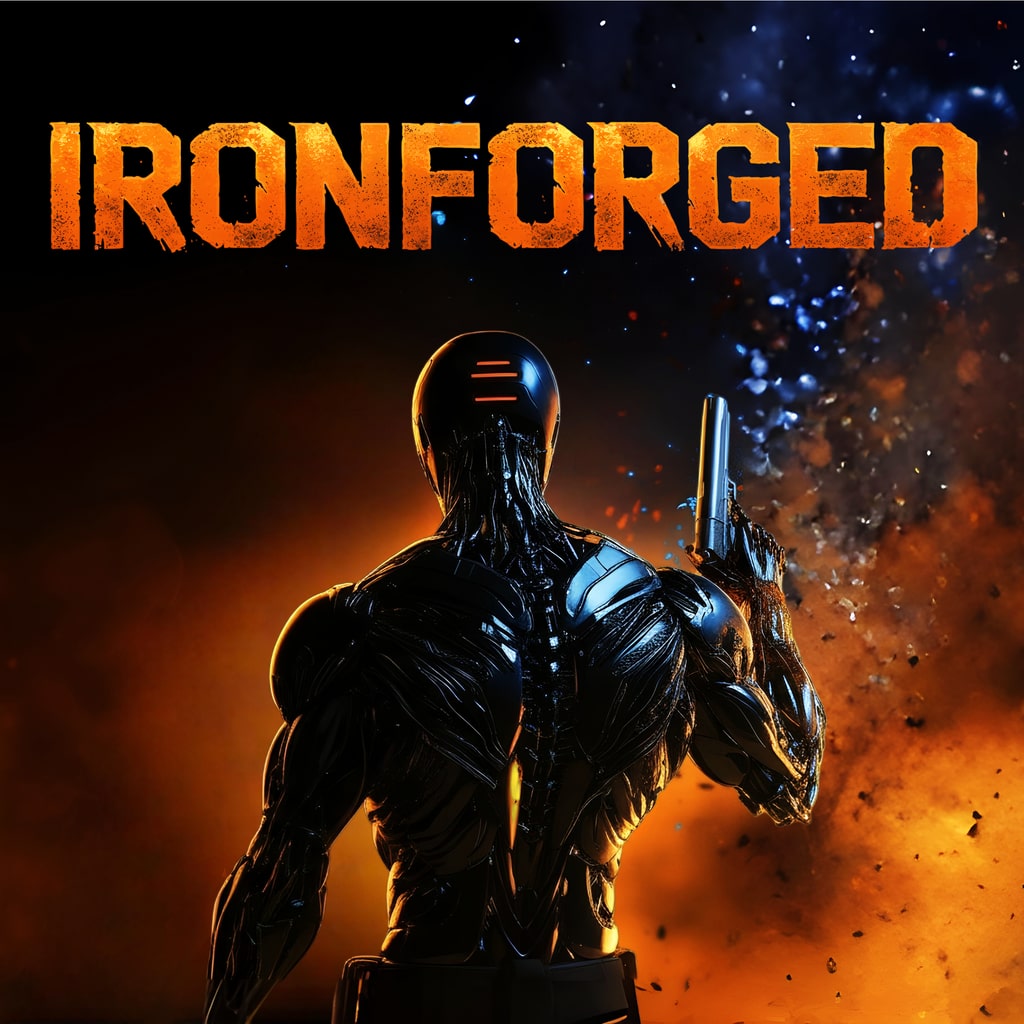
There is something refreshingly uncompromising about Ironforged. It is not particularly interested in making you feel like an unstoppable action hero, nor does it want to hold your hand as you learn to survive. Instead, it drops you into a hostile mechanical nightmare with a limited arsenal and expects you to make every bullet count. In a VR landscape that can sometimes become obsessed with spectacle, Ironforged finds its identity in precision, restraint and the wonderfully uncomfortable feeling that one poor decision can bring everything crashing down.
Developed by IronforgeDreams and published by Mefis LLC, Ironforged puts you inside the mechanised body of CM 42, a designated combat unit being tested deep beneath a collapsing world. The facility is not a conventional battlefield where victory is assumed, because you are essentially another component in a brutal testing process. There are 12 realms to survive, each designed to push your combat abilities and composure to their limits. Succeed, and CM 42 earns deployment, but failure means being melted down like the machines that came before you.
That premise gives the entire experience a wonderfully cold edge, and it works particularly well with the physicality of virtual reality.
Welcome to the Testing Facility
Ironforged establishes its atmosphere through a world that feels industrial, oppressive and deliberately hostile. The environments suggest you are not an elite soldier arriving on a heroic battlefield, but another machine being processed through an enormous mechanical system. There is little comfort here, and that absence gives the campaign a distinct personality. VR makes the whole thing considerably more immediate because you are physically standing inside these environments rather than simply looking at them on a television screen.
That physical presence is important because the game is built around the idea that your body is part of the combat system. You are looking around corners, positioning yourself behind cover, reaching for weapons and physically managing your ammunition. Rather than watching CM 42 perform these actions, you are responsible for them yourself. The result is a shooter where even simple interactions can become tense when enemies are closing in and your attention is already being pulled in several directions.
The 12 testing realms provide a clear structure for the campaign, giving you a series of increasingly demanding environments to overcome. While the fundamental combat philosophy remains consistent, each realm feels like another examination of your ability to remain calm under pressure. There is a pleasing sense of progression as you work your way through the facility, particularly because the narrative premise makes every completed section feel like another step towards earning your deployment. You are not simply clearing levels because the game needs somewhere to put its enemies; you are proving that CM 42 deserves to survive.
Precision Over Panic
The central idea behind Ironforged is remarkably simple: make every bullet matter. That sounds straightforward until you are standing in a hostile room, enemies moving around you, and you realise that firing wildly is probably the fastest way to make an already difficult situation much worse. Ammunition conservation is therefore not just a resource-management mechanic but an important part of the game’s overall rhythm. You are encouraged to slow down, control your breathing, assess the battlefield, and make deliberate shots rather than emptying magazines whenever something moves.
That slower approach works particularly well in VR because there is already a physical intensity to everything you are doing. You are managing your weapons with your hands, watching your surroundings, and trying to keep track of threats that can appear from different directions. Adding limited ammunition to that equation creates genuine pressure without needing to artificially inflate enemy health. A missed shot feels like a mistake because you know that bullet cannot be recovered.
There is also something satisfying about the discipline this creates. In many shooters, firing a weapon becomes almost instinctive, with ammunition acting as a resource that can be replenished whenever necessary. Ironforged makes you stop and think before pulling the trigger, which changes the emotional weight of combat. A single well-placed shot can feel more rewarding than an entire magazine dumped into an enemy.
Your Hands Are Part of the Arsenal
Manual weapon handling is one area where Ironforged benefits most from being designed specifically for VR. Reloading is not simply a button press that triggers an animation; you are expected to physically interact with your magazines and weapon. The ability to eject rounds and reorganise magazines adds an extra layer of involvement that fits neatly with the game’s emphasis on preparation and precision. It can feel fiddly at first, but that physicality is also what makes the system memorable.
The difference becomes especially obvious when things start going wrong. Reloading in a quiet environment is one thing, but attempting to manage your weapon while an enemy is moving towards you creates a very different experience. You have to think about where your hands are, what ammunition you have available, and whether you actually have enough time to complete the process. Suddenly, something as routine as reloading becomes another tactical decision.
That is one of the strongest qualities running through Ironforged. The game takes ordinary shooter mechanics and asks what happens when the player has to physically perform them. It does not always make the experience easier, but it makes the actions feel more meaningful.
Cover Is a Lifeline
Cover is not simply a place to stand while waiting for enemies to stop firing. In Ironforged, understanding your position relative to the environment can be the difference between completing an encounter and starting again. The game’s deliberate combat encourages you to think about positioning, angles and exposure rather than charging directly towards whatever happens to be shooting at you. In VR, this becomes particularly intuitive because you naturally start thinking about your physical relationship with the environment.
There is real satisfaction in finding a useful position, exposing yourself just long enough to take a shot, then retreating before the return fire reaches you. You might crouch behind cover, lean around an obstruction and take a carefully placed shot before disappearing again. These actions may not look particularly spectacular on paper, but they can feel wonderfully tense when you are physically performing them. The game understands that tactical combat does not need to be loud to be exciting.
The downside is that this approach can make Ironforged feel slow if you are expecting the constant momentum of a traditional action shooter. The game deliberately asks you to take your time, which will inevitably frustrate players who prefer aggressive movement and rapid firefights. For everyone else, the slower pace gives the encounters room to breathe and allows each decision to carry greater weight.
Time Warp Changes the Rhythm
One of CM 42’s most useful abilities is Time Warp, which slows the battlefield and gives you a brief window to regain control of a difficult situation. It is an excellent fit for the game’s philosophy because it does not simply turn you into an unstoppable killing machine. Instead, it gives you the time needed to make a better decision. You still have to aim, choose a target and understand what is happening around you.
The ability becomes particularly useful when multiple threats begin to overwhelm your position. Slowing the action can give you enough breathing room to identify the most immediate danger, line up a shot or reposition yourself. It creates a satisfying contrast with the otherwise methodical combat, as the battlefield suddenly becomes almost dreamlike while you work out your next move. Used well, Time Warp feels like a reward for keeping your composure rather than a shortcut around the game’s difficulty.
There is also a nice sense of restraint to the mechanic. It does not remove the need for skill, nor does it completely eliminate danger. Instead, it gives you an opportunity to regain control, which is exactly what a tactical ability should do in a game built around pressure.
When the Bullets Run Out
Eventually, even the most careful player will run out of ammunition. That is where the Takedown system becomes particularly important, offering a physical option when your weapons can no longer solve the problem. Instead of simply accepting that you have lost the encounter, you can close in and use physical attacks to regain the upper hand. It provides a useful safety net without undermining the importance of ammunition management.
There is an appealing desperation to being forced into close quarters after carefully conserving your bullets. The entire encounter suddenly shifts as the comfortable distance of ranged combat disappears. You are no longer thinking about the perfect shot; you are thinking about whether you can survive long enough to create another opportunity. Those moments can produce some of the most memorable encounters because the game has forced you to adapt.
The Takedown mechanic also reinforces one of the game’s most important themes: preparation is valuable, but improvisation is essential. You can plan your ammunition usage and position yourself carefully, but the battlefield does not always cooperate. Having another option when things go wrong gives combat a welcome degree of flexibility.
Upgrades That Actually Matter
The progression system gives Ironforged another reason to push further into the facility. Upgrades let you unlock new skills and then improve those abilities individually, adding a little more depth than simply handing out increasingly powerful weapons. The system encourages you to think about how you want CM 42 to develop and which improvements best support your preferred approach. That feels appropriate for a game where survival depends more on refinement than brute force.
The upgrade system also avoids completely undermining the game’s difficulty. Becoming stronger does not suddenly transform CM 42 into an unstoppable machine, because the core combat demands remain. You still need to aim carefully, manage ammunition and use the environment intelligently. Progression therefore feels like an enhancement to your skills rather than a replacement for them.
That distinction is important because it keeps the central challenge intact. You are improving your capabilities while still being asked to improve as a player. The two systems work together rather than competing with each other.
VR That Understands Why It Is VR
Perhaps the biggest compliment I can pay Ironforged is that it understands what virtual reality is good at. The game does not simply take a conventional shooter and place it inside a headset, because many of its most important mechanics are built around physical interaction. Looking around corners, handling weapons, managing magazines and positioning yourself within the environment all become more meaningful because you are physically involved.
That physicality can also make the game considerably more demanding than a conventional shooter. A lengthy session can leave you feeling as though you have actually earned your victories, particularly when encounters require constant movement and concentration. For some players, that could become tiring sooner than expected. For others, that physical involvement will be precisely what makes Ironforged worth playing.
There is also a satisfying connection between the game’s fiction and its mechanics. CM 42 is a machine being tested, and the player is effectively being tested alongside it. The more carefully you handle the weapons and environment, the more successful you become. The experience therefore feels unusually coherent from a design perspective.
It Is Not Afraid to Be Difficult
There is no getting around the fact that Ironforged can be punishing. Small mistakes can quickly escalate into major problems, particularly when poor positioning leaves you exposed or careless shooting drains your ammunition. The game expects you to learn from failure rather than simply overpower the next encounter. That can be frustrating during a difficult stretch, but it also makes success feel considerably more satisfying.
The important distinction is that the difficulty generally feels connected to the game’s mechanics. Enemies are not simply soaking up enormous amounts of damage to make the game harder. Instead, the challenge comes from your limited resources, positioning and ability to remain calm. When you fail, there is usually a sense that you could have handled the situation better.
That makes the eventual victories feel earned rather than handed out. Surviving an encounter after several failed attempts can create the kind of satisfaction that disappears when a game constantly cushions the player from its consequences. Ironforged trusts you to learn, and that confidence is one of its most appealing qualities.
The Price of Failure
The idea that CM 42 will be melted down if it fails gives the campaign a wonderfully grim sense of purpose. You are not a legendary hero destined to survive, and the facility does not care whether you have made progress before. You are another machine under evaluation, and failure simply means another unit can take your place.
That premise fits the game’s industrial aesthetic beautifully. Everything feels clinical and mechanical, which makes the threat of destruction feel more believable within the fiction. There is no need for an elaborate emotional story when the game’s basic premise already gives every encounter consequences.
It also makes the 12 realms feel more significant. Completing another realm is not merely another tick on a progression bar, because it represents another step towards proving that CM 42 is worth deploying. The campaign therefore has a simple but effective sense of momentum.
Where Ironforged Could Improve
For all its strengths, Ironforged is not going to appeal to everyone. Its deliberate pacing can feel slow if you prefer the frantic movement and constant explosions of a more traditional VR shooter, while the manual weapon handling can become demanding during longer sessions. The game is also so committed to its central combat philosophy that some encounters can begin to feel familiar once you have fully grasped the rhythm. There is a fine line between deliberate tension and repetition, and Ironforged occasionally comes close to it.
The setting could also benefit from more opportunities to break up the combat loop. The facility provides a suitably oppressive backdrop, but a game this focused on combat needs enough environmental variety to keep the player curious about what comes next. More dramatic changes in scenery, atmosphere or encounter design could have helped maintain that sense of discovery throughout the campaign.
None of these issues fundamentally undermine the experience, though. They largely stem from Ironforged’s strong commitment to its chosen identity. It would be easy to make the game more accessible by removing some of its demands, but doing so would probably weaken the very qualities that make it distinctive.
A Shooter With Discipline
What I appreciate most about Ironforged is that it understands the difference between difficulty and chaos. It could have simply filled every room with enemies and called the resulting mayhem challenging, but instead it asks you to think about what you are doing. Every encounter becomes a small tactical problem involving ammunition, positioning, cover, timing and target selection.
That creates a much more deliberate rhythm than in many VR shooters. You might spend several seconds observing an area before making your move, then suddenly find yourself reacting to a threat that has appeared from an unexpected direction. The tension comes from the possibility of losing control rather than from constant action. When you regain that control, the relief can be surprisingly powerful.
This is also where the game’s physical systems work together particularly well. Manual reloading makes ammunition management tangible, cover makes positioning important, and Time Warp gives you a tool for recovering from difficult situations. None of these systems exists in isolation, and their interaction is what gives the combat its character.
The Best Moments Are the Ones You Earn
The most memorable moments in Ironforged are not necessarily the biggest or loudest encounters. They are the times when everything seems to be going wrong and you somehow manage to recover. Your magazine is almost empty, an enemy is closing in, and your carefully planned position has suddenly become dangerous. You duck behind cover, reload, activate Time Warp, and manage to land the shot you needed.
Those moments feel earned because the game does not simply manufacture them with scripted spectacle. They emerge naturally from the systems you have been learning throughout the campaign. You understand why you survived because you made the right decisions under pressure. That is the kind of satisfaction VR can deliver exceptionally well when its mechanics are designed around the player’s physical involvement.
There is also a sense of personal achievement in physically overcoming those situations. You are not watching an impressive animation of a character performing a perfect reload or takedown. You are doing it yourself, and when everything comes together, the success feels considerably more immediate.
Final Verdict
Ironforged is a refreshingly focused VR shooter that understands the value of restraint. Rather than drowning the player in weapons, abilities and endless explosions, it builds its experience around a small set of mechanics and asks you to master them. That approach will not appeal to everyone, particularly players who want a faster, more immediately accessible action experience, but those willing to meet the game on its own terms will find a surprisingly tense and rewarding combat loop.
The combination of manual weapon handling, limited ammunition, physical takedowns, tactical positioning and Time Warp gives each encounter a sense of purpose. More importantly, the VR implementation makes those mechanics feel physical rather than cosmetic, which is exactly what a game designed specifically for room-scale VR should do. You are not simply controlling a character who happens to be holding a weapon; you are physically managing the tools that keep you alive.
There is also something satisfying about the game’s central premise. CM 42 is not a superhero, and you are never promised victory. You are another machine being tested inside a facility that has already destroyed countless others, and every realm represents another opportunity to prove that you are different. That makes progression feel meaningful even when the story itself remains relatively straightforward.
Ironforged is tough, occasionally demanding, and perhaps a little too committed to its slow, methodical approach for some tastes, but its confidence is admirable. It knows exactly what sort of VR shooter it wants to be and rarely compromises that vision. For players who enjoy tactical combat, physical weapon handling and the tension of knowing that one careless mistake could end everything, there is plenty here to appreciate.
CM 42 has been given a simple objective: survive the facility and earn deployment. The impressive part is how effectively Ironforged makes you feel that failure genuinely matters. Every carefully placed shot, every desperate reload and every successful encounter becomes another small victory over a world that would happily turn you into scrap.