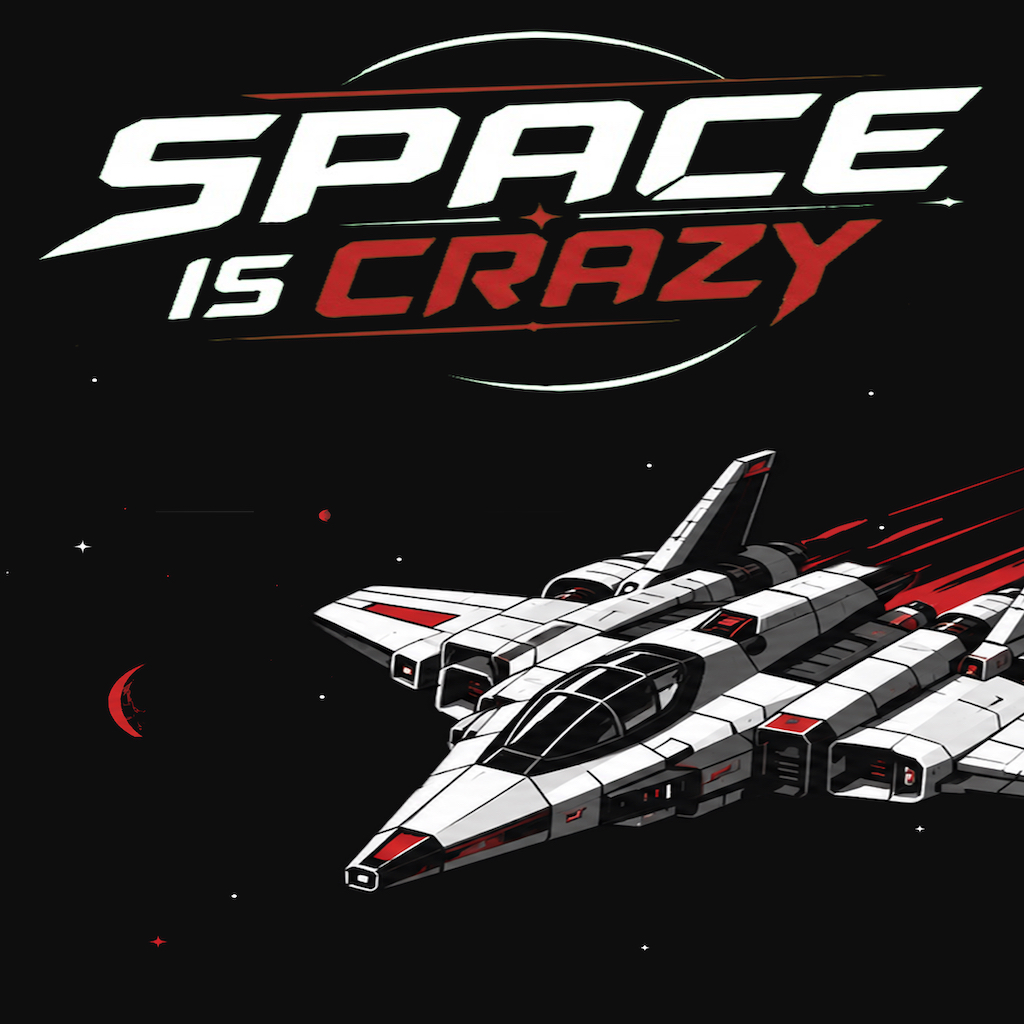
There is a certain purity to arcade shooters that never seems to go out of fashion. Long before sprawling open worlds and cinematic storytelling became the norm, games relied on little more than tight controls, relentless action and the irresistible promise that you could always do a little better on your next attempt. Space Is Crazy taps directly into that philosophy, delivering an experience that wastes no time getting you into the cockpit before unleashing wave after wave of colourful cosmic mayhem.
Developed and published by PedroFStudio, Space Is Crazy combines familiar shoot ’em up action with roguelite progression, allowing every run to evolve through random upgrades and unlockable ships. It is an uncomplicated premise, but one that works remarkably well because it knows exactly what it wants to be. This is not a sprawling space opera or an intricate simulation. It is an unapologetic arcade game that thrives on split-second decisions, constant movement and the satisfying thrill of turning an underpowered fighter into a devastating force of destruction.
Like many games built around repeat playthroughs, its success depends entirely on whether the core gameplay remains enjoyable after dozens of runs. Thankfully, Space Is Crazy has enough personality and mechanical variety to keep pulling players back for one more attempt, even after another spectacular explosion sends them back to the starting line.
Gameplay
From the opening moments, Space Is Crazy sets an aggressive pace. Enemy formations arrive almost immediately, asteroids drift across your flight path, and projectiles begin filling the screen before you have fully settled into the controls. Survival depends as much on movement as on accurate shooting, encouraging players to weave through danger while constantly returning fire.
The controls are refreshingly responsive. Your ship reacts instantly to every adjustment, making even the busiest firefights feel fair. When you fail, it is almost always due to your own positioning or decision-making rather than awkward handling. That sense of precision becomes increasingly important as later encounters introduce larger enemy waves and more elaborate attack patterns.
Random upgrades provide the game’s greatest source of variety. After surviving encounters, players are rewarded with different enhancements that gradually transform both offensive and defensive capabilities. One run might favour overwhelming firepower through rapid-fire weapons, while another leans heavily into defensive shields or improved mobility. These unpredictable combinations ensure that no two attempts unfold in exactly the same way.
Unlocking additional ships and pilots further expands this flexibility. Different combinations subtly alter how each run feels, encouraging experimentation rather than settling on a single preferred strategy. It is a rewarding progression system because every new unlock feels like another tool to master, rather than simply offering larger numbers.
The roguelite structure also softens the frustration of defeat. Even unsuccessful runs contribute to unlocking future possibilities, creating a satisfying sense of long-term progression that helps offset the inevitable failures.
Controlled Mayhem
The title Space Is Crazy proves surprisingly accurate. Battles quickly descend into controlled chaos, with enemies approaching from multiple directions as weapon effects illuminate every corner of the screen. Yet beneath all that visual noise lies a carefully balanced arcade shooter that rarely feels unfair.
Success relies on reading patterns rather than luck. Enemy formations telegraph their attacks clearly enough for attentive players to react, rewarding observation alongside quick reflexes. As your ship becomes increasingly powerful, the screen fills with lasers, explosions and projectiles, creating wonderfully dramatic firefights without sacrificing clarity.
There is also an addictive rhythm to every run. Early encounters encourage cautious play while your ship remains relatively weak. As upgrades stack, confidence naturally grows and riskier decisions become increasingly worthwhile. Eventually, however, the game’s escalating difficulty catches up, forcing you to rely on every skill developed throughout the run.
That balance between empowerment and vulnerability keeps the action engaging throughout. You never feel invincible for long, but neither do you feel hopelessly outmatched.
Visuals and Presentation
Space Is Crazy embraces retro pixel art with obvious enthusiasm. Bright colours dominate every environment, enemy designs remain instantly recognisable, and explosive visual effects ensure that every successful attack feels impactful. While the overall presentation remains relatively simple, it consistently delivers the energetic arcade atmosphere the game aims for.
Ships offer enough visual variety to make unlocks feel worthwhile, while alien enemies range from small, disposable fighters to intimidating larger threats that demand considerably more attention. Explosions burst with satisfying intensity without obscuring important gameplay information, striking a welcome balance between spectacle and readability.
Menus remain clean and easy to navigate, allowing players to quickly jump back into another run after defeat. That accessibility perfectly complements the game’s fast-paced structure. Very little stands between you and the next attempt, helping maintain the addictive flow that arcade games depend on.
The overall presentation may not push modern hardware particularly hard, but it does not need to. Every artistic decision supports gameplay first and foremost, creating an experience that remains consistently readable even during its most frantic moments.
Sound Design
The soundtrack captures the spirit of classic arcade shooters beautifully. Fast-paced, chiptune-inspired music drives every encounter forward, maintaining a constant sense of urgency without becoming repetitive. Each track complements the escalating action, adding energy without overwhelming the gameplay.
Weapon effects carry satisfying weight despite the retro presentation. Laser blasts, explosions and enemy destruction all provide clear, audible feedback that reinforces every successful hit. Combined with the energetic soundtrack, these effects help create an experience that feels lively from beginning to end.
Audio cues also contribute to gameplay by subtly warning players of incoming threats and important events during battle. Those small touches become increasingly valuable in later encounters, when the screen grows crowded with enemies and projectiles.
It is not a soundtrack likely to rival the genre’s most memorable classics, but it consistently supports the game’s relentless pace and arcade identity.
Replay Value
Replayability is where Space Is Crazy finds much of its strength. Procedurally selected upgrades ensure every run unfolds differently, while unlockable ships and pilots provide long-term goals beyond simply surviving another wave.
Leaderboards add another welcome incentive for competitive players. Even after unlocking preferred equipment, there remains the temptation to chase higher scores, longer survival times and cleaner runs. That familiar “just one more game” mentality takes hold remarkably quickly.
Runs remain relatively short, making the game perfectly suited to brief play sessions. It is equally enjoyable during a spare fifteen minutes or a longer evening spent experimenting with different builds. The progression system rewards both approaches, allowing players to steadily improve regardless of how much time they invest.
Some players may eventually wish for more enemy variety or greater environmental diversity during extended sessions. Even so, the randomised upgrade system does enough to prevent repetition from becoming a serious concern.
Final Verdict
Space Is Crazy delivers exactly what its title promises. It is loud, colourful, relentlessly energetic and unashamed of its arcade roots. By combining satisfying twin-stick shooting with roguelite progression, it creates an experience that feels immediately familiar while offering enough variety to remain engaging across repeated playthroughs.
Its greatest achievement is its simplicity. Every mechanic supports the central goal of surviving increasingly chaotic battles, allowing players to focus on improving their skills rather than memorising overly complex systems. Responsive controls, enjoyable upgrade choices and rewarding progression combine to create an arcade shooter that is difficult to put down once it gets its hooks into you.
While it does not dramatically reinvent the genre, it confidently delivers a polished interpretation of classic space combat that understands why arcade shooters endure. For players who enjoy chasing high scores, experimenting with different builds and surviving impossible odds, one explosion at a time, Space Is Crazy proves that sometimes the old ways remain the most entertaining.