Some games rely on cutting-edge graphics or sprawling open worlds to make an impression. Dodo Duckie takes the opposite approach. It embraces simplicity, wraps everything in an irresistibly charming package, and builds its entire adventure around a genuinely clever mechanic. That confidence pays off. What begins as a light-hearted quest to rescue a flock of kidnapped chickens steadily reveals itself as a thoughtful puzzle-platformer that constantly asks players to look at the world from a different angle, quite literally.
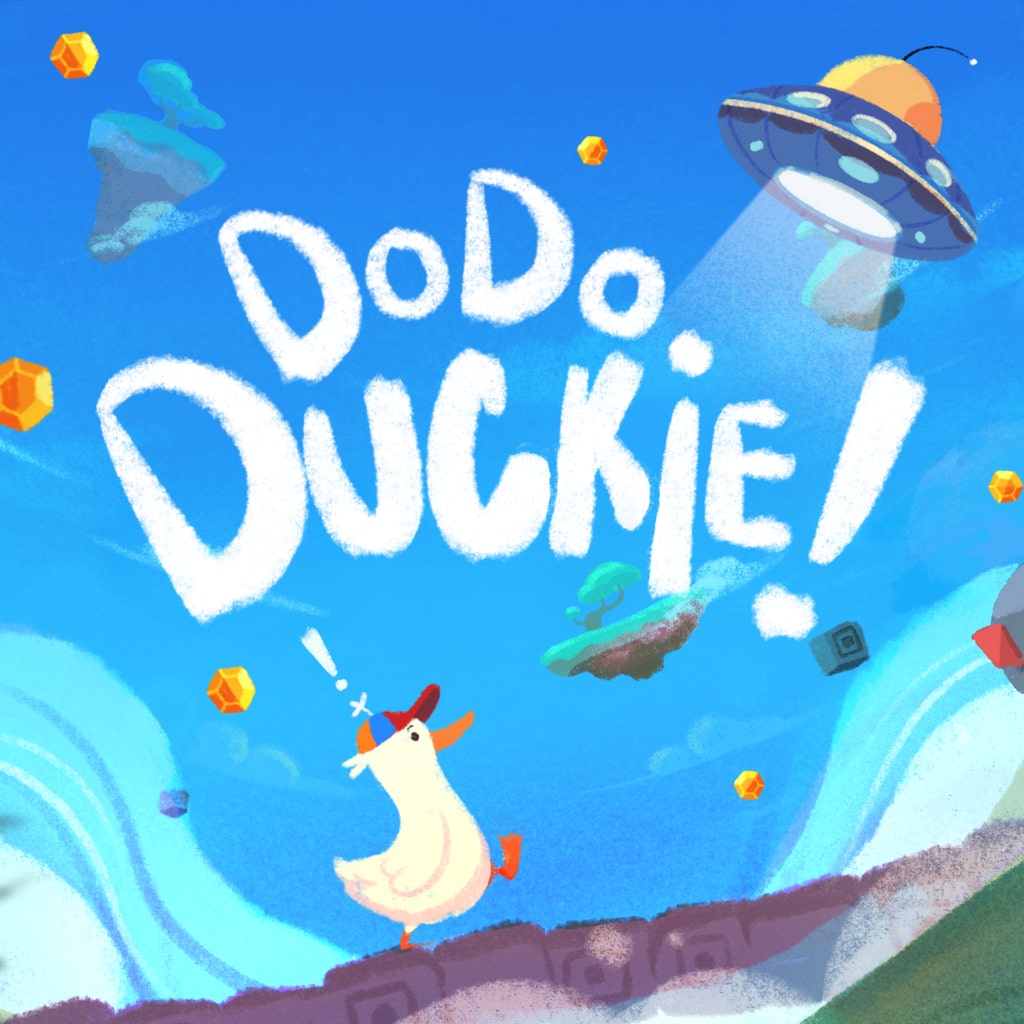
The premise is wonderfully absurd. Dodo is an awkward little duck who has spent his life happily alongside ninety-nine chickens until an alien invasion tears that peaceful existence apart. After stumbling into a strange dimensional world and receiving a magical cap from an equally laid-back capybara named Capie, Dodo gains the ability to switch between two-dimensional and three-dimensional perspectives. From that point onward, the rescue mission becomes an inventive journey through colourful worlds packed with environmental puzzles, hidden secrets, and enough personality to keep a smile on your face. It is the sort of game that never takes itself too seriously, yet still feels thoughtfully crafted from beginning to end.
Gameplay
The perspective-switching mechanic is unquestionably the heart of Dodo Duckie. With the press of a button, levels transform between traditional side-scrolling and fully explorable 3D environments. What initially appears to be a dead end from one perspective often becomes an obvious route from another. Walls dissolve into narrow pathways, floating platforms suddenly align, and impossible jumps become perfectly manageable after a quick shift in viewpoint.
The beauty of the system lies in how naturally it evolves. Early puzzles simply teach the basic concept, allowing players to understand how each perspective changes the layout. Later stages become significantly more intricate, layering multiple perspective changes with moving platforms, environmental hazards, switches, and hidden routes that require careful observation rather than quick reflexes.
Instead of relying on frustrating trial and error, the game encourages curiosity. Every obstacle feels like an invitation to stop, examine your surroundings, and experiment with perspective until the solution reveals itself. That creates a satisfying rhythm in which solving puzzles feels earned without becoming exhausting.
Platforming remains pleasantly accessible throughout the adventure. Dodo can glide through the air, swim across water, float over hazards, and waddle with a deliberately clumsy charm that suits the character perfectly. Controls remain responsive enough that mistakes usually feel like your own rather than the game’s fault. The result is a platformer that welcomes newcomers while still offering enough thoughtful level design to entertain experienced puzzle fans.
A World Full of Charm
The story is refreshingly uncomplicated, and that simplicity works in its favour. Rather than overwhelming players with lengthy dialogue or dramatic exposition, Dodo Duckie lets its cheerful personality shine through environmental storytelling and playful character interactions.
Capie quickly becomes one of the game’s highlights. His relaxed attitude contrasts perfectly with Dodo’s frantic rescue mission, creating several amusing exchanges that never overstay their welcome. The relationship feels genuine, giving the journey a warm, comforting atmosphere that suits the cosy presentation.
Searching for the missing chickens also provides constant motivation. Every rescued companion feels like tangible progress, turning exploration into something meaningful rather than simply collecting arbitrary tokens.
Although the narrative never reaches the emotional heights of larger adventure games, it never needs to. It understands exactly what kind of experience it wants to deliver and sticks confidently to that vision.
Visual Presentation
Visually, Dodo Duckie favours bright colours and playful imagination over technical spectacle. The alien worlds are packed with vibrant landscapes, oversized mushrooms, floating platforms, glowing crystals, and whimsical architecture that often looks like a child’s storybook brought to life.
The transition between 2D and 3D perspectives is particularly impressive. Rather than feeling like separate gameplay modes stitched together, the shifts happen seamlessly, making each level feel like a living puzzle box waiting to be unfolded.
Character animation also deserves praise. Dodo’s waddling, tiny flaps, awkward landings, and expressive reactions inject enormous personality into every moment. Even when standing still, he feels alive.
There are occasional moments when environmental textures appear fairly basic, particularly when viewed up close in three dimensions. However, the consistent art direction ensures these technical limitations rarely distract from the overall experience. The game’s presentation succeeds because every artistic decision supports its playful identity.
Sound Design and Atmosphere
The soundtrack quietly enhances the adventure without demanding attention. Gentle melodies accompany exploration, creating a relaxing atmosphere that encourages experimentation rather than pressure. Music shifts appropriately during more dramatic encounters, but it never overwhelms the mood.
Sound effects are equally charming. Dodo’s enthusiastic quacks quickly become impossible to resist, and the dedicated Quack button feels like one of those wonderfully unnecessary features that somehow becomes one of your favourites after only a few minutes.
Environmental audio also contributes to immersion. Bubbling water, rustling plants, distant machinery, and subtle ambient effects help each location feel distinct despite the game’s relatively modest scope. It all comes together to create an experience that feels welcoming from the moment you begin.
Exploration and Replay Value
Exploration remains consistently rewarding thanks to hidden Stardust collectibles, secret routes, and cosmetic unlocks available from Capie’s shop. While none of these additions dramatically alter gameplay, they provide satisfying incentives for players who enjoy searching every corner of each level.
The cosmetic hats add another layer of personality without being intrusive. They offer visual variety while reinforcing the game’s playful tone. Completionists will find plenty of reasons to revisit earlier stages after learning new techniques and becoming more comfortable with perspective switching. Many hidden areas become obvious only after a stronger understanding of how the mechanics interact. The adventure itself is not especially long, but it never feels artificially stretched. Every level introduces enough fresh ideas to maintain momentum until the credits roll.
Where It Stumbles
While Dodo Duckie delivers an enjoyable experience overall, it is not without flaws. Some puzzles repeat familiar concepts in the latter half of the adventure. Although new environments introduce visual variety, experienced players may recognise solution patterns before fully engaging with the challenge. A few additional mechanics introduced later in the game could have helped maintain surprise.
Camera behaviour during certain three-dimensional platforming sections can also be mildly awkward. It rarely causes failure, but there are moments when adjusting your view interrupts the otherwise smooth pacing.
Players seeking demanding platforming similar to Celeste or deeply layered puzzle design may also find the overall difficulty fairly gentle. The game clearly prioritises accessibility over punishing precision, and while that makes it welcoming for younger audiences and casual players, veterans may wish for tougher optional challenges. Fortunately, these shortcomings never overshadow the game’s strengths.
Final Verdict
Dodo Duckie is exactly the kind of surprise that reminds you why smaller independent games continue to thrive. It takes a single imaginative mechanic, builds an entire adventure around it, and delivers a consistently enjoyable experience filled with charm, warmth, and clever level design. The perspective-switching never feels like a gimmick because every puzzle reinforces how versatile the idea can be.
Its colourful presentation, likeable cast, approachable gameplay, and rewarding exploration create an adventure that is easy to recommend to players of almost any age. While it may not reinvent the puzzle-platforming genre or offer especially demanding challenges, it succeeds by staying focused on delivering a joyful experience from beginning to end.
Not every adventure needs epic battles or emotional devastation to leave an impression. Sometimes all you need is a determined duck, a magical hat, ninety-nine missing chickens, and a world that constantly encourages you to look at things differently.