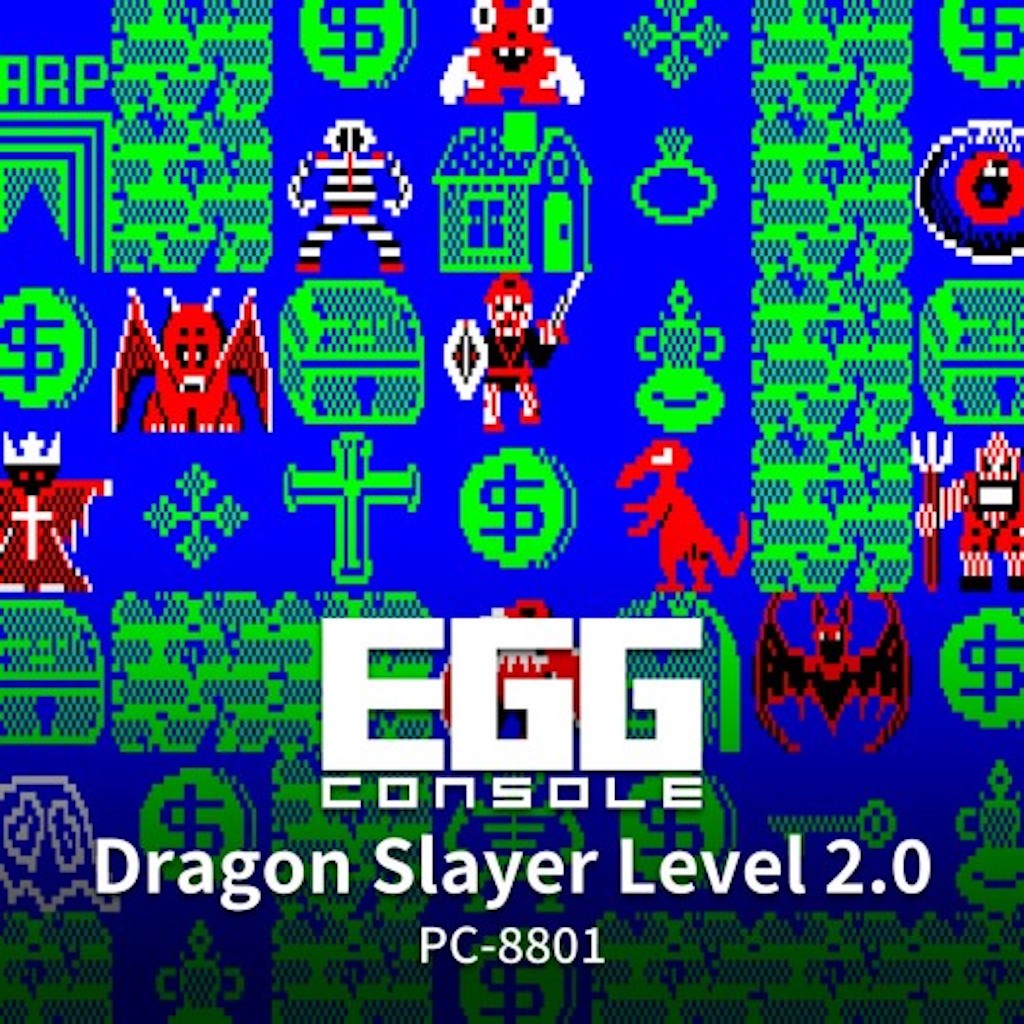
Looking back through gaming history can sometimes reveal experiences that feel surprisingly familiar, even decades after their original release. EGGCONSOLE Dragon Slayer Level 2.0 PC-8801 is one such example. Released by Nihon Falcom in 1984, this early action RPG may look simple compared with modern adventures, but its ideas helped lay the foundations for an entire genre. Long before sprawling open worlds, elaborate skill trees, and cinematic storytelling became the norm, Dragon Slayer was already experimenting with exploration, progression, magic, and strategic combat.
At first glance, it can be hard to appreciate how ambitious this game was for its time. The visuals are basic, the interface is minimal, and many modern conveniences are absent. Yet beneath that old-school presentation lies a game filled with clever systems and meaningful decisions. Every item collected matters, every battle carries risk, and every step into the unknown feels like a genuine adventure.
This EGGCONSOLE release offers a valuable opportunity to experience one of Japanese gaming’s most important historical titles in a more accessible form. The inclusion of the Level 2.0 balancing adjustments, alongside modern emulation features, makes this version a more welcoming entry point while still preserving the uncompromising design philosophy that made the original so influential.
For players interested in gaming history, Dragon Slayer is more than an old curiosity. It offers a glimpse into the creative experimentation that helped shape the RPG experiences many players enjoy today.
A Blueprint for the Action RPG
The premise is simple. You are a lone warrior tasked with defeating a powerful three-headed dragon and recovering four stolen crowns. Your journey begins with the search for a sword, and from there you must explore dangerous territory filled with monsters, obstacles, and hidden treasures.
The structure is refreshingly direct. There are no lengthy introductions or complicated explanations. The game immediately places responsibility in the player’s hands, encouraging exploration and experimentation. You learn by interacting with the world, discovering what each item does, and understanding how different abilities can help you overcome challenges.
This design philosophy reflects the era in which Dragon Slayer was created, yet it still feels surprisingly engaging. The world does not constantly guide you towards your next objective. Instead, it asks you to pay attention, remember important locations, and think carefully about your actions.
The four crowns are the main objective, but much of the experience comes from the journey itself. Searching for equipment, defeating enemies, and gradually becoming stronger create a satisfying sense of adventure. It may lack the dramatic storytelling of modern RPGs, but it succeeds in creating the feeling of being a lone explorer facing an unknown world.
Inventory Management Before It Was Cool
One of the most interesting aspects of Dragon Slayer is its strict approach to inventory management. Players can equip only one item at a time alongside their sword. This limitation may sound restrictive, but it drives some of the game’s most important strategic decisions. The Cross protects against monsters, the Ring lets players push walls, Keys unlock valuable chests, and the Power Stone increases strength when used at home.
Rather than collecting dozens of items and carrying everything effortlessly, players must think ahead. Entering an area without the right tool can leave you unable to progress, forcing careful preparation before venturing into dangerous locations.
This simplicity creates a surprisingly tactical experience. The challenge is not just defeating enemies. It is understanding what you need, when you need it, and whether carrying one item means sacrificing access to another useful ability.
Modern players may initially find this restrictive, but there is something satisfying about the system’s deliberate nature. Every item has a purpose, and every decision feels important because resources and equipment are never treated as disposable.
The Level 2.0 update improves this system by addressing some of the original frustrations. Making the Cross more useful on the ground and removing certain enemy-spawning mechanics after defeating the dragon help smooth the experience without removing the challenge that defines the game.
Magic, Combat and Survival
Combat in Dragon Slayer is simple by modern standards, but its progression systems offer surprising depth. Defeating enemies grants experience, enabling players to learn powerful spells that dramatically reshape how they approach the world. Abilities such as KICK, BREAK, FLY, and FREEZE offer new ways to overcome obstacles and enemies, gradually expanding the player’s options.
The magic system is one of the game’s most important innovations. Rather than simply increasing attack power through equipment upgrades, players gain abilities that alter how they interact with the environment. FLY enables movement across areas previously inaccessible, while BREAK can remove obstacles and open new paths.
These abilities foster a sense of discovery because learning a new spell does more than make the player stronger. It reshapes the possibilities available during exploration.
However, combat remains challenging. Enemies can quickly overwhelm an unprepared player, and limited information means mistakes can be costly. The Level 2.0 version mitigates this slightly by adding helpful features such as a red-screen warning when health is dangerously low, but it still demands patience and careful play.
Halving the experience gained from enemies ensures progression remains slow and deliberate. Veteran players may appreciate the preserved difficulty, while newcomers may need to adjust their expectations.
A Piece of Gaming History Preserved
The importance of Dragon Slayer extends far beyond its mechanics. This game helped establish ideas that would influence countless future RPGs. Nihon Falcom’s approach to combining exploration, action combat, character growth, and magical abilities laid a foundation that later games would build upon. Without titles like this, the action RPG landscape could have developed very differently.
The EGGCONSOLE release does an admirable job of preserving that legacy. Modern features such as save states, speed options, visual filters, and access to documentation make the experience far more approachable than playing on original hardware.
These additions are particularly valuable because they respect the original game rather than attempting to modernise it beyond recognition. The goal is not to transform Dragon Slayer into something it was never meant to be. Instead, it allows players to experience the title as it was while removing unnecessary barriers. For retro enthusiasts, this preservation effort is a major strength. For newcomers, it provides a chance to understand where many RPG conventions began.
Verdict
EGGCONSOLE Dragon Slayer Level 2.0 PC-8801 is a fascinating historical adventure that showcases the creativity of early Japanese computer gaming. While its age is impossible to ignore, the ideas behind it remain impressive. The careful inventory management, exploration-focused design, and evolving magic system demonstrate a level of ambition that helped define the action RPG genre.
It is not an easy recommendation for everyone. Players expecting modern conveniences, fast progression, or cinematic storytelling may struggle with its deliberate pace and demanding mechanics. However, those willing to approach it as a piece of gaming history will find a surprisingly thoughtful experience.
This is not simply an old game preserved for nostalgia. It is an important chapter in RPG history, one that still offers valuable lessons about exploration, experimentation, and player-driven discovery.