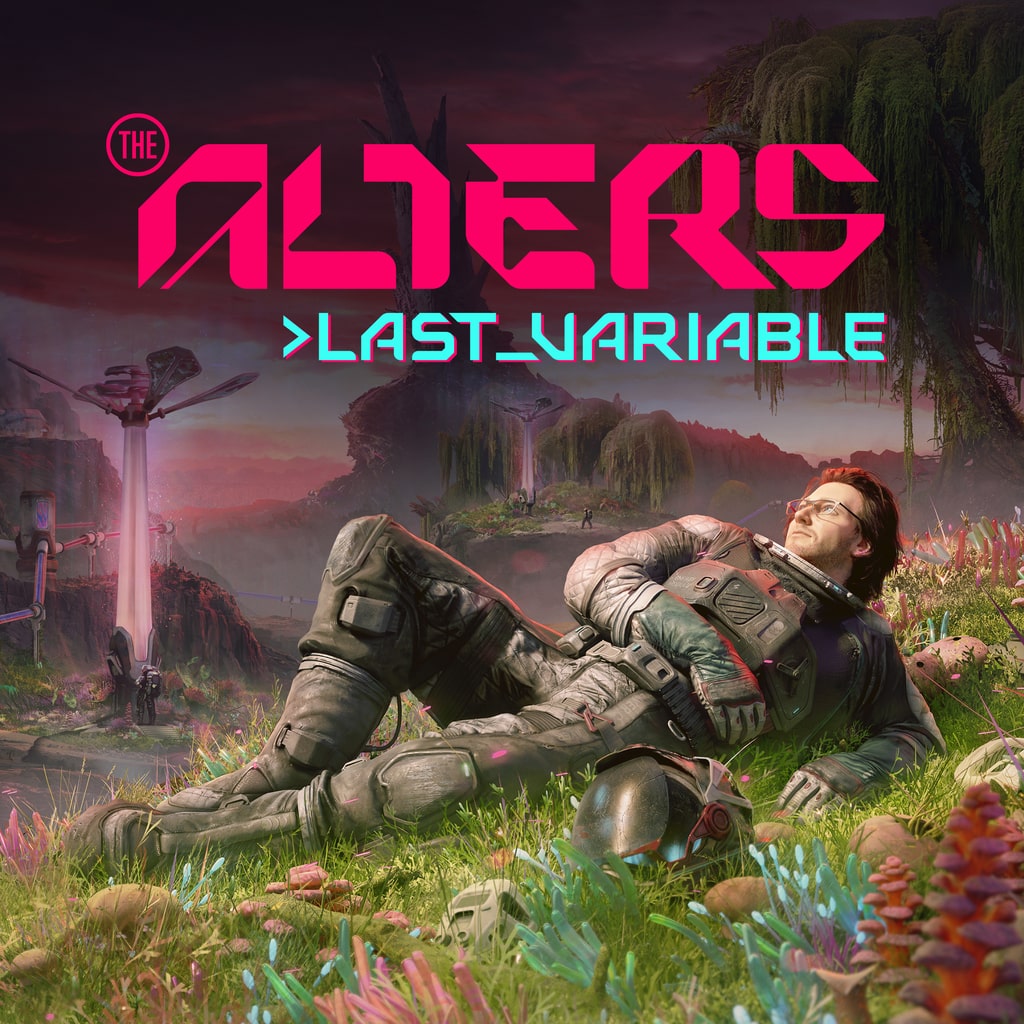
When The Alters launched, it immediately stood out from almost every survival game on the market. Rather than focusing solely on gathering resources or building larger bases, it posed a far more intimate question: who would you have become if your life had taken a different path? Every version of Jan Dolski embodied a choice, a regret, or a possibility, making survival feel deeply personal rather than purely mechanical.
The Alters: Last Variable takes one of the original game’s most intriguing endings and transforms it into something far more ambitious than a typical story expansion. Picking up after the conclusion in which Jan Scientist chooses to remain on the hostile planet, this twenty-hour adventure shifts the focus from desperate escape to relentless scientific discovery. Instead of fleeing an impossible world, you are now determined to understand it, even if doing so comes at an unimaginable cost.
The result feels less like downloadable content and more like a thoughtful second chapter. It respects what made the original memorable while confidently pushing its systems into fascinating new directions.
Curiosity Can Be More Dangerous Than Survival
The original game was driven by urgency. Time was always against you, forcing difficult decisions as the deadly sunrise crept ever closer. Last Variable replaces that immediate panic with something slower yet equally compelling.
Jan Scientist finally has the opportunity to devote himself entirely to research. Rather than surrounding himself with mechanics, miners and labourers, he creates a new team composed entirely of specialised scientific versions of himself. Each Jan represents a different discipline, bringing expertise in geology, chemistry, biology or physics, yet each also carries the same stubborn personality beneath their academic brilliance.
The premise is wonderfully absurd yet emotionally believable. Watching several highly intelligent versions of the same man disagree over methodology, ethics and personal priorities produces conversations that are every bit as engaging as the original game’s emotional conflicts. These are not simply clones performing assigned tasks. They are fully realised individuals whose intelligence often becomes their greatest obstacle.
Their mission centres on the mysterious Oasis, a flourishing ecosystem that somehow endures on a planet ravaged by devastating environmental cycles. Understanding why it exists becomes an obsession, and as the investigation deepens, it becomes increasingly clear that each answer reveals even more unsettling questions.
Building a Future Underground
Perhaps the most significant mechanical change is the abandonment of the enormous mobile base that defined the original campaign. Instead of constantly moving to avoid destruction, your operations now move underground. This immediately changes the rhythm of the game. Construction feels more permanent, encouraging thoughtful planning rather than temporary solutions designed simply to survive another day.
Excavating new chambers, researching advanced facilities and managing increasingly complex infrastructure become incredibly satisfying. Every expansion feels earned because each new room directly contributes to your long-term scientific goals. The underground setting also creates a striking contrast with the dangerous world above.
Managing this subterranean laboratory is a wonderfully intricate balancing act. New research modules unlock experimental technologies, while specialised facilities process resources into increasingly advanced materials. Watching your hidden scientific complex gradually evolve into a thriving research centre offers the same rewarding sense of progression that made the original base-building so addictive.
Terraforming With Consequences
Exploration also receives a major evolution through the introduction of terraforming. Rather than simply harvesting resources, players actively reshape nine distinct regions of the planet in an effort to unlock the secrets hidden beneath the landscape. Every successful breakthrough opens new research opportunities, reveals previously inaccessible resources and dramatically changes the surrounding environment.
However, nature refuses to cooperate quietly. Each major terraforming project provokes increasingly violent planetary responses. Earthquakes rip through carefully constructed infrastructure, radiation storms threaten valuable equipment, and entire sections of terrain become hazardous almost overnight. Success never feels comfortable because every scientific achievement creates fresh problems that demand immediate solutions.
This constant push and pull gives the expansion wonderful momentum. Progress always feels meaningful because it carries genuine consequences rather than simply unlocking another technology tree.
Time Becomes Your Greatest Enemy
One of Last Variable’s smartest additions concerns planetary cycles. Extended periods of unbearable surface temperatures force your entire research team into cryosleep while the world above becomes temporarily uninhabitable. On paper, this sounds like little more than another survival mechanic, but it introduces fascinating long-term planning.
Preparing for each sleep cycle becomes a major strategic objective. Supplies must be secured, infrastructure reinforced, and enough resources gathered to ensure the base remains operational while everyone sleeps. Even then, time exacts its own price.
Characters continue to age despite cryosleep, subtly reinforcing one of the expansion’s central themes. Scientific progress demands sacrifice, and sometimes the greatest sacrifice is simply the passage of time. Few games make ageing feel this tangible without resorting to melodrama.
Brilliant Minds Are Still Human
While the scientific mechanics provide plenty of depth, the heart of Last Variable remains its characters. Replacing the original crew with specialised scientists dramatically alters the emotional atmosphere aboard the base. Instead of disagreements born of physical exhaustion or practical concerns, conflicts now arise from intellectual pride, competing theories and philosophical differences.
Everyone believes they are the smartest person in the room because, technically, they all are. Managing these relationships is surprisingly delicate. Scientific breakthroughs may require collaboration, but convincing several exceptionally intelligent versions of yourself to cooperate is often more difficult than surviving the hostile planet outside.
The writing here deserves enormous praise. Each Jan feels distinct despite sharing identical origins. Their different life paths have shaped their personalities in subtle yet convincing ways, creating conversations that frequently blur the line between scientific debate and personal therapy.
There are moments of humour scattered throughout these exchanges, yet the expansion never loses sight of its emotional core. Beneath every argument lies the same fundamental question that powered the original game: does changing your circumstances truly change who you are?
Beautiful Isolation
Visually, Last Variable remains every bit as impressive as its predecessor. The underground laboratories glow with crisp blues and sterile whites, creating an atmosphere that feels both hopeful and unsettling. Sophisticated research equipment hums quietly, while holographic displays illuminate otherwise dark corridors, giving the base a convincing sense of technological advancement.
Returning to the planet’s surface offers a completely different experience. The Oasis bursts with impossible colour, standing in stark contrast to the surrounding wasteland. Every expedition becomes visually memorable as alien beauty collides with environmental hostility.
Performance remains consistently strong throughout the campaign. Load times are quick, frame rates remain stable, and environmental detail remains impressive even during larger terraforming events. Minor navigation hiccups occasionally affect AI pathfinding within the expanding underground complex, but these moments are infrequent and rarely disrupt the overall experience.
Evolution Rather Than Reinvention
Despite its many strengths, Last Variable does inherit a few familiar frustrations. The increasingly elaborate research systems can occasionally feel overwhelming, especially in later chapters, when multiple projects demand simultaneous attention. Players unfamiliar with the original game’s management mechanics may find the learning curve particularly steep.
Resource management also becomes noticeably more demanding in the later stages of the expansion. Balancing scientific ambition with practical survival creates meaningful tension, but it can occasionally slow the pace as production chains grow increasingly complex. Fortunately, these issues never overshadow the expansion’s remarkable overall quality. They simply reflect the expansion’s ambition to deepen systems rather than simplify them.
Final Verdict
The Alters: Last Variable demonstrates exactly what a meaningful expansion should achieve. Rather than offering more of the same, it thoughtfully evolves nearly every aspect of the original game while remaining fully faithful to its identity.
The shift from survival to scientific obsession proves remarkably effective, allowing 11 bit studios to explore new philosophical territory without abandoning the deeply personal storytelling that made the original unforgettable. Terraforming mechanics, underground construction and complex scientific relationships enrich the experience without feeling disconnected from its foundations.
Perhaps most importantly, Last Variable continues to pose difficult questions about identity, ambition and the cost of pursuing knowledge. Those questions linger long after the credits roll, giving the expansion an emotional weight that many full-priced games struggle to match. For anyone who connected with the original journey, this is not simply another chapter. It feels like the continuation the story genuinely deserved.