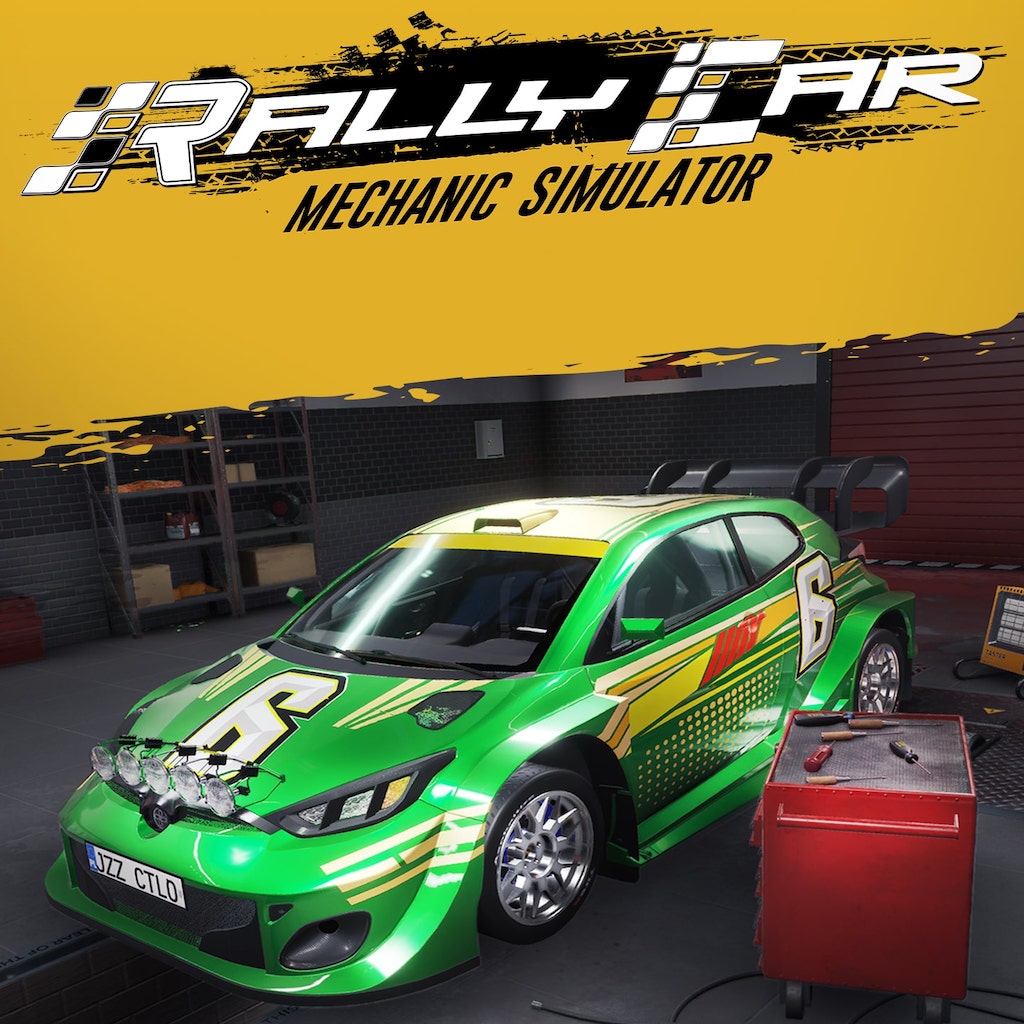
Mechanic simulators have built a loyal audience over the years by celebrating patience and precision rather than speed and spectacle. There’s a particular satisfaction in stripping an engine down piece by piece, diagnosing faults and watching a neglected vehicle slowly come back to life. Rally Car Mechanic Simulator understands why players love that process, but it refuses to let you become too comfortable. Instead of leisurely restoring classic road cars, it throws you into the unpredictable world of professional rallying, where every repair carries genuine consequences and every second in the garage matters.
That shift in focus immediately gives the game its own identity. Rally cars live brutal lives, bouncing over rocks, launching across jumps and sliding through mud at terrifying speeds. By the time they return to the service park, they are rarely in pristine condition, and the responsibility of getting them race-ready rests entirely on your shoulders. Suddenly, replacing a bent suspension arm or deciding whether a worn gearbox can survive one more stage becomes a genuinely tense decision rather than another routine task.
Rather than chasing cinematic storytelling, the game lets your career unfold naturally through your team’s successes and failures. You begin with modest equipment, limited finances and plenty to prove, slowly building a reputation through consistent results and careful management. Watching your workshop grow alongside your team’s ambitions creates an enjoyable sense of progression that feels authentic to the world of rallying.
More Than Simply Replacing Parts
The mechanical side of Rally Car Mechanic Simulator is impressively detailed without becoming completely overwhelming. Every damaged vehicle requires careful inspection before you start pulling components apart, encouraging you to think like an actual mechanic rather than someone randomly replacing expensive parts. Diagnostic equipment plays a major role throughout the campaign, rewarding players who take the time to investigate faults properly before reaching for the toolbox.
Repairs themselves feel tactile and satisfying. Engines, suspension systems, transmissions and countless smaller components all fit together logically, making every successful rebuild genuinely rewarding. There is something deeply satisfying about seeing a battered rally machine arrive covered in mud and bodywork damage, then slowly transform back into a competition-ready car through your own work.
The inclusion of electronics, tuning systems and advanced performance upgrades helps separate the game from more traditional mechanic simulators. Rally cars are highly specialised machines, and Red Dot Games clearly understands the engineering involved. As your garage expands, so does your ability to fine-tune performance, allowing you to prepare vehicles for vastly different weather conditions and rally surfaces throughout the championship.
The Service Park Is Where the Real Drama Happens
The highlight of Rally Car Mechanic Simulator is undoubtedly its timed service park sequences. Between rally stages, the calm of the workshop gives way to relentless pressure as strict repair windows force you to make difficult decisions. There is never enough time to fix everything, so prioritisation becomes every bit as important as mechanical knowledge.
These moments capture the frantic energy of real-world rallying remarkably well. A damaged radiator may demand immediate attention, but ignoring worn suspension components could prove disastrous on the next stage. Every repair carries an opportunity cost, forcing you to constantly balance risk against available time while the countdown relentlessly ticks away in the corner of the screen.
The result is an experience that feels dramatically different from other games in the genre. Instead of methodically completing one repair after another, you’re constantly making split-second judgement calls that directly influence your driver’s performance. When your repairs hold together long enough for a stage victory, it feels like a genuine team achievement rather than simply another completed objective.
Running a Rally Team
Outside the workshop, Rally Car Mechanic Simulator introduces a surprisingly enjoyable management layer that gives greater purpose to your mechanical work. Sponsor negotiations, financial planning and workshop expansion all feed into the wider career, creating a satisfying balance between short-term repairs and long-term ambitions. Success on the stages brings larger rewards, while poor performances can leave your team struggling to keep pace with better-funded rivals.
The economy generally feels well balanced throughout the early and middle stages of the campaign. New tools unlock meaningful efficiency gains, while upgraded facilities expand the range of repairs and modifications available. Progress always feels connected to your efforts, giving each successful rally weekend tangible value beyond another place on the championship table.
Vehicle customisation also adds a welcome layer of personality. Fresh paint schemes, upgraded bodywork and improved performance parts allow your cars to evolve visually alongside your growing reputation. This helps create a genuine attachment to the vehicles you’ve spent countless hours maintaining, making every podium finish feel that little bit more satisfying.
Dirt, Dust and Mechanical Detail
Visually, Rally Car Mechanic Simulator captures the messy reality of motorsport beautifully. Workshops feel busy and believable, filled with scattered tools, hydraulic lifts, spare tyres and half-dismantled machinery that lend the environment a convincing sense of authenticity. Rather than presenting an immaculate showroom, the developers embrace the organised chaos that defines a working garage.
The rally cars themselves receive impressive attention. Thick layers of mud gradually coat body panels after rough stages, while dents, scratches and mechanical wear accumulate naturally throughout the season. Watching those same vehicles emerge spotless and fully repaired after hours of careful work provides one of the game’s most satisfying visual rewards.
Sound design complements the presentation wonderfully. Pneumatic tools deliver heavy mechanical clunks, impact wrenches chatter convincingly, and turbocharged engines roar with aggression during testing. Combined with the constant background ambience of an active workshop, the audio does an excellent job of reinforcing the feeling that you’re working inside a genuine professional rally operation.
Not Every Repair Is Perfect
Despite its many strengths, the game occasionally asks a little too much of the player’s patience. Progression slows noticeably in the latter half of the career, as increasingly expensive upgrades require significant amounts of money and experience. This often leads to repeated repair jobs simply to generate enough income for the next meaningful unlock, which can sap momentum.
Console controls also reveal the game’s PC origins from time to time. Navigating large inventories and scrolling through lengthy parts catalogues with analogue sticks can feel unnecessarily cumbersome, particularly when compared with the precision of a mouse. It never becomes unplayable, but the interface could certainly benefit from further optimisation for controllers.
Some of the supporting activities also begin to feel repetitive after extended sessions. Washing vehicles, carrying out routine servicing and completing familiar maintenance jobs eventually become predictable, particularly once you’ve mastered the core mechanics. Thankfully, the timed repair events remain engaging enough to prevent those quieter moments from dragging the experience down too heavily.
Final Verdict
Rally Car Mechanic Simulator succeeds because it understands that rallying is far more than what happens between the start and finish lines. Behind every successful driver is a team of mechanics working to impossible deadlines, making critical decisions with limited resources and somehow keeping extraordinary machines alive in punishing conditions. Red Dot Games captures that overlooked side of motorsport with impressive authenticity, creating a simulator that feels genuinely fresh within a crowded genre.
Its satisfying repair systems, meaningful management mechanics and wonderfully stressful service park sequences combine to create an experience that rewards planning, observation and mechanical understanding in equal measure. Although the slower late-game progression, repetitive maintenance tasks and slightly awkward console interface occasionally interrupt the flow, they never overshadow the quality of the core gameplay loop.
For simulation fans and rally enthusiasts alike, Rally Car Mechanic Simulator delivers a rewarding look behind the scenes of one of motorsport’s toughest disciplines. It proves that the heroes of rallying aren’t always the ones standing on the podium. Sometimes they’re the grease-covered mechanics tightening the final bolt just before the countdown reaches zero.