Horror games often chase scale. They build sprawling haunted mansions, abandoned hospitals, or entire open worlds filled with creatures lurking in every shadow. Cornfield takes a very different approach. Instead of overwhelming players with endless mechanics or elaborate lore, it strips everything back to a single, primal fear: being lost in the dark while something hunts you.
Developed by Upscale Studio and published by Appwill Company Ltd, Cornfield places players inside a towering maze of corn stalks under the cover of night. There are no weapons, no superpowers, and no heroic last stand waiting at the end of the journey. Survival depends entirely on your ability to navigate, solve puzzles, and keep your nerves under control while a relentless predator stalks the pathways around you. It is a simple concept, but simplicity can often be a horror game’s greatest weapon.
The Fear of Being Trapped
Cornfield wastes little time setting up its premise. You awaken inside a seemingly endless agricultural labyrinth with no clear explanation as to how you arrived there. The towering walls of corn stretch high above your head, blocking any view of the horizon and creating a suffocating sense of confinement. Every path looks similar. Every turn feels uncertain. Before long, you realise that finding the exit will not be nearly as easy as following a straight line.
What follows is a tense survival experience built around exploration and environmental puzzle solving. Gates, locks, codes, and various obstacles stand between you and freedom. The maze itself becomes both your prison and your puzzle box.
The lack of extensive narrative may disappoint players looking for detailed storytelling, but there is something refreshing about the game’s minimalist approach. Cornfield understands that uncertainty fuels fear. Rather than explaining every mystery, it allows players to fill in the blanks with their own imagination. That uncertainty lingers throughout the entire experience.
Every Rustle Matters
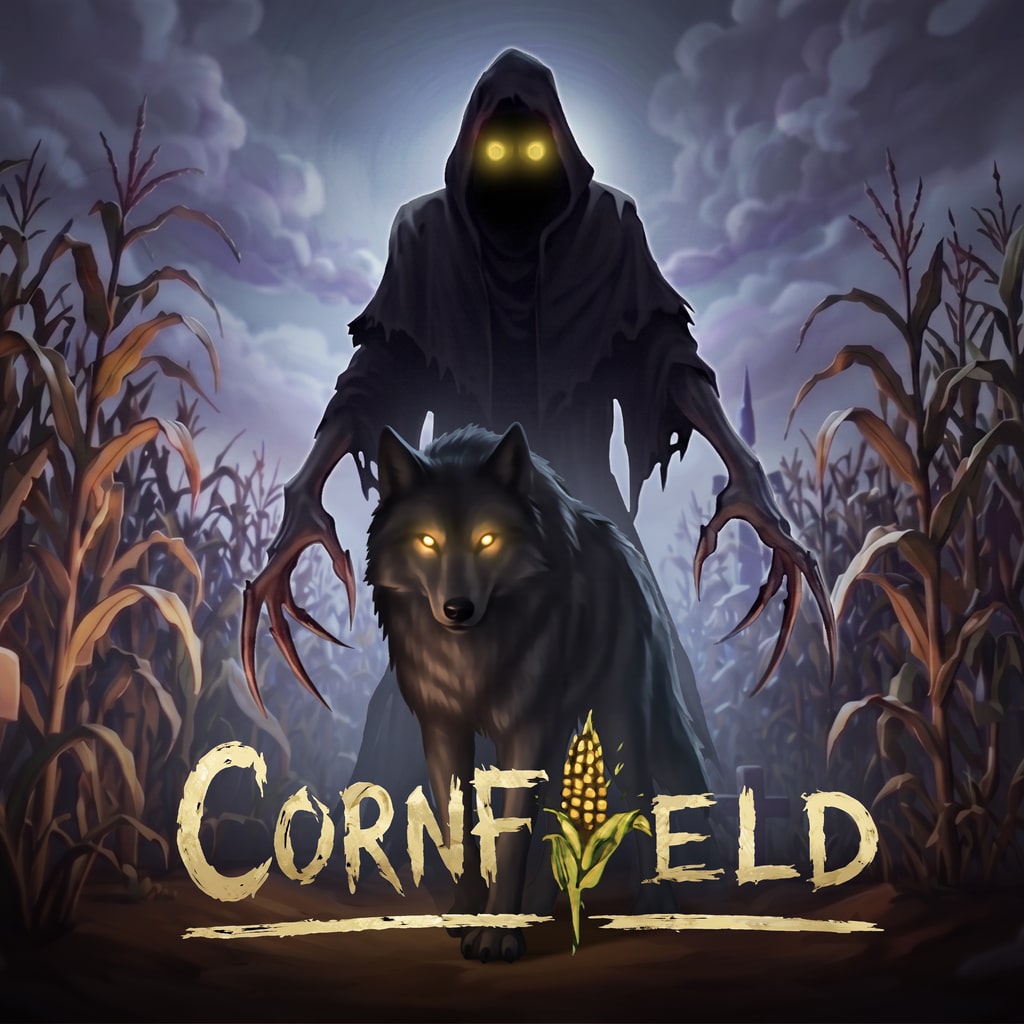
The heart of Cornfield’s horror comes from its monster. Unlike many modern horror games that rely heavily on scripted encounters, the creature here feels like a constant presence hanging over every decision you make.
The game leans heavily on sound design to communicate danger. Long before you see the monster, you hear it. Rustling leaves, snapping branches, distant growls, and heavy breathing create an atmosphere where every noise feels important. The result is a constant state of tension that rarely allows you to relax.
There is something deeply unsettling about standing in front of a puzzle while knowing the creature could be closing in at any moment. Your brain is pulled in two directions. One part is trying to solve the challenge in front of you, while the other desperately listens for signs of approaching danger.
That balancing act becomes Cornfield’s greatest strength. The puzzles themselves are not particularly groundbreaking, but the pressure surrounding them transforms even simple tasks into nerve-wracking experiences. A code lock suddenly becomes terrifying when every second spent examining clues could be bringing the monster closer.
A Maze That Fights Back
The maze itself deserves a great deal of credit for maintaining the game’s tension. Navigation becomes a challenge long before the creature enters the picture. The field is deliberately designed to disorient players, creating an environment where getting lost feels inevitable.
Many horror games rely on darkness alone to create fear. Cornfield goes a step further by making the environment actively work against your sense of direction. Familiar landmarks are rare, and many pathways seem almost identical. After a while, players begin doubting their own memory, second-guessing whether they have already explored a particular route or missed an important clue somewhere behind them.
This creates a unique psychological pressure that extends beyond traditional jump scares. Getting lost is frustrating, but it is also frightening. Every wrong turn feels dangerous because it increases the amount of time you remain trapped inside the monster’s hunting grounds.
The game encourages careful observation and mental mapping. Players who pay attention to subtle environmental details will fare much better than those who rush blindly through the field. It becomes a test of patience as much as survival.
Atmosphere Over Spectacle
Visually, Cornfield succeeds because it knows exactly what kind of horror experience it wants to deliver. The game does not attempt to overwhelm players with elaborate creature designs or excessive gore. Instead, it focuses on creating mood.
The towering corn stalks sway gently in the darkness, illuminated only by weak light sources and occasional flashes of visibility. Volumetric fog hangs over the pathways, creating uncertainty around every corner. Shadows dance between the rows, often making harmless scenery look like something far more sinister.
The environment rarely feels safe. Even during moments when the monster is nowhere nearby, the field itself remains deeply unsettling. There is an oppressive quality to the darkness that keeps tension simmering beneath the surface.
The audio design elevates everything further. Horror lives and dies by sound, and Cornfield understands this completely. The combination of environmental ambience and carefully placed audio cues creates an experience best enjoyed with headphones. Every creak, rustle, and distant noise contributes to the atmosphere.
Repetition Creeps In
For all its strengths, Cornfield is not without limitations. Its commitment to a focused concept occasionally works against it in longer sessions. The visual environment, while effective, lacks variety. After spending significant time moving through similar-looking pathways, some sections begin to blur together. The initial fear generated by the maze gradually gives way to familiarity, which naturally reduces some of the tension.
The monster AI also reveals its limitations over time. Early encounters are genuinely terrifying because you do not fully understand how the creature behaves. As you learn its patterns, however, survival becomes more predictable. The fear never completely disappears, but it does lose some of its mystery.
Puzzle design falls into a similar category. While the pressure surrounding the puzzles remains effective, the challenges themselves are relatively straightforward. Players hoping for deeply complex brainteasers may find certain sections lacking depth.
Thankfully, the game’s relatively focused scope prevents these issues from becoming overwhelming. Cornfield knows what it wants to be and generally avoids overstaying its welcome.
Final Verdict
Cornfield proves that horror does not require massive budgets or endless mechanics to be effective. By focusing on a single, terrifying scenario and executing it with confidence, Upscale Studio has crafted a tense survival experience that thrives on atmosphere, uncertainty, and psychological pressure.
Its maze design keeps players disoriented, its sound design keeps them on edge, and its monster keeps them moving. While some repetition and predictable AI behaviour keep it from reaching the upper tier of modern indie horror classics, the overall experience remains consistently engaging and genuinely unsettling.
For fans of survival horror who prefer being hunted to fighting back, Cornfield delivers exactly what it promises. It traps you in a nightmare, leaves you with little more than your wits, and dares you to find a way out before something lurking in the darkness finds you first.