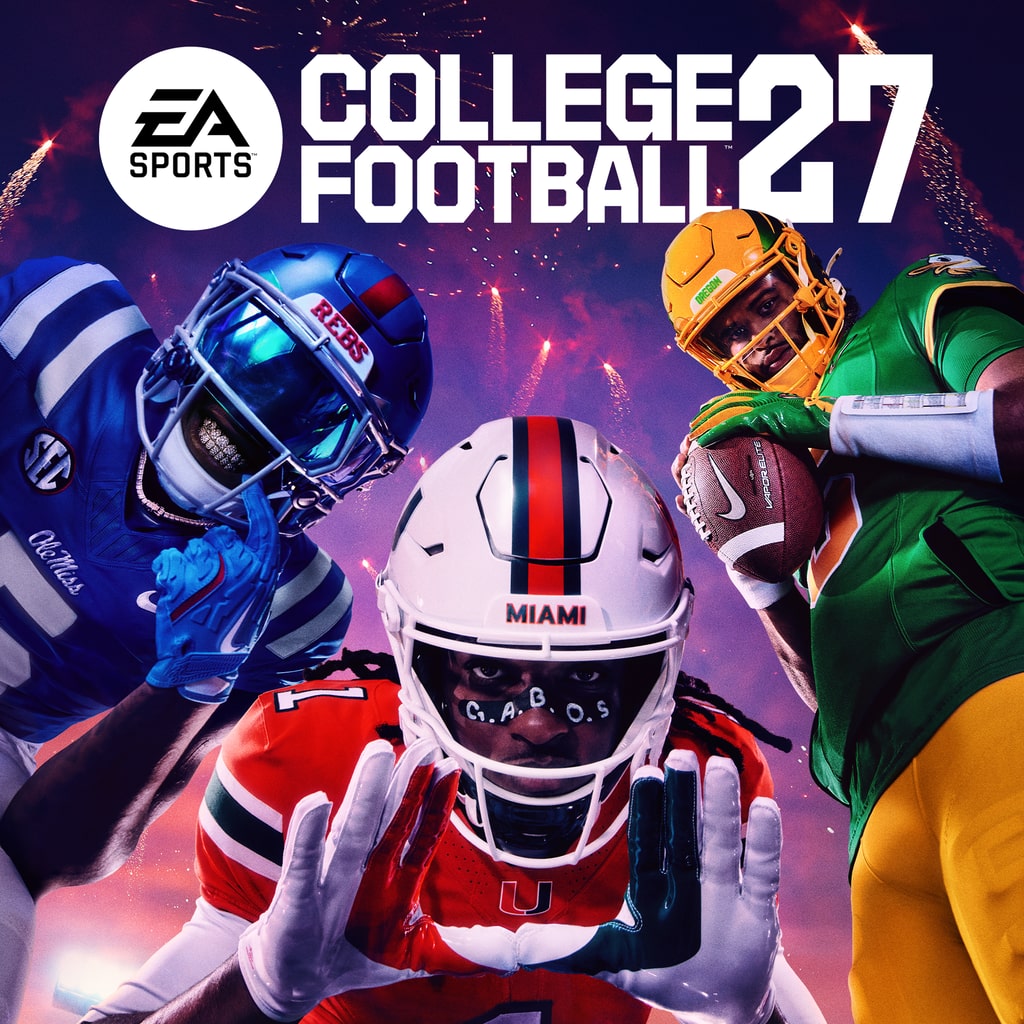
EA SPORTS College Football 27 opens with a clear sense that the series is no longer relying on its return-era goodwill. Instead, it seeks to define what modern collegiate football feels like under pressure. The presentation immediately sets the tone, from packed-stadium traditions to a broadcast package with a sharper, more contemporary identity. Joel Klatt joining Chris Fowler gives the commentary a refreshed cadence, and Holly Rowe’s sideline presence adds a layer of situational awareness that makes big games feel more reactive than scripted.
What stands out most, though, is how much weight the game places on identity. Every programme feels like it has a pulse this year, shaped by expectations that extend beyond wins and losses. You are not just playing for rankings; you are managing reputation, recruitment pipelines, and internal pressure that builds quietly over time. Even early matches in lower conferences carry the sense that one bad season can echo far beyond the scoreboard.
Dynasty Blueprint and the Weight of Control
The headline evolution this year is Dynasty Blueprint, which genuinely reshapes how you approach long-term play. Rather than simply recruiting and upgrading in familiar loops, you now work within a structured economy of Dynasty Points that governs nearly every decision. Recruiting, facilities, coaching hires, NIL deals and even staff morale all draw from the same strategic pool, forcing you to think like an administrator as much as a coach.
There is a satisfying tension in how this system plays out. Smaller programmes feel genuinely constrained, not just in talent but in flexibility, while powerhouse schools operate with a kind of structural confidence that mirrors real-world disparities. It is not always elegant in its presentation, particularly when menus stack multiple decision layers at once, but the underlying idea is strong. For the first time in the series, building a dynasty feels less like progression and more like negotiation with constant trade-offs.
Road to Glory and the Personal Grind
Road to Glory returns with a more layered identity system that pushes player development beyond simple stat growth. The introduction of new positions such as Tight End, Edge Rusher and Free Safety helps broaden the appeal, but the real change lies in how your decisions ripple outward. NIL deals, draft projections, and Legacy Score tracking combine to form a progression system that constantly reminds you that you are being evaluated from multiple angles.
What makes this mode more engaging than previous iterations is its sense of pressure without constant visibility. You are not always told how well you are doing in explicit terms, but you feel it in how coaches respond, how snaps are distributed, and how opportunities appear or disappear over time. The result is a career mode that feels less like a highlight reel and more like an ongoing negotiation with expectations. It can be demanding, but it rarely feels directionless.
Mascot Chaos and Controlled Absurdity
Mascot Mashup remains the series’ most surreal outlet and continues to serve as a pressure release valve for everything else happening in the game. With over 120 mascots available, these 11-on-11 matchups lean fully into controlled chaos, blending exaggerated animations with surprisingly readable gameplay. It is deliberately over the top, yet not without structure, which prevents it from collapsing into pure visual noise.
There is something oddly effective about how this mode contrasts with the seriousness of Dynasty and Road to Glory. One moment you are managing NIL budgets and defensive coverage logic, and the next you are watching oversized mascots collide in physics-heavy mayhem. It does not always align tonally with the rest of the package, but it undeniably broadens the game’s personality in a way few sports titles attempt.
On Field Football and Defensive Intelligence
The biggest mechanical leap this year comes on defence. The Look for Work system fundamentally changes how defensive AI behaves, particularly in zone coverage. Rather than static positioning, defenders now anticipate movement patterns and adjust dynamically, creating passing windows that feel earned rather than exposed.
This is paired with a more physical passing game overall, especially through jostling between WR and DB. Routes feel contested from start to finish, and timing matters more than ever when reading coverage. Combined with dynamic weather that can shift mid-game, the on-field experience often feels unpredictable in ways that mirror real college football Saturdays. It is not always clean, but it is rarely dull.
There is a slight learning curve to how reactive everything has become. Quarterbacks, in particular, require more patience, as defensive adjustments can close space faster than expected. Once you adapt, however, the rhythm of each drive becomes more deliberate and strategic, rewarding careful reads over quick improvisation.
Presentation, Pressure, and Menu Overload
If there is a persistent friction point in College Football 27, it is not on the field but around it. Dynasty Blueprint, in particular, can feel dense, with layered systems that sometimes feel more like management software than a sports menu. There is depth here, but it occasionally comes at the cost of clarity, especially during longer sessions.
That said, the ambition is difficult to ignore. EA Tiburon is clearly trying to simulate the entire ecosystem of college football, not just the games themselves. When everything is working in sync, from recruitment battles to stadium atmosphere to late-game defensive stands under changing weather, the experience feels impressively complete.
Final Verdict
EA SPORTS College Football 27 is the most structurally ambitious entry in the modern revival of the series. It moves beyond nostalgia and begins to build something more systemic, where identity, pressure, and strategy are as important as on-field execution. Not every system is perfectly streamlined, and the density of Dynasty management will not suit everyone, but the trade-off is a level of depth the series has not previously reached.
When it clicks, it feels like the closest the franchise has come to capturing the real complexity of college football. It is less about highlight moments and more about sustained responsibility, and that shift gives it a distinct identity of its own.
A confident, sometimes demanding step forward for the series, one that recognises that college football is as much about structure as it is about spectacle.