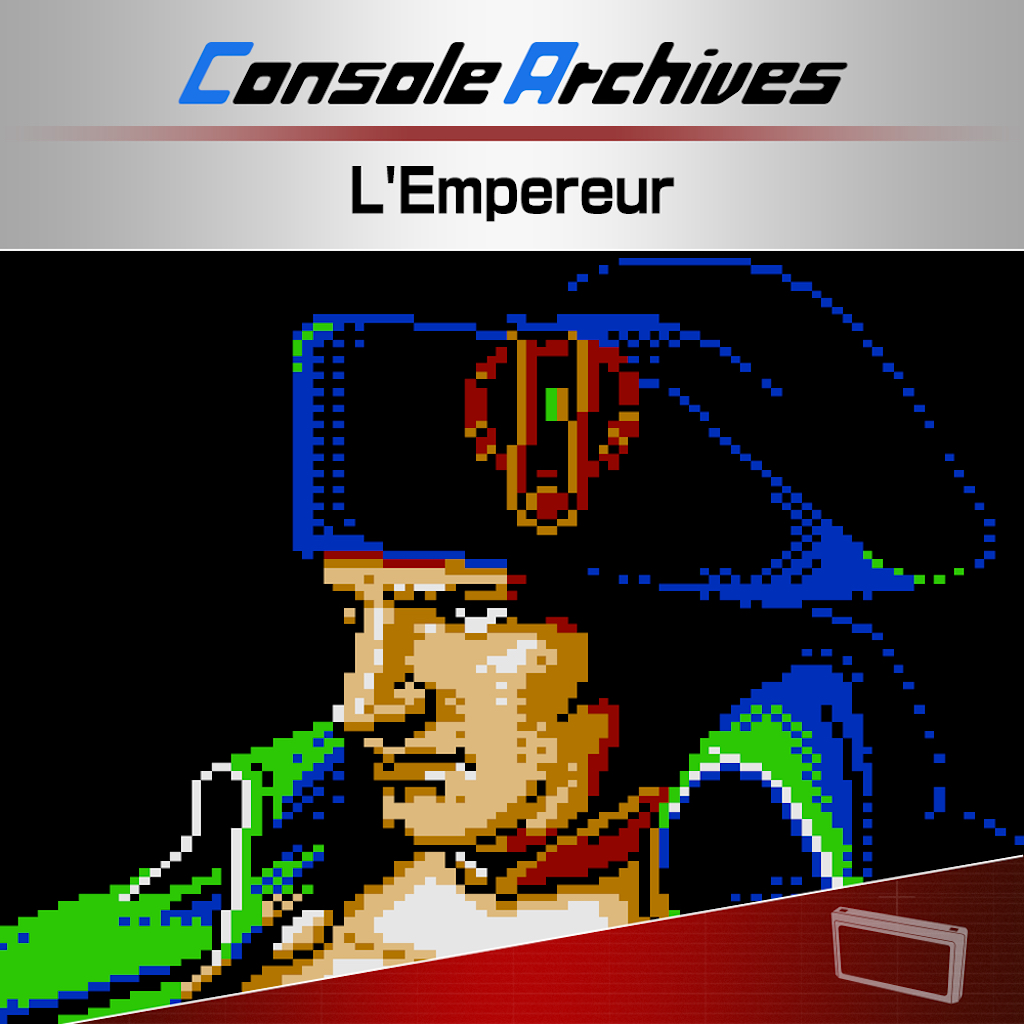
There is something uniquely fascinating about revisiting a genre’s foundations. Modern grand strategy games often arrive wrapped in slick interfaces, extensive tutorials, and countless quality-of-life conveniences designed to make complex systems approachable. Back in 1991, however, developers assumed players would meet the game on its own terms. That philosophy lies at the heart of Console Archives: L’Empereur, a faithful re-release of Koei’s classic Napoleonic strategy simulation, now preserved for modern platforms by Hamster Corporation.
Released as part of the growing Console Archives line, L’Empereur places players directly in the boots of Napoléon Bonaparte and tasks them with guiding France through one of the most turbulent periods in European history. What begins as a campaign of military survival gradually expands into a sprawling exercise in political leadership, diplomacy, economics, and continental conquest. It is undeniably old-fashioned, often intimidating, and occasionally frustrating. Yet beneath those rough edges lies a strategy game that remains surprisingly compelling more than thirty years after its original debut.
A Different Kind of Historical Adventure
Unlike many modern historical strategy games that focus heavily on alternate histories or sandbox freedom, L’Empereur remains firmly grounded in the real rise of Napoléon. The campaign follows several major stages of his political and military career, allowing players to experience the transformation from ambitious military commander to Emperor of France.
The historical framing gives the game a distinctive sense of progression. Rather than simply expanding across a map for the sake of territorial gain, each scenario feels part of a larger narrative. France begins surrounded by uncertainty and opposition, forcing players to think carefully about every military deployment and diplomatic decision. The stakes feel personal because they are directly tied to Napoléon’s ascent and the future of an entire nation.
What makes this particularly impressive is how much the game achieves despite the technological limitations of its era. The presentation is minimal by modern standards, but the underlying systems create a convincing illusion of governing a living political entity. Every victory feels earned because each success emerges from a chain of carefully considered decisions.
Running France Is Hard Work
One of L’Empereur’s greatest strengths is its commitment to making leadership feel like genuine work. Before players even think about marching armies across Europe, they must first manage domestic affairs in France. Cities require governors, agricultural development demands investment, and economic resources must be distributed wisely to ensure long-term stability.
There is a surprisingly satisfying rhythm to these administrative systems. While the menus can initially seem overwhelming, they gradually reveal a network of interconnected mechanics that reward careful planning. Spending too heavily on military expansion may leave your economy vulnerable. Ignoring provincial development can create problems later, when additional resources are desperately needed.
This balancing act forms the backbone of the experience. Success rarely comes from a single brilliant decision. Instead, victory emerges from dozens of small choices that gradually strengthen your position. Players who enjoy thoughtful resource management will find plenty to appreciate here.
War on a Hexagonal Battlefield
Eventually, diplomacy fails, tensions rise, and armies march. When conflict erupts, L’Empereur shifts to detailed turn-based battles on hexagonal maps. Although the visuals remain simple, the tactical depth holds up remarkably well.
Terrain matters enormously. Hills offer valuable defensive advantages, rivers can slow advances, and mountain positions often become critical strongpoints. Positioning units effectively is every bit as important as maintaining numerical superiority. Charging forward without considering geography often leads to costly defeats.
Weather adds another welcome layer of unpredictability. Rain and snow can dramatically alter the pace of battle, reducing mobility and limiting artillery effectiveness. These environmental factors force players to adapt their plans rather than rely on a single strategy throughout an entire campaign.
Perhaps most importantly, morale and supply systems prevent warfare from becoming a straightforward numbers game. Isolated units gradually lose effectiveness, while poorly supported armies can collapse despite appearing stronger on paper. The result is a battlefield experience that rewards patience and long-term thinking rather than reckless aggression.
Preservation Done Right
Hamster Corporation deserves considerable praise for its approach to retro preservation. Rather than attempting to modernise L’Empereur or fundamentally alter its design, the company has focused on making the original experience accessible without compromising its identity.
The inclusion of save states is arguably the most important addition. L’Empereur can be brutally unforgiving, and the ability to create manual saves before major diplomatic negotiations or critical battles dramatically reduces frustration. These features do not make the game easier, but they make experimentation far less punishing.
Customisable controls and display options are equally welcome. Players can tailor the presentation to modern displays while also taking advantage of CRT-style filters that recreate the appearance of classic televisions. The effect is subtle yet effective, helping preserve some of the atmosphere surrounding the original release. The overall package demonstrates a clear understanding of preservation. The goal is not to remake history but to ensure it remains playable.
A Steep Climb for New Players
As impressive as L’Empereur remains, it would be dishonest to ignore its greatest obstacle. It is a 1991 strategy game, and it behaves exactly like one. Modern players accustomed to extensive tutorials and contextual guidance may find the opening hours genuinely overwhelming. Menus are dense, information is delivered in large blocks of text, and the game expects players to learn many of its systems through direct experimentation. There is little hand-holding and almost no attempt to introduce mechanics gradually.
The challenge is not merely understanding how individual systems work. It is understanding how every system influences every other. Economic planning affects military recruitment. Diplomatic relationships influence strategic opportunities. Domestic stability impacts your ability to wage prolonged wars.
For dedicated strategy enthusiasts, this complexity becomes part of the game’s appeal. For newcomers, it may be a significant barrier to entry. Patience is essential, and those unwilling to invest time in learning the mechanics may struggle to appreciate what makes L’Empereur special.
The Value of Historical Preservation
What ultimately makes Console Archives: L’Empereur so interesting is not merely that it remains enjoyable. It is that it offers a direct window into the history of strategy game design. Many concepts now taken for granted in modern grand strategy titles can be traced back to games like this.
Playing L’Empereur today reveals how ambitious Koei’s designers were decades ago. Long before massive strategy franchises became commonplace, they were already experimenting with large-scale political simulations, detailed battlefield tactics, and interconnected economic systems. The technology may have been limited, but the design vision was remarkably forward-thinking.
That historical significance gives the release value beyond simple nostalgia. It allows modern players to see where many beloved mechanics originated and to appreciate the foundations on which an entire genre was built.
Final Verdict
Console Archives: L’Empereur is not a game for everyone. Its interface is archaic, its learning curve steep, and its refusal to modernise certain design philosophies will undoubtedly frustrate some players. Yet for those willing to meet it on its own terms, a deeply rewarding strategic experience lies beneath the surface.
The blend of political management, diplomacy, and thoughtful hex-based warfare remains surprisingly engaging even after more than three decades. Hamster Corporation’s preservation work ensures these systems can be enjoyed on modern hardware without sacrificing their original character.
For strategy veterans, history enthusiasts, and anyone curious about the roots of grand strategy gaming, Console Archives: L’Empereur stands as a fascinating and worthwhile piece of gaming history. It may not be the easiest campaign you’ll ever undertake, but few victories feel as satisfying as those earned through patience, intelligence, and careful leadership.