Some arcade games hook players with spectacle. Others rely on fast reflexes, relentless action, or memorable characters. CAMELTRY takes a completely different approach. Its brilliance lies in a single idea so simple that it feels surprising nobody had thought of it sooner.
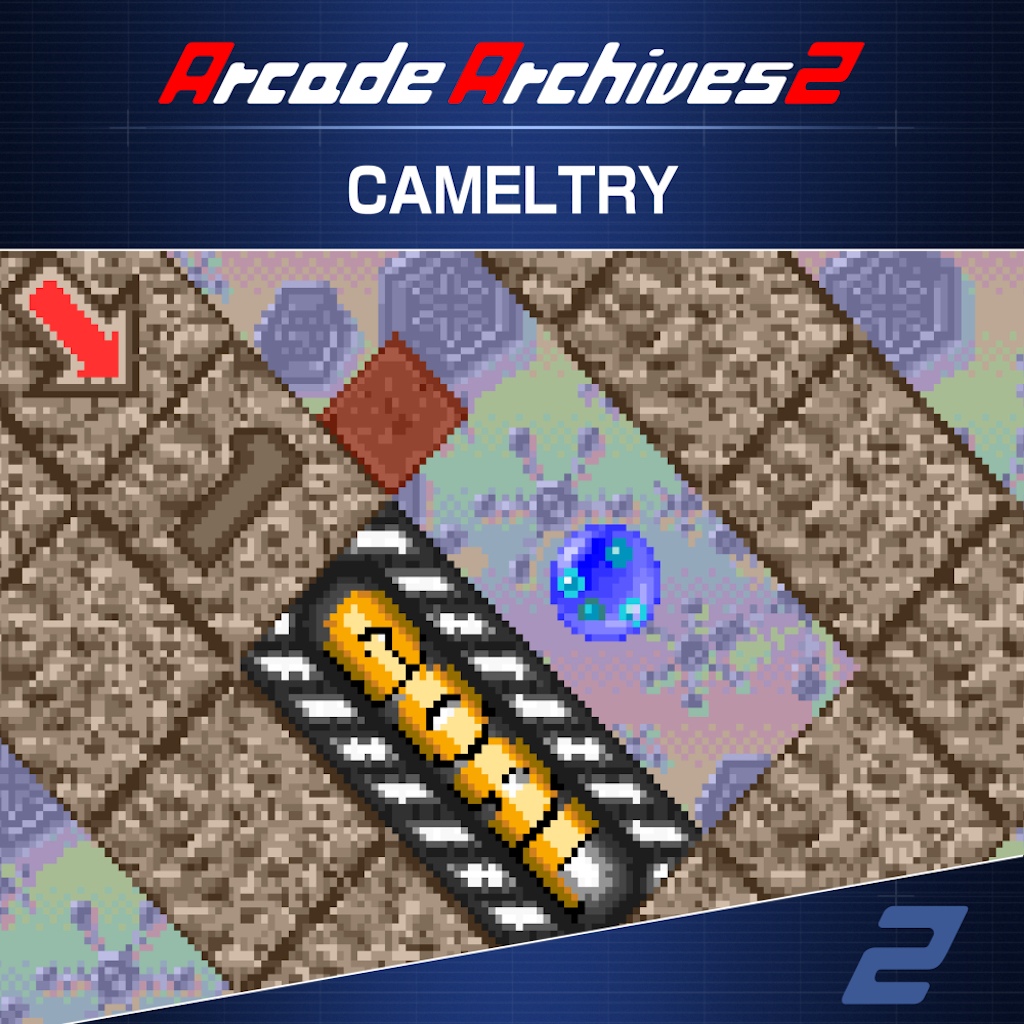
Rather than controlling a ball directly, players rotate the entire maze around it. Gravity remains constant, always pulling downward, while the twisting labyrinth shifts beneath the ball’s path. Your goal is straightforward: guide the ball to the exit before time runs out.
That premise sounds uncomplicated, and in many ways it is. Yet within moments of starting your first stage, CAMELTRY reveals layers of challenge and elegance beneath its minimalist design. Every movement builds momentum. Every turn alters the ball’s trajectory. Every decision matters. Even in 2026, the concept feels remarkably fresh.
A Puzzle Game Built on Physics
What separates CAMELTRY from countless maze games is its relationship with momentum. This is not simply about finding the correct route. Success depends on understanding how the ball behaves as the world rotates around it.
At first, the stages serve as gentle introductions. Wide corridors and forgiving layouts encourage experimentation. Players quickly learn to tilt the maze to accelerate movement, navigate corners, and maintain control.
Soon enough, however, the game demands greater precision. Narrow pathways appear. Obstacles interrupt your progress. Sudden changes in direction become necessary. What initially felt calm and methodical becomes a frantic race against both the clock and your own mistakes.
The beauty of CAMELTRY is how naturally this escalation occurs. The game rarely feels unfair because every challenge emerges from mechanics you already understand. It simply asks you to master them more completely.
The Joy of Movement
Many puzzle games are intellectual exercises. CAMELTRY certainly engages the brain, but it also creates a surprisingly physical connection between player and game.
Guiding the ball through a complex maze produces a sense of flow that is difficult to describe until you experience it firsthand. Momentum becomes something you can almost feel. Successfully carrying speed through multiple corners without losing control is deeply satisfying, akin to carving perfect lines in a racing game.
That sensation is what makes CAMELTRY so enduring. Solving the maze is only part of the challenge. Learning to move through it efficiently is equally important.
There are moments when everything clicks into place. The maze spins effortlessly beneath the ball, hazards are avoided instinctively, and the finish line arrives seconds earlier than expected. Those moments create a unique sense of mastery that remains deeply rewarding.
An Arcade Classic That Still Holds Up
One of the most impressive aspects of CAMELTRY is how little it feels constrained by its age. Many arcade titles from the early 1990s remain enjoyable primarily because of nostalgia. Their historical significance often outweighs their modern playability. CAMELTRY largely avoids that problem thanks to its originality.
The game’s core mechanics remain as engaging today as they were when players first encountered them in arcades. There is no need for modern reinterpretation because the concept was already ahead of its time. Its clean visual presentation and straightforward objectives keep the gameplay the central focus. That timeless quality helps explain why retro enthusiasts continue to celebrate the game decades after its original release.
The Arcade Archives 2 Treatment
Hamster Corporation has earned a strong reputation for preserving arcade history, and Arcade Archives 2: CAMELTRY continues that tradition. The package includes a wealth of modern features that make the experience far more accessible than in its original arcade form. Save states, rewind functionality, display options, online leaderboards, and customisable settings allow players to tailor the experience to their preferences.
The newly introduced Time Attack Mode feels particularly appropriate for CAMELTRY. Because the game naturally rewards efficient movement and route optimisation, competing purely on completion speed becomes an addictive challenge. Every second saved feels meaningful, encouraging repeated attempts to perfect your performance. For players who enjoy chasing leaderboard positions, this addition adds substantial replay value beyond the original arcade structure.
Smooth Preservation
One of the headline additions to the Arcade Archives 2 line is Variable Refresh Rate support. While this may sound like a feature aimed primarily at technical enthusiasts, it genuinely benefits a game like CAMELTRY.
The entire experience revolves around momentum and precise movement. Smooth frame pacing helps preserve the responsiveness that made the original arcade version feel so satisfying. Rotating the maze feels fluid, and the ball’s movement remains consistent even during rapid adjustments.
While casual players may not immediately notice the technical improvements, they contribute to a presentation that feels remarkably polished. Combined with Hamster’s usual attention to detail, this results in what is arguably the definitive version of CAMELTRY currently available.
The Missing Arcade Wheel
The one area where modern hardware cannot fully replicate the original experience is the controls. CAMELTRY’s arcade cabinet utilised a rotary controller specifically designed for the game’s unique mechanics. Turning the maze with a physical wheel created a tactile connection that standard gamepads inevitably struggle to match.
To the game’s credit, the transition to modern controllers is handled well. Analog sticks provide sufficient precision for most situations, and players quickly adapt to the new control scheme. Nevertheless, long-time arcade enthusiasts will likely notice the difference.
Late-game stages occasionally demand rapid directional changes, when the limitations of a standard controller become more apparent. These moments never ruin the experience, but they do serve as reminders of the game’s arcade origins. Fortunately, this remains a minor complaint rather than a major flaw.
A Lesson in Elegant Design
What stands out most after spending time with CAMELTRY is how efficiently it deploys its ideas. Modern puzzle games often introduce dozens of mechanics across lengthy campaigns. CAMELTRY builds an entire experience from a single brilliant concept and trusts that concept to carry the adventure.
That confidence pays off. Every new challenge emerges naturally from the core mechanic. There is no unnecessary complexity. No bloated systems. No distractions from the central idea.
The result is a game that feels remarkably focused. It understands exactly what makes it special and refuses to dilute that identity. In an era when many games struggle with excess, such elegant restraint is refreshing.
Final Verdict
Arcade Archives 2: CAMELTRY is both a celebration of arcade history and a reminder that great game design never goes out of style. Its innovative maze-rotation mechanics remain as clever and engaging today as they were in 1990, offering a puzzle experience that still feels distinct in a crowded genre.
Hamster’s preservation work is excellent. The addition of Time Attack Mode, modern accessibility features, online rankings, and technical enhancements ensures that both newcomers and long-time fans can enjoy the game at its best.
The lack of the original rotary controller prevents this from being a perfect recreation, but it is a minor compromise in an otherwise outstanding package. CAMELTRY may not be one of arcade gaming’s most famous names, yet it remains one of its most inventive. More than thirty years later, spinning an entire maze to guide a tiny ball home still feels like magic.